
I remember the first time I decided to “go deep.” I had my fancy tea, my $30 candle, and a brand-new shadow work journal that promised to unlock my ancestral wisdom and fix my life by Tuesday. I sat there, pen poised, ready to excavate my soul.
Three hours later, I was a crying mess on the floor, convinced that I was fundamentally broken, toxic, and probably unlovable. I had spent the afternoon digging up every insecurity I’d ever had, but I didn’t feel "healed." I felt like I’d just ripped a scab off a wound and then stared at it under a magnifying glass.
Sound familiar?
Shadow work has become a massive buzzword, but let’s be real: most of us are doing it in a way that actually blocks our peace instead of creating it. We’ve turned it into another chore, another way to "fix" ourselves, or, even worse, a tool for self-punishment.
If you feel like your emotional healing journal sessions are leaving you more drained than empowered, you’re likely making one of these seven mistakes. Here is how I learned to stop flinching at my shadows and start actually reintegrating them.
This is the big one, and it’s the sneakiest trap of all. We use journaling to find a "flaw", say, a fear of abandonment or a tendency to people-please, and then we tell ourselves, "I cannot live my life, start that business, or date that person until this part of me is GONE."
We identify the shadow and then try to abandon it.
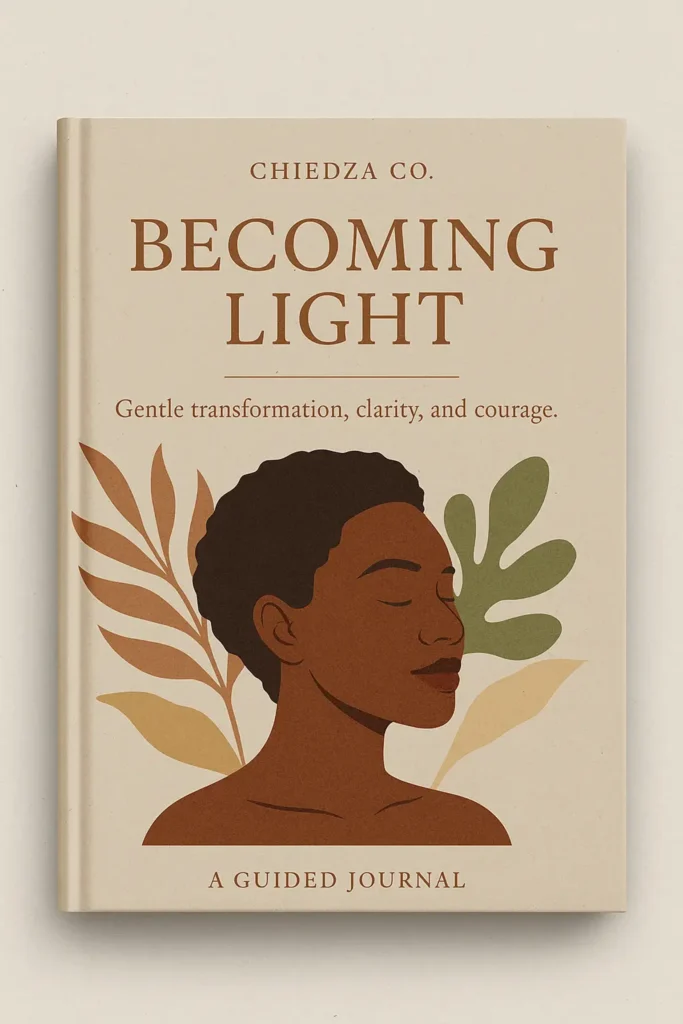
But here is the witty truth: your shadow is just a part of you that got lost in the dark. You can’t "heal" a shadow by cutting it off; you heal it by bringing it home. When I used to find a "wound," I’d treat it like a virus I needed to purge. Now, I use my Becoming Light journal to ask that part of me: "What were you trying to protect me from?"
Transformation isn't about becoming a "new" person; it's about becoming the whole person you already are.
We’ve all seen the "Good Vibes Only" crowd. They suggest that if you just "manifest harder" or "think positive," your shadows will dissolve.
Let’s talk straight: toxic positivity is just spiritual bypassing with a better wardrobe.
If you’re using your journal to force yourself into a "high vibration" before you’ve actually processed the "low" one, you’re just burying the problem deeper. Your shadow doesn't need a cheerleader; it needs a witness. When I stopped trying to "reframe" my grief into a "lesson" before I’d even felt the pain, that’s when the real shifts happened. My Still Rising journal became a space where I could say, "I am angry, I am hurt, and no, there isn't a silver lining today." Ironically, that’s when the peace finally showed up.
There is a fine line between radical honesty and self-abuse. If your shadow work journal looks like a list of everything you hate about yourself, you aren't doing shadow work; you're doing an audit of your insecurities.
The "Inner Critic" loves shadow work because it gives her a platform to be mean under the guise of "growth."
Survival tip: If you wouldn't say it to your best friend, don't write it in your journal without a massive dose of compassion. The shadow isn't "evil." It's the parts of you that were too much, too loud, or too sensitive for the world to handle, so you tucked them away. Treat them with the same tenderness you’d give a scared child.
Are you writing long, philosophical essays about why you feel the way you do? Are you analyzing your childhood like a forensic scientist?
That’s a defense mechanism, sis.
It’s much easier to talk about the pain than it is to actually feel it. I used to write five pages of "logic" to avoid thirty seconds of "sobbing." But the body keeps the score. If your journaling doesn't include checking in with your physical sensations: the tightness in your chest, the knot in your stomach: you're just rearranging the furniture in your mind.
True emotional healing happens when the ink on the page meets the breath in your lungs.
We live in a "hustle" culture, and we’ve brought that energy into our healing. We think that if we do four hours of deep shadow work on a Sunday, we’ll be "fixed" by Monday morning.
Shadow work is not a sprint; it’s a slow walk through a dark forest.
Diving into your deepest traumas for hours on end without a break isn't "brave": it's dysregulating. It floods your nervous system and leaves you in a state of fight-or-flight. I’ve learned that twenty minutes of focused, gentle reflection is worth more than three hours of emotional self-flagellation. Give your soul time to breathe between the deep dives.
You wouldn't go cave diving without a rope and a flashlight, so why are you diving into your deepest psyche without boundaries?
Mistake number six is having no "off-switch." You start journaling about a minor annoyance at work and suddenly you’re reliving a core wound from age seven, and now you have to go to a PTA meeting.
Survival in shadow work requires a "container." Set a timer. Decide on one specific prompt. Use a guided journal for women that provides structure so you don't get lost in the weeds. When the timer goes off, the journal closes. You need to know how to step out of the shadow as much as you need to know how to step into it.
This is the mistake that keeps people stuck. Most people finish a heavy journaling session, close the book, and immediately check their email or start cooking dinner.
You cannot go from "excavating deep-seated shame" to "choosing what’s for dinner" without a transition.
This is what I call The Sacred Return. After every session, you owe your nervous system a moment of return. For me, that looks like:
Without aftercare, the "shadow" stays open. It leaks into your day, making you reactive and exhausted.
The transformation doesn't happen in the "digging." It happens in the reintegration.
When I stopped making these mistakes, my journaling changed. It went from a "self-help project" to a sacred conversation with myself. I realized that my "shadows": my anger, my fear, my "too-much-ness": were actually the keys to my authentic identity. My anger was just my boundaries trying to protect me. My fear was just my love trying to stay safe.
If you’re ready to stop the cycle of "identify and abandon" and start actually rising, you need the right tools. Our journals at Chiedza Innovations aren't just notebooks; they are companions designed to help you navigate these storms with intention. Whether it’s the Still Rising guided journal for the heavy seasons or our Becoming Light resources for gentle discovery, we’re here to help you write your own story: all of it.
Stop flinching at the dark, queen. That’s where your gold is buried.


