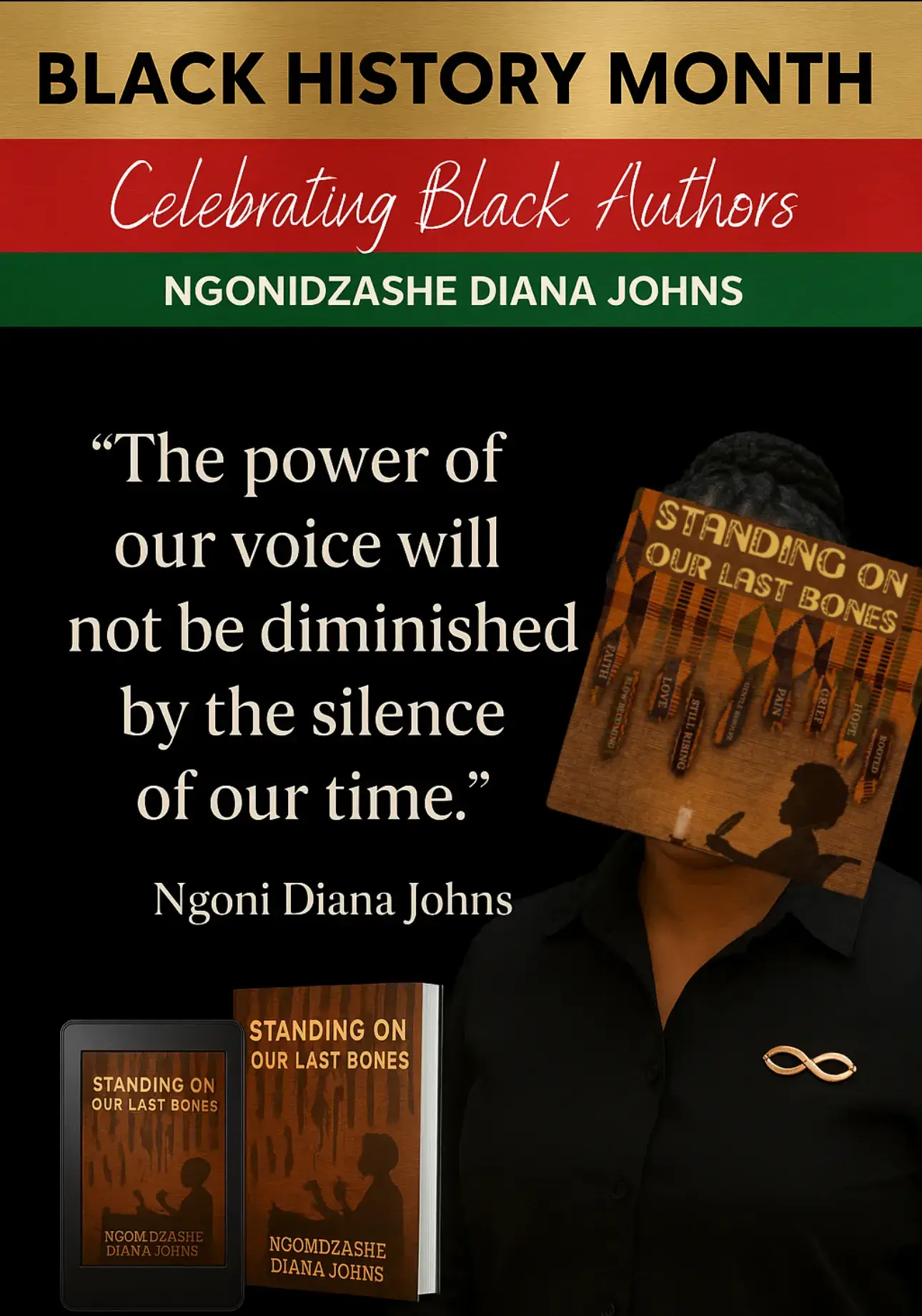

What It Means to Write Your Own Healing
"Some stories are not told to be understood. They are told to survive the telling."
There are moments when the world keeps moving, even though your life has stopped.
Today, I am preparing for a total hysterectomy after years of chronic illness, medical dismissal, pain and adaptation. My body has carried endometriosis, adenomyosis, POTS, dysautonomia and the health effects I experienced following vaccination. It has carried symptoms that were minimised, appointments where I had to prove what I already knew, and the quiet grief of becoming a stranger to the body I once thought I understood.
Outside, life looks ordinary.
Inside, I am standing at the edge of a surgery that will change my body, my relationship with fertility and the future I once imagined. There is no elegant way to say that. I can write about resilience, but I will not pretend I am not afraid. I am grieving anticipated motherhood. I am grieving the years illness took. I am grieving the version of myself who believed that if she worked hard enough, explained clearly enough and stayed hopeful enough, the system would eventually listen.
Sometimes, it did not.
And that is the tension I keep returning to: how do I turn a life shaped by being disbelieved into something that helps another woman be believed sooner?
The body that became a signpost
For years, survival became my full-time occupation.
Getting dressed could feel like climbing. Walking from one room to another became a negotiation. Plans were cancelled, journeys shortened and ordinary tasks turned into calculations. My body spoke a language I did not yet have the words to translate, while the people around me often treated the translation as an inconvenience.
I became fluent in explaining pain.
I learned how to make suffering presentable. How to smile while something inside me was screaming. How to attend the appointment, answer the questions, describe the symptoms and leave with the growing suspicion that perhaps I was the problem.
Medical gaslighting does not only make you question a diagnosis. It makes you question your memory, your instincts and your right to ask for help at all.
There were days I mistook survival for living.
There were also days when I wished I had never needed to become this brave. I did not want to turn suffering into purpose. I did not want to become a signpost because the road was so poorly marked.
But I have learned this about women like me: we did not choose what happened to us, but sometimes we can choose what happens because of us.
So I began to ask a different question.
Not, “Why did this happen to me?”
But, “What must change so the next woman does not have to carry this alone?”
That question is the beginning of Chiedza.
Recovery is not return
I used to imagine recovery as a return journey. Back to work. Back to productivity. Back to the body, identity and ambitions I had before illness interrupted everything.
I know better now.
Recovery is not return. It is reconstruction.
Reconstruction is slower and less photogenic. It asks what can be carried forward, what must be released and what needs to be built differently. It does not demand that I become the woman I was before. It gives me permission to become someone more honest.
That honesty includes grief.
A hysterectomy may be medically necessary for my circumstances, but necessity does not cancel emotion. I can make an informed decision and still mourn fertility. I can feel relief and loss in the same breath. I can be grateful to be moving towards a different chapter and still feel the weight of the chapter closing.
Both things can be true.
I am not only the body that became ill. I am also the woman who listened when it said, “Something is wrong.” I am the daughter and granddaughter shaped by Zimbabwean heritage, by stories, prayer, humour and the wisdom of women who knew how to keep a fire alive.
My Gogo Jessina Norah taught me that light is not merely something we admire. It is something we tend.
In Shona, we say Chiedza Hachidzimi: the light does not go out.
Not because darkness is imaginary. Not because pain is always overcome quickly. The light remains because someone protects the ember.
That is the spirit behind my stage piece, I Will Come Back With Embers. The embers are the mapfihwa, the hearthstones, the pieces that hold heat after the visible fire has changed. They remind me that survival is not always a blaze. Sometimes it is one small warmth protected through the night.
From lived experience to a blueprint
I am not only a survivor with a story. I am a founder with a blueprint.
My background in finance and strategy taught me to look at systems: how they allocate resources, measure outcomes and decide what counts. Chronic illness taught me what happens when people disappear from those measurements.
The gap is often not the crisis itself. It is what comes after: after the appointment, after the diagnosis, after the discharge, after the public attention moves on.
That is why Chiedza is not a wellness app. It is an ecosystem for sustainable recovery, aftercare, human capacity, technology and systems change. It exists because people need more than encouragement. They need structures that remember them.
The S.A.F.E.R.™ Framework gives that work a foundation:
- Self-Awareness: noticing what is happening without abandoning yourself.
- Access: making sure support, language and resources are reachable.
- Facilitation: helping people move through systems that are often difficult to navigate alone.
- Escalation: creating a route forward when the first response is inadequate.
- Recovery & Resilience: supporting sustainable rebuilding, not glorifying endurance.
In practice, S.A.F.E.R. asks a simple but demanding question: are we designing care around the whole human being, or merely reacting to the most visible crisis?
The Aftercare Mandate™ carries the same challenge through its shorthand:
Believe. Track. Continue.
Believe women when they describe their bodies.
Track what happens beyond the initial intervention, including the symptoms, complications and consequences that may emerge later.
Continue care after the official emergency, appointment or programme has ended.

Its wider A.F.T.E.R.C.A.R.E.™ architecture makes the responsibility even clearer.
We must Acknowledge what happened without forcing people to minimise it. We must Follow Through, rather than celebrating a referral as though it were a completed outcome. We must Track & Transition, so people are not abandoned when they move between services, life stages or identities.
We must Equip for Recovery with language, tools and practical support. We must Reintegrate people into work, community and ordinary life without demanding that they pretend nothing changed. We must Connect to Care, recognising that no single professional, platform or institution can hold the whole story.
We must Adapt & Learn from lived experience. We must Reach the Unreached, especially women whose pain is routinely racialised, dismissed or made invisible. And we must Empower Through Evidence, treating people’s accounts as essential knowledge rather than anecdotal noise.
This is not theory I discovered from a distance. It is work shaped by the road I have walked.
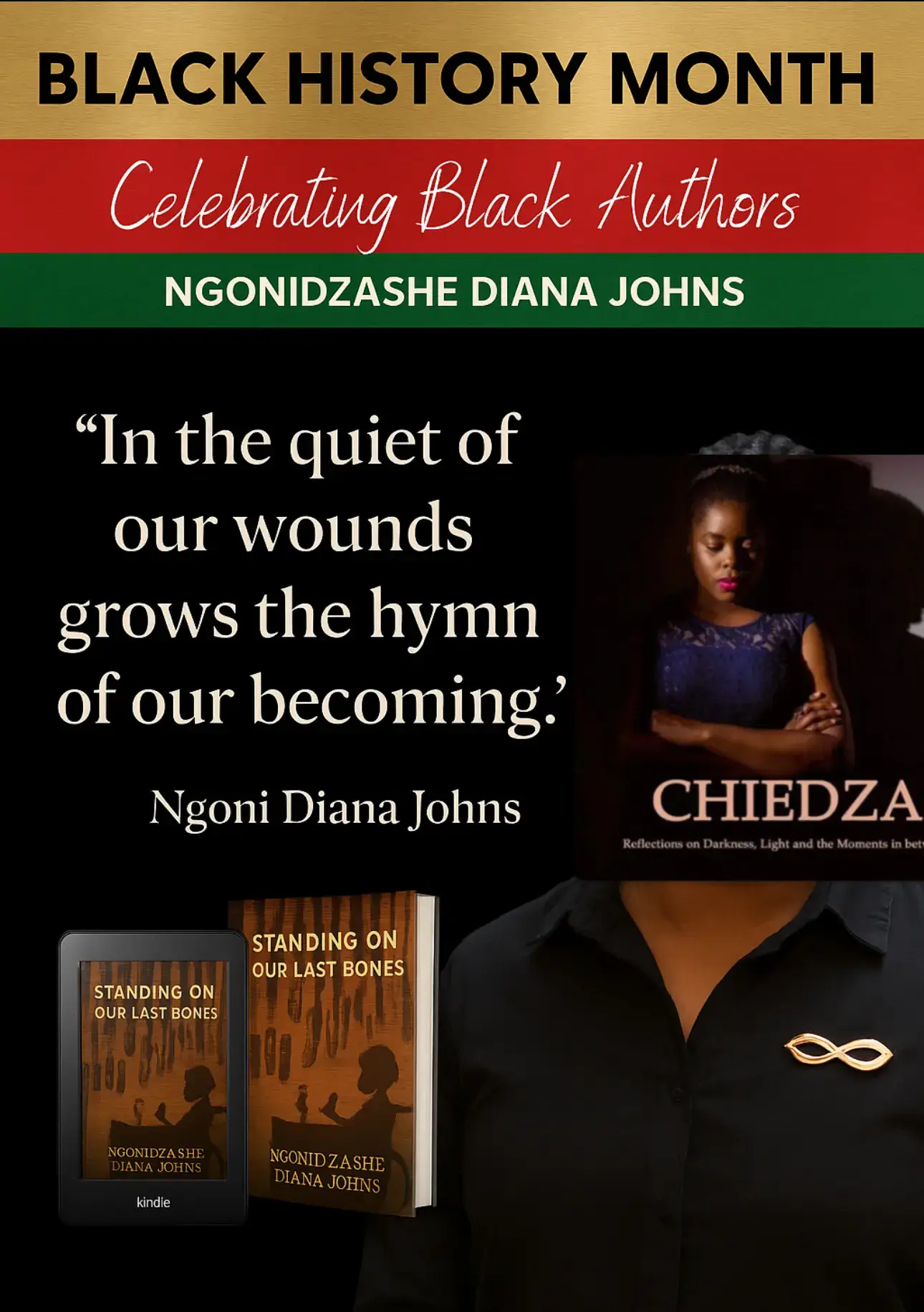
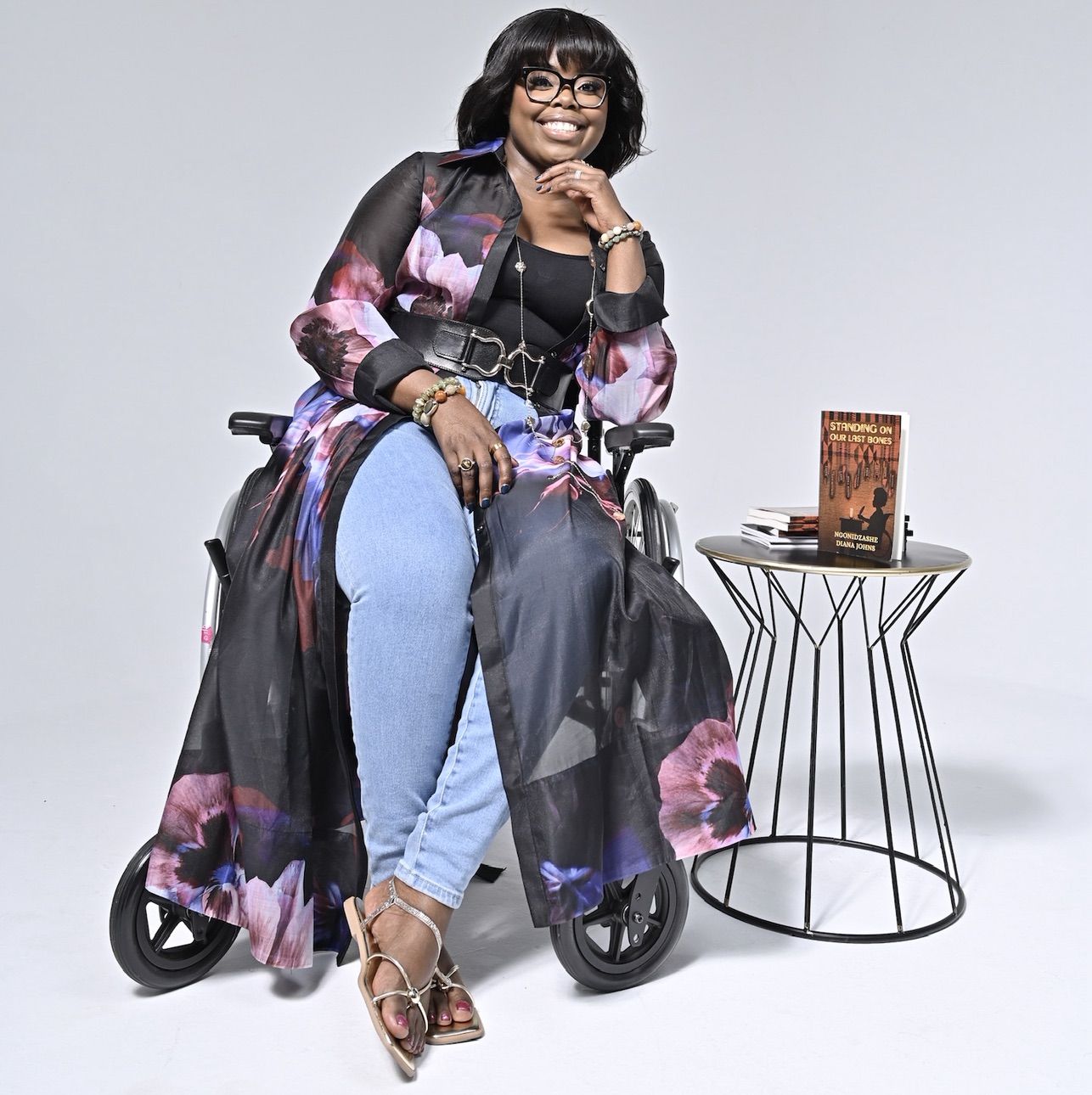
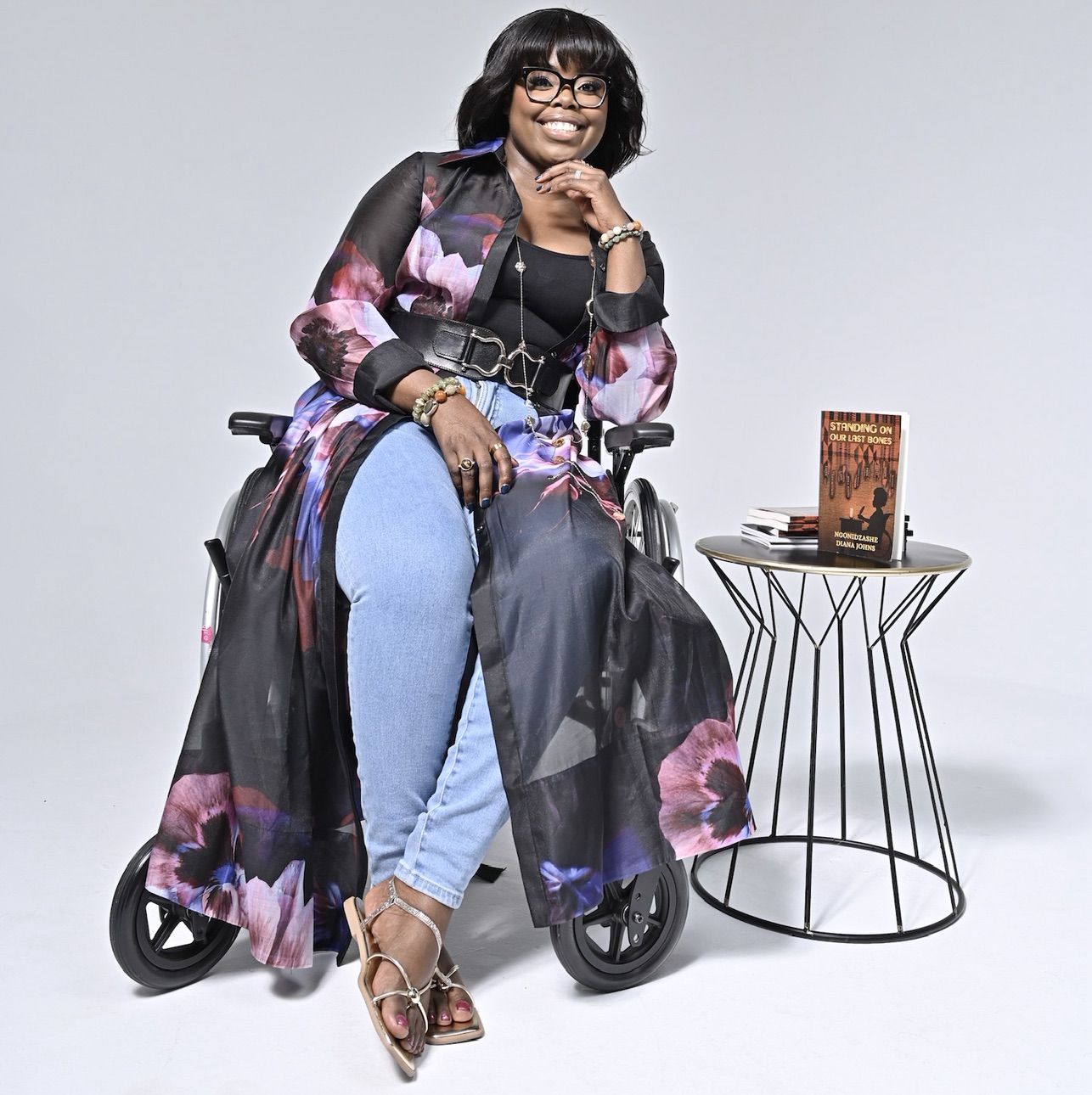
The Chiedza prototype has reached 1,000 users. I have published books, including Chiedza: Reflections on Darkness, Light, and the Moments in Between and Standing on Our Last Bones. I have taken this conversation into speaking engagements on chronic illness, healthcare, aftercare, resilience, leadership and human-centred technology. The S.A.F.E.R.™ Framework and Aftercare Mandate™ are registered intellectual property, and their principles are being carried into real-world work.
In November 2026, I am scheduled to speak at the upcoming TEDx at the Flourish Summit in South Africa, from 10–20 November. I will not be carrying a perfect recovery story onto that stage.
I will be carrying an honest one.
Unouya neyi?
My Gogo’s question was always close to the surface: Unouya neyi?
What will you come away with?
I want to come away from this season with more than scars. I want language that helps another woman recognise that she is not weak, dramatic or failing. I want systems that listen before collapse. I want healthcare that understands aftercare as part of treatment, not an optional kindness.
I want the next Ngoni to be believed sooner.
Not after years of explaining. Not after losing mobility, work, savings or hope. Not after her body has been forced to provide evidence through breaking.
The next woman should inherit more than my suffering. She should inherit my voice, my language and the doors I pushed open.
That is why I write. That is why I speak. That is why I build journals and frameworks. A page cannot replace medical care, but it can help someone record what is happening, name what they need and return to their own voice when the world tells them to doubt it.

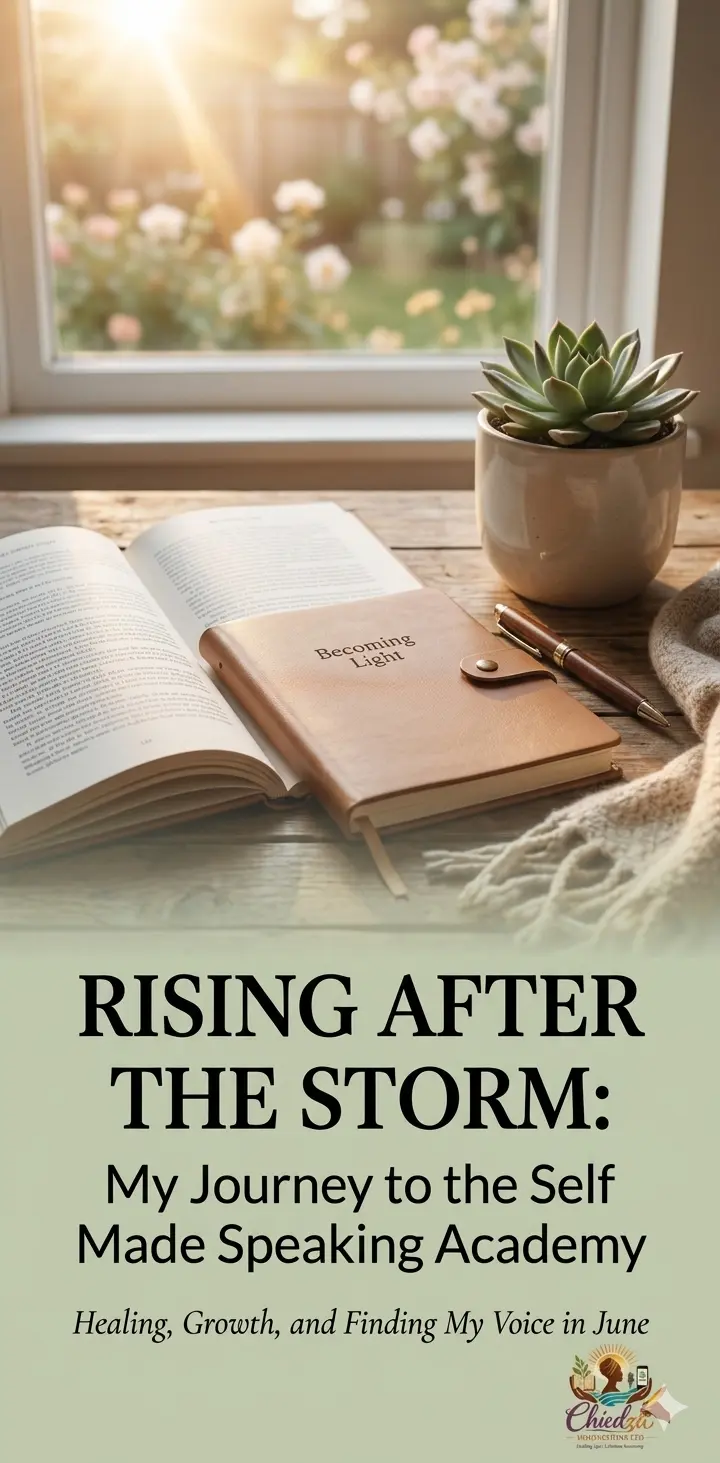
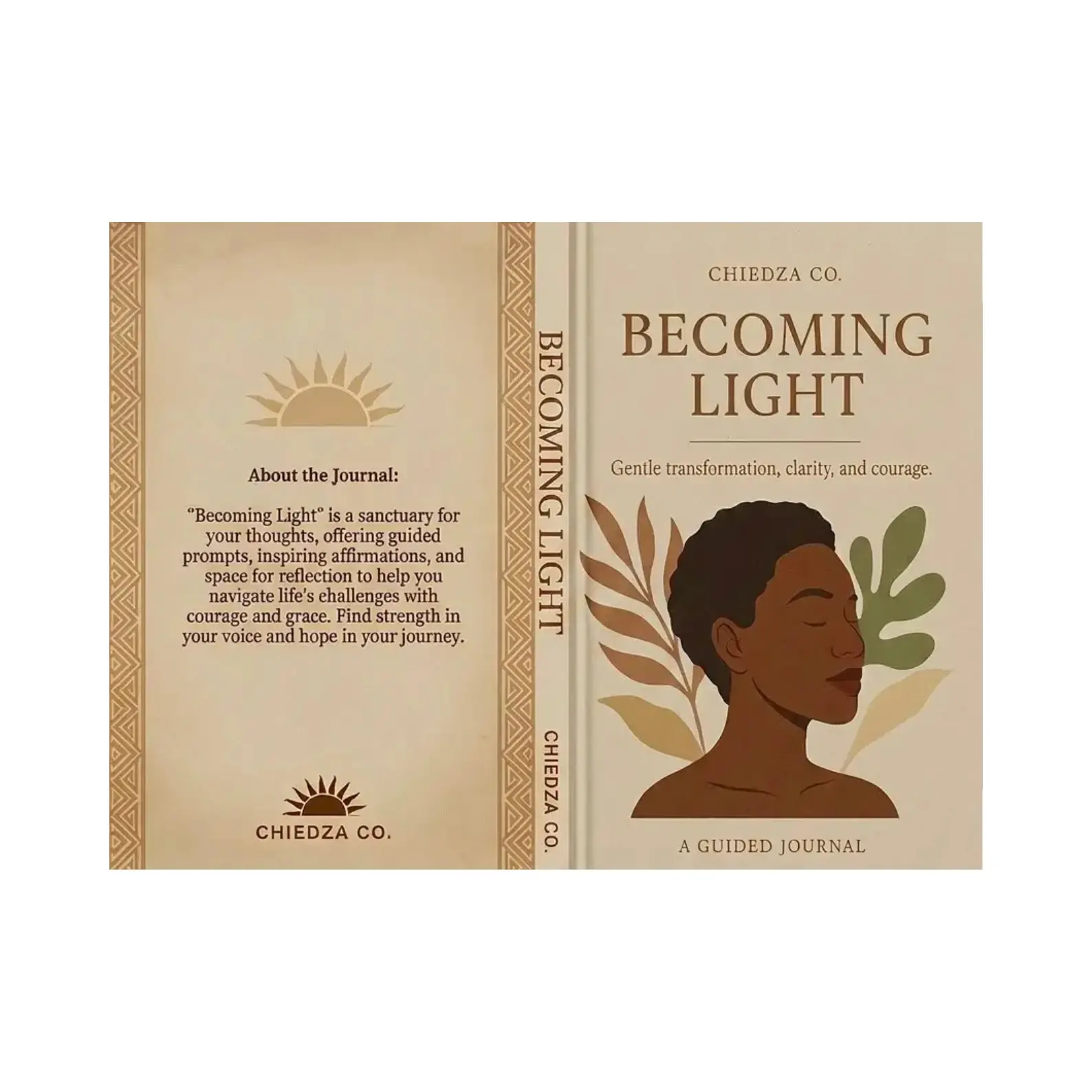
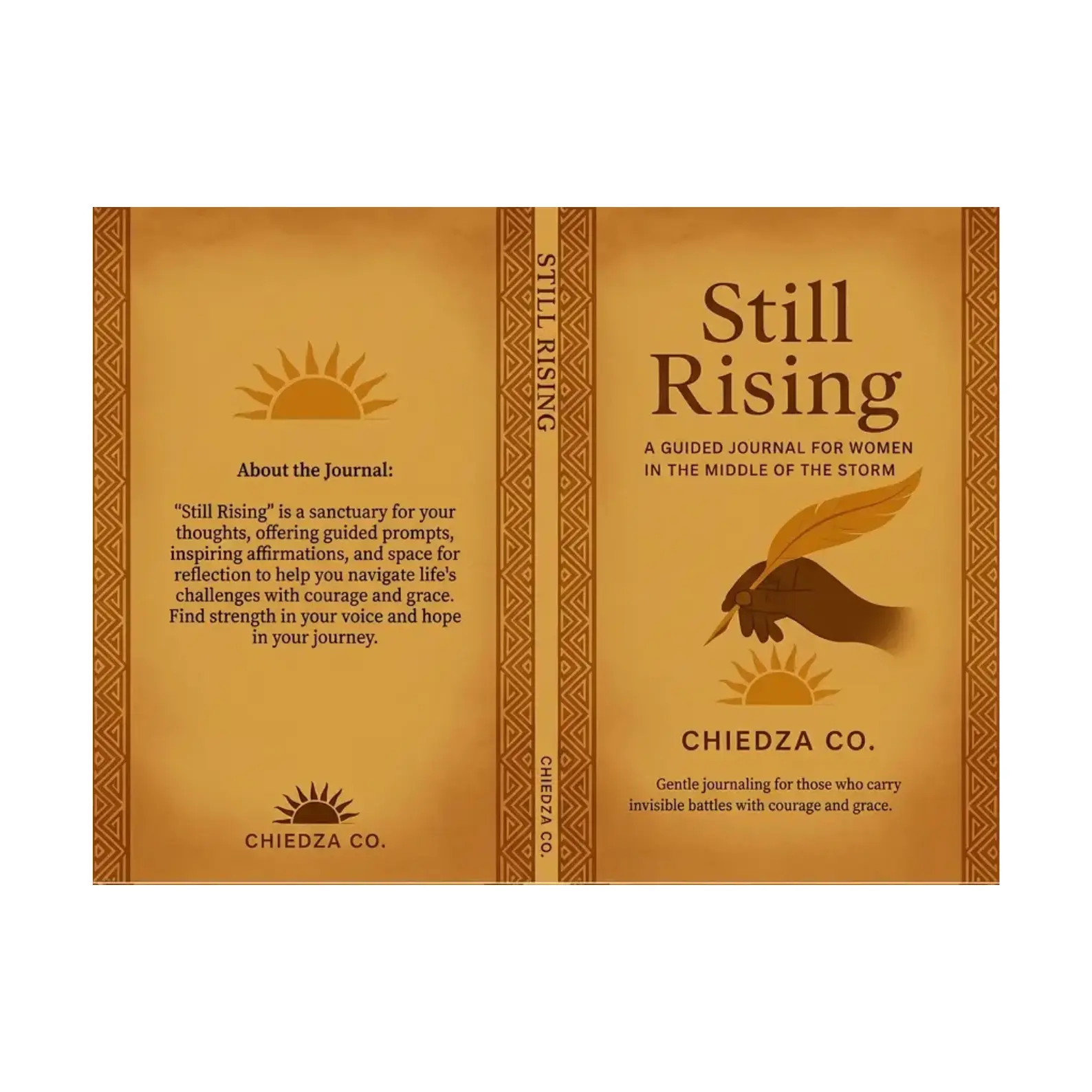
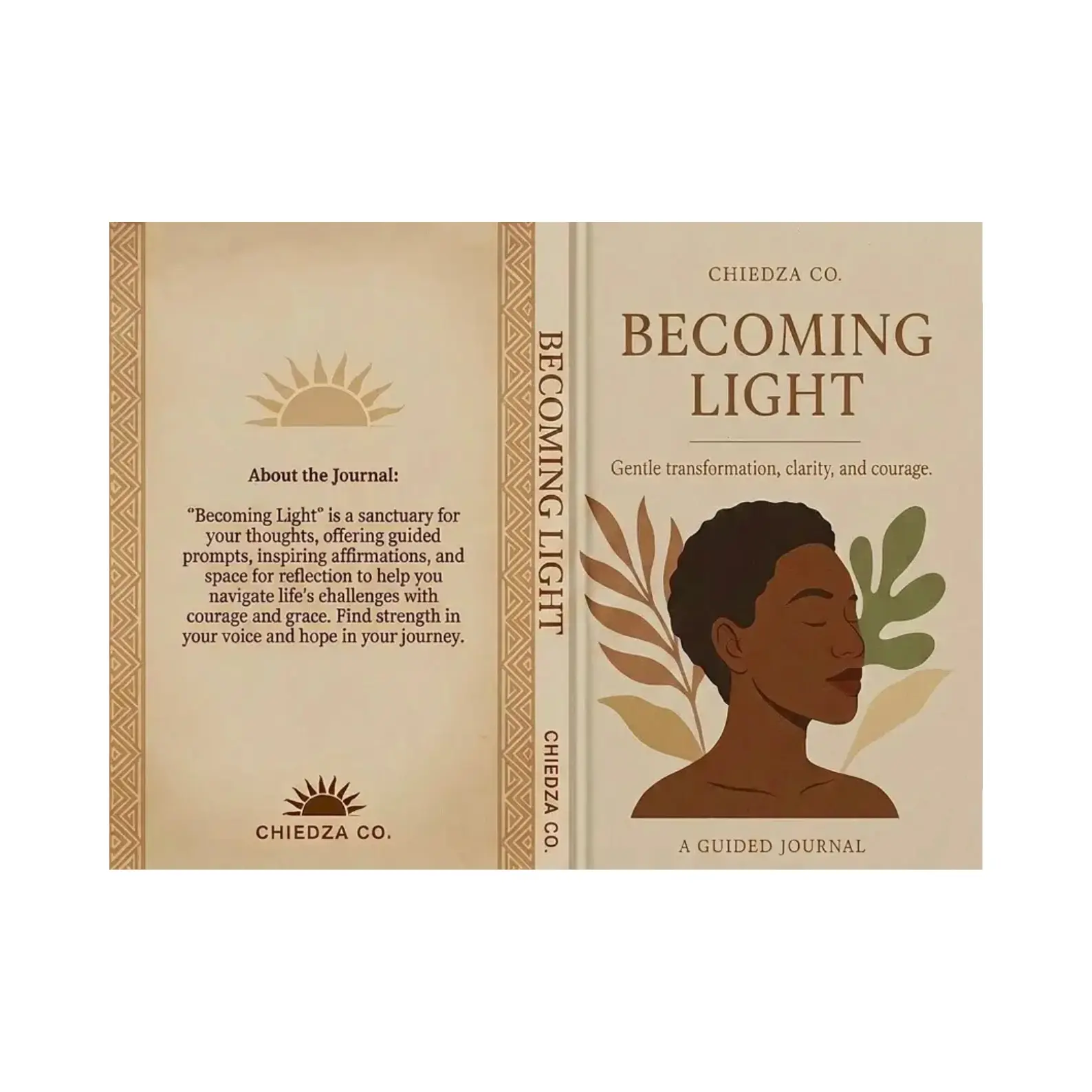
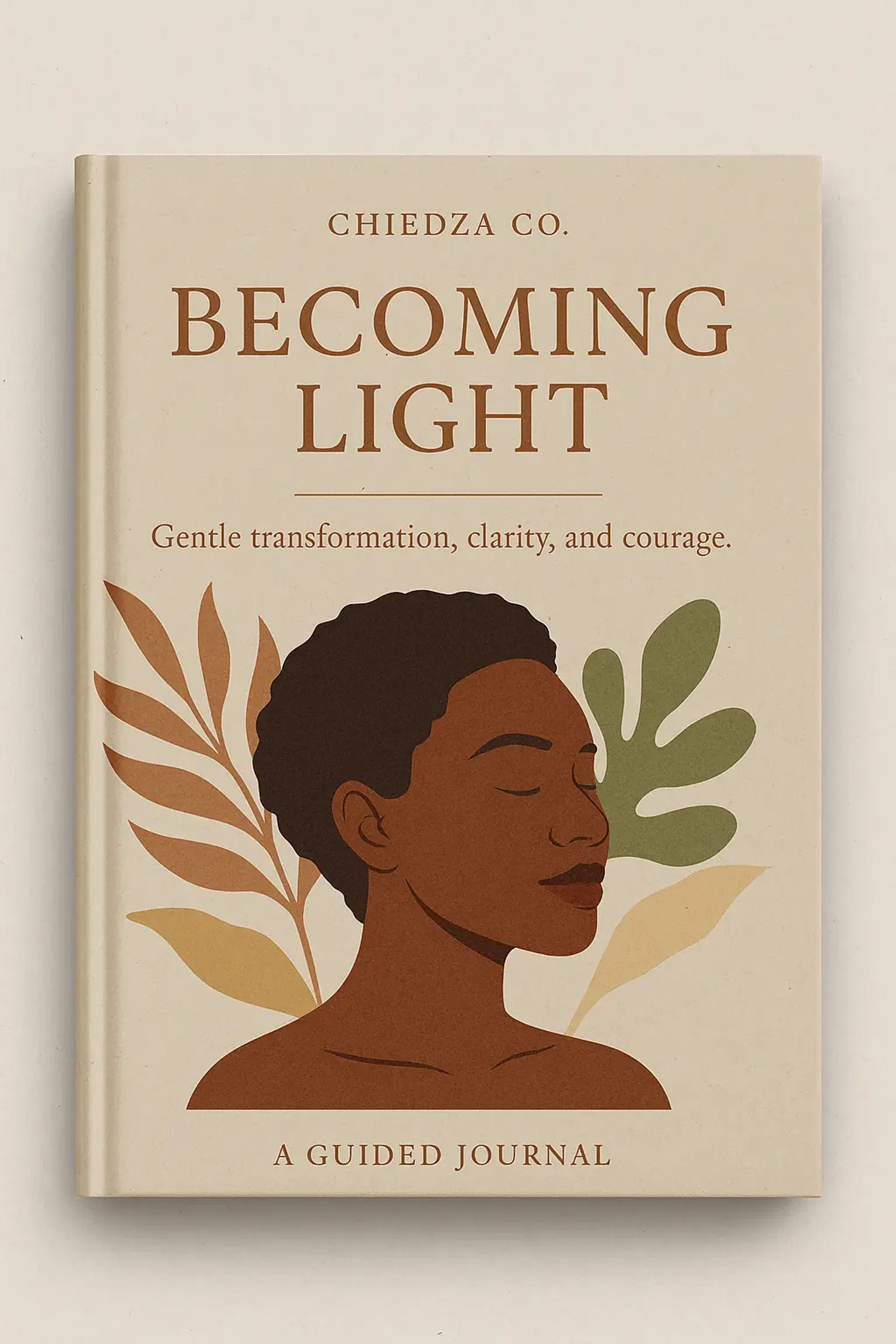
Still Rising was created for the woman navigating the storm. Becoming Light was created for the woman learning that gentle transformation is still transformation. These tools are not a substitute for diagnosis or treatment. They are invitations to pause, reflect and participate in your own story.
Because we carry more than memory.
We carry each other.
I do not know the name of the woman who will come after me. I may never meet her. But I want her road to be softer because I walked mine. I want her to know that something is not right is a complete sentence. I want her to ask for help without apologising. I want her to understand that strength is not measured by how much pain she can survive.
I was not only what I endured.
I was what I refused to pass on.
If you are navigating illness, grief, recovery or a life that has changed shape, you can explore Chiedza’s healing journals and reflective tools at chiedzaco.com. And if this story feels close to your own, please seek advice from a qualified healthcare professional who can understand your individual circumstances. This essay is a personal reflection, not medical advice or a substitute for diagnosis, treatment or urgent support.
I am still becoming. Still carrying light. Still building the map I once needed.
So the next Ngoni doesn’t have to.
Aftercare isn’t the final stage. It’s part of the architecture.
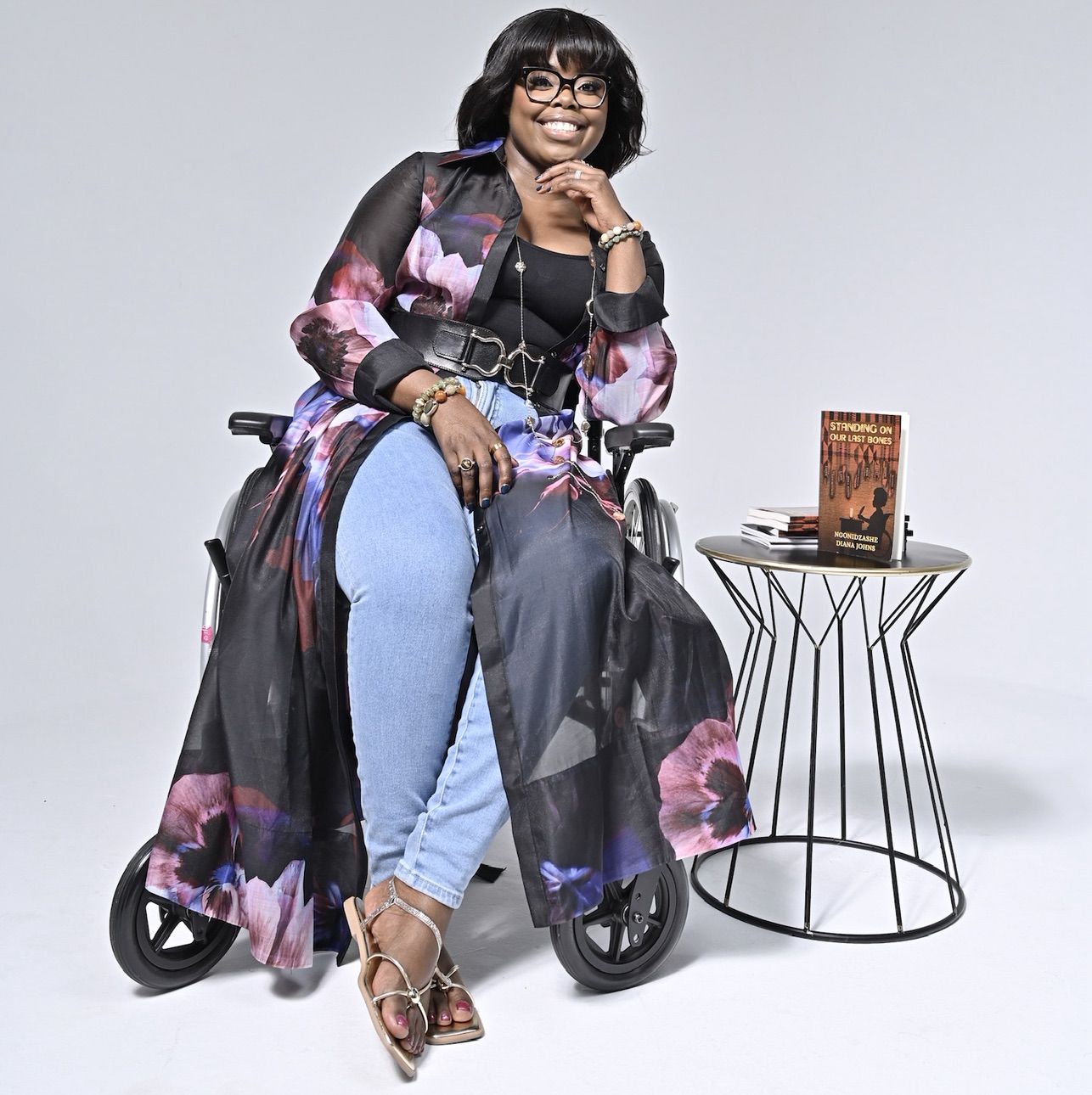
There is a particular kind of exhaustion that does not show up on a blood test.
It is the exhaustion of explaining the same symptoms again. The exhaustion of rehearsing your medical history before an appointment, wondering which details will be believed and which will be filed under anxiety. The exhaustion of smiling politely while someone suggests that perhaps your racing heart, crushing fatigue, pain, dizziness, allergic reactions, or inability to stand are really just stress wearing a dramatic hat.
I know that exhaustion.
Living with chronic illness can affect your mental health because illness changes your body, your plans, your independence, your relationships, and your sense of safety. But there is another layer we rarely discuss honestly: the psychological toll of not being believed.
That is the conversation I am taking to the Flourish stage in South Africa this November.
The part of chronic illness that follows me into the appointment
When I talk about the mental health impact of chronic illness, I am not suggesting that symptoms are “all in the mind”. Quite the opposite. I am saying that the mind is forced to live inside the body’s uncertainty.
Endometriosis and adenomyosis can mean chronic pain, disrupted sleep, hormonal changes, fertility concerns, and years of delayed diagnosis. POTS can mean dizziness, fainting, palpitations, fatigue, and a nervous system that does not respond to standing in the way it should. MCAS can bring unpredictable, frightening reactions that make ordinary environments feel like potential hazards.
The body is carrying a lot. The mind notices.
A 2024 systematic review and meta-analysis found that people with endometriosis had nearly three times the risk of anxiety and depression compared with people without the condition. The researchers reported relative risks of 2.82 for anxiety and 2.93 for depression. That does not mean every woman with endometriosis will develop a mental health condition. It does mean the emotional burden is not a personal failure or a lack of resilience. It is a documented part of the landscape.
Research on POTS makes another important distinction: POTS is an autonomic disorder, not a psychiatric disorder. People may experience anxiety, depression, fear, and psychological distress because of symptom burden and loss of function, but that does not mean anxiety caused the POTS. A racing heart is not proof that someone is “just panicking”. Sometimes the heart is racing because the autonomic nervous system is struggling. The body deserves investigation before interpretation.

When “it’s anxiety” becomes an injury
Anxiety can be real and still not be the whole explanation.
That sentence has taken me time to own because so many of us have been forced into a false choice: either our symptoms are physical, or our emotions are valid. We are told to choose one, as though a woman cannot have a heart rate problem and feel frightened by it. As though pain cannot cause depression. As though trauma cannot begin in a consulting room.
Medical gaslighting is not simply an annoying interaction. Repeated dismissal can erode self-trust. When a patient is told again and again that she is exaggerating, imagining things, being difficult, or overreacting, she may eventually start questioning her own body.
That is where the psychological harm deepens.
A recent review of qualitative research into chronic illness and symptom invalidation describes consequences including self-doubt, healthcare-related anxiety, avoidance of care, delayed diagnosis, and trauma-like responses. Research from Rutgers summarises findings across 151 qualitative studies involving more than 11,000 people living with conditions including fibromyalgia, long COVID, endometriosis, and lupus.
The trauma is not always one dramatic event. Sometimes it is cumulative: the appointment where you cried in the car, the scan that was never ordered, the symptom that was reduced to stress, the family member who stopped asking because the illness was taking too long.
Eventually, the hospital corridor can feel like a threat before you even arrive.
For Black women, this conversation also sits inside a longer history of whose pain is considered credible, whose bodies are treated as complicated, and whose distress is made to carry the blame. I do not want culturally grounded mental-health care to be an optional extra. I want it built into the conversation from the beginning.
I am not taking a polished survival story to Flourish
I am not travelling to South Africa to perform perfect healing.
I am taking the truth: chronic illness can make you anxious. It can make you depressed. It can make you grieve the person you were before your body became a full-time research project. It can leave you traumatised by the care you needed to survive.
And still, there can be a way forward.
The Flourish South Africa Summit runs from November 10–20, 2026, bringing together mental-health dialogue, leadership, cultural connection, service, and restoration. The published itinerary includes a TEDx experience on November 14 under the theme The Courage to Flourish.
That theme feels personal.
Courage, for me, is not the absence of fear. It is refusing to let fear become the author of my life. It is speaking about the mental-health consequences of illness without allowing anyone to use that conversation to erase the physical reality.
This is where my S.A.F.E.R.™ Framework meets the Aftercare Mandate™.

From “believe me” to “build care that continues”
The shorthand for the Aftercare Mandate is simple:
Believe. Track. Continue.
But simple does not mean easy.
Believe means taking a woman seriously before she has assembled a courtroom case against her own body. Track means noticing patterns over time rather than treating every appointment as an isolated incident. Continue means care does not stop because the headline has moved on, a scan is inconclusive, or an institution has run out of patience.
The S.A.F.E.R. Framework expands that commitment. It asks us to ACKNOWLEDGE what happened, FOLLOW THROUGH after the first conversation, TRACK & TRANSITION as needs change, EQUIP FOR RECOVERY, REINTEGRATE people into ordinary life, CONNECT TO CARE, ADAPT & LEARN, REACH THE UNREACHED, and EMPOWER THROUGH EVIDENCE.
That is not a motivational slogan. It is a structure for reducing the chaos.
It applies to public health systems, but it also applies to the way I have learned to care for myself. I acknowledge what my body is saying. I follow through instead of abandoning myself when the first answer is “we don’t know”. I track symptoms, questions, triggers, emotions, and recovery. I adapt without treating adaptation as defeat.
Most importantly, I stop confusing survival with silence.
The page became part of my care team
Journaling has not cured my chronic illness. Let’s be very clear about that before the internet starts selling notebooks as emergency medicine.
But writing has helped me notice what was happening inside me. It gave shape to the fear. It helped me prepare for appointments. It allowed me to record what happened on the days when brain fog made a perfect explanation impossible. It became a place where I could tell the truth without first making it palatable.
Research on expressive writing suggests small, meaningful average improvements in anxiety, stress, and trauma-related distress, although the benefits are not universal and journaling should not replace therapy or medical care. I find that honest limitation reassuring. The page is a tool, not a miracle worker.
For the woman who needs a gentle place to begin, Becoming Light offers a 45-day guided path through reflection, gratitude, mindfulness, and self-discovery.
For the woman who is still in the storm and needs language for resilience, Still Rising creates space to reflect, reconnect with purpose, and keep going without pretending every day is inspirational.
And for the woman who has come through an intense season but knows recovery requires more than a triumphant before-and-after photograph, The Aftercare Journal supports 60 days of reflection, healthy habits, and intentional continuation.
The S.A.F.E.R. workbook and coaching pathway are designed to take those ideas further: from naming what happened to building practical systems for what comes next.
The hidden truth I want to leave on the stage
Here is the truth nobody wants to discuss about chronic illness:
You can be grateful to be alive and still be grieving.
You can be resilient and still need help.
You can be anxious because your body has become unpredictable without being responsible for the illness itself.
You can forgive yourself for the days you cannot work, socialise, exercise, parent, pray, plan, or perform strength on demand.
Mental health support is not evidence that the illness is imaginary. It is evidence that the person living through it deserves whole-person care.
That is what I am carrying to Flourish: not a neat ending, but a more honest framework. One that believes women before they break themselves trying to prove they are broken. One that tracks what happens after the appointment, after the diagnosis, after the public-health campaign, after everyone else goes home. One that continues.
If you are navigating chronic illness, post-vaccine effects, medical trauma, anxiety, depression, or the exhausting work of reclaiming trust in your own body, please do not carry it alone. A journal can help you begin the conversation, but it is not a substitute for qualified medical or mental-health support. Speak with a healthcare professional who will take your symptoms seriously. If you may harm yourself or are in immediate danger, contact your local emergency service or crisis line now.
I am still learning the path.
But I know this much:
Believe. Track. Continue.
And when I step onto that stage in South Africa, I will be speaking for the woman who has been told to doubt herself for too long.
She is not difficult.
She is not dramatic.
She is still here.
There was a time when I thought a 30-day challenge meant proving something.
Wake up earlier. Do more. Track everything. Never miss a day. Turn your life into a colour-coded spreadsheet and call the exhaustion “discipline”.
That kind of challenge may work when your body is cooperating and your life has room for relentless momentum. But when you are living with chronic illness, burnout, grief, disability, or a life transition, traditional challenges can feel less like support and more like a boot camp with motivational quotes.
I know this because my body has forced me to pause in ways I never planned. Chronic pain, endometriosis and adenomyosis, temporary vision loss, wheelchair use, and the long work of self-advocacy taught me that pushing harder is not always the same as moving forward.
Sometimes, the bravest thing I can do is listen sooner.
So this is a different kind of 30-day challenge. It is not about becoming a new woman by force. It is about returning to yourself with grace. It is built around pacing, safety, reflection, and the belief that healing needs aftercare, not just applause for surviving the crisis.
Welcome to the 30-Day Gentle Rise Challenge.
Our energy is simple:
Believe. Track. Continue.
You do not need to complete every practice perfectly. You do not need to start again from Day One because you needed rest on Day Four. You are allowed to adapt this challenge to your body, your capacity, and your actual life.
This is a rhythm, not a race.
This challenge is for reflection and personal support. It is not medical advice or a replacement for professional care. Please adapt any practice to your needs and seek appropriate medical or mental-health support when necessary.
Before You Begin: The Gentle Rules
I want you to remove the word “should” from the room.
For the next 30 days:
- The smallest version counts.
- Rest is participation.
- Missing a day does not mean you have failed.
- Your body is allowed to give feedback.
- You can write one sentence instead of three pages.
- You can pause the challenge and return when you are ready.
- You are not behind.
Each day, use your journal as a quiet anchor. In the morning, ask yourself: How am I arriving today? In the evening, ask: What did I learn about my needs?
You can use the StillRising 30-Day Guided Journal for the challenge itself, then allow Becoming Light to carry you into the next season of gentle transformation.
Week One: Acknowledge & Unload
Days 1–7
The first week is not about fixing yourself. It is about telling the truth.
I have learned that the body often carries what the mouth has been trained to minimise. The grief of cancelled plans. The anger of not being believed. The exhaustion of explaining an invisible illness for the hundredth time. The quiet humiliation of needing help with things you once did without thinking.
We cannot gently rise while pretending we were never hurt.
Day 1: Name the season
Write: “The season I am in is…”
Do not make it sound beautiful. If the truth is “I am tired and uncertain,” let that be enough.
Day 2: Notice what you have been carrying
List three responsibilities, expectations, or emotions that feel heavier than they should. Beside each one, write: mine, shared, or not mine.
You may discover that you have been carrying other people’s comfort like it is a second handbag.
Day 3: Honour the grief
Write about one thing you have lost, postponed, or had to do differently. You do not have to turn the loss into a lesson today. Some things need to be mourned before they can be transformed.
Day 4: Put down the unearned hustle
Ask: Who taught me that rest must be earned?
Then write a new sentence: “My worth is not measured by how much I can produce while unwell.”
Day 5: Listen without correcting
Spend five quiet minutes noticing your body. What feels tight? Heavy? Tender? Restless? Do not argue with the answer. Your body is not being dramatic. It is communicating.
Day 6: Find one safe comfort
Choose something uncomplicated: a warm drink, a familiar song, a soft blanket, prayer, sunlight through the window, or a message to someone safe.
Comfort is not a consolation prize. It is information.
Day 7: Weekly reflection
Complete this sentence:
“This week, I gave myself permission to…”
If the answer is “admit I am struggling,” that is not a small answer. That is the beginning of honesty.
Week Two: The Art of Pacing
Days 8–14
Pacing changed the way I understand strength.
Before, I often waited until my body was shouting before I listened. I treated the early whispers as inconveniences: the sudden heaviness, the headache, the change in vision, the need to lie down, the irritation that arrived before the fatigue.
Now I try to notice the whisper before it becomes a roar.
Pacing is not laziness. It is a practical relationship with capacity. It asks me to work with my energy instead of making promises on behalf of a body I have not consulted.
Day 8: Track your energy honestly
Check in during the morning, afternoon, and evening. Use words rather than numbers if numbers feel stressful: steady, fading, fragile, restored, overloaded.
You are collecting information, not grading yourself.
Day 9: Identify your early warning signs
What tells you that you are approaching your limit? Maybe you become unusually quiet, lose words, feel dizzy, experience pain, or start rushing.
Write your signs down. Awareness is a form of protection.
Day 10: Make one task smaller
Cut one task in half. Reply to one message instead of clearing your inbox. Wash only what you need. Work for ten minutes, then pause.
Small is not pointless. Small is repeatable.
Day 11: Schedule rest before you need it
Put one rest period into your day before the crash arrives. It may be five minutes in a chair or an hour in bed. Planned rest is not surrender. It is maintenance.
Day 12: Create a low-energy care list
Write five things you can do on a difficult day. Include options that require almost nothing: listening to an audiobook, opening the curtains, drinking water, texting “I’m having a hard day,” or simply breathing.
Day 13: Ask for low-barrier support
Is there one appointment, prescription, message, form, or conversation you have been avoiding because it feels too difficult? Break it into the first reachable step. Find the number. Draft the message. Ask someone to sit with you while you do it.
Day 14: Track what helped
Write: “My energy responded well to…”
This is the “Track” part of Believe. Track. Continue. You are building a personal map, not following a rigid formula.
For a journal designed around healing, reflection, and sustained care, explore The Aftercare Journal. Because care should not end simply because the emergency has passed.
Week Three: Boundaries & Sanctuary
Days 15–21
I used to think boundaries were mostly about saying no. Now I understand them as instructions for safety.
A boundary can be a shorter visit. A closed door. A delayed response. A quieter room. A decision not to explain your pain to someone committed to misunderstanding it.
When your energy is limited, every environment has a cost. This week is about noticing the cost and creating more sanctuary around yourself.
Day 15: Name what drains you
Write down the people, spaces, conversations, and habits that leave you feeling scattered or depleted. You do not need to solve every item. You only need to see it clearly.
Day 16: Write one protective sentence
Try:
- “I cannot take that on today.”
- “I need more notice before I commit.”
- “I am resting and will respond when I have capacity.”
- “That does not work for me.”
You do not need a twelve-slide presentation to justify a boundary.
Day 17: Protect one transition
Create a buffer between activities. Do not move directly from a demanding call into another responsibility if you can help it. Give your nervous system a doorway.
Day 18: Make one corner restorative
Choose a small area: a bedside table, desk, chair, or corner of the sofa. Remove one source of clutter and add one comforting object. Sanctuary does not require a dramatic home makeover. Sometimes it is just finding your charger.
Day 19: Practise receiving
Let someone help. Accept the lift, the meal, the reminder, the listening ear. Receiving support does not make you a burden. It makes care communal.
Day 20: Release one performance
What are you pretending to be fine about? Write the truth privately. You do not have to perform wellness in your own journal.
Day 21: Review your boundaries
Ask: What became safer when I stopped over-explaining?
Keep that answer close.
Week Four: Rising Softly
Days 22–28
Gentle transformation is still transformation.
I do not need to become unrecognisable to prove that I have healed. Sometimes becoming looks like trusting myself sooner. Sometimes it looks like choosing an accessible path rather than the impressive one. Sometimes it looks like believing that my life can still hold beauty after it has changed shape.
This is not the week for pressure. It is the week for possibility.
Day 22: Describe your softer future
Write about a day that feels sustainable: not perfect, productive, or enviable. What does it sound like? What is absent? What is present?
Day 23: Revisit an old desire
What did you want before survival became your full-time occupation? You do not have to pursue it immediately. Just write its name down and welcome it back.
Day 24: Choose a tiny act of becoming
Read one page. Send one email. Wear the colour you love. Open the document. Pray. Create. The action is not meant to prove anything. It is a gentle vote for the woman you are becoming.
Day 25: Let accessibility be part of the dream
Ask: What would make this goal kinder to my body?
Perhaps it needs breaks, remote access, a wheelchair-friendly setting, help from another person, or a slower timeline. Adaptation is not cheating. It is intelligent design.
Day 26: Write a new identity statement
Complete:
“I am a woman who…”
Try “listens,” “receives,” “creates,” “rests,” “asks,” “continues,” or “rises without abandoning herself.”
Day 27: Celebrate evidence
List the ways you have continued: not just the visible achievements. You attended the appointment. You rested before the crash. You told the truth. You kept going in a form nobody else could see.
Day 28: Write your gentle rise declaration
Begin with:
“I am no longer available for…”
Then:
“I am making room for…”
Days 29–30: Continue With Aftercare
The final two days are not a graduation ceremony where you are sent back into the world with a certificate and no support.
They are an invitation to continue.
Day 29: Choose your three anchors
Select three practices to carry forward:
- A morning check-in.
- A pacing pause.
- An evening journal reflection.
Make each one small enough to survive a difficult day.
Day 30: Build your personal rhythm
Write a simple aftercare promise:
“When life forces me to pause, I will…”
Perhaps you will believe your body sooner. Track your energy without shame. Continue with support instead of isolation. Return to your journal. Ask for help before the crisis becomes unmanageable.
That is the heart of the S.A.F.E.R.™ Framework and the Aftercare Mandate™ energy: safety, dignity, and what comes after.
Your Gentle Rise Begins Here
You do not need to wait for a new month, a perfect Monday, or a sudden reserve of energy.
Begin with one page.
The StillRising 30-Day Guided Journal can hold this challenge with you, while Becoming Light offers a longer path into reflection, hope, and intentional transformation. You can also explore the wider Chiedza collection or visit the Journal Hub for more reflective resources.
Come to chiedzaco.com, choose the tool that meets you where you are, and join this challenge in the only way that matters:
Believe in your capacity for renewal. Track what your body is teaching you. Continue: gently, honestly, and at your own pace.
You are not behind.
You are not broken.
You are still becoming.
Let’s be entirely honest for a second. If you are reading this while propped up on three pillows, battling a flare-up of Endometriosis, Adenomyosis, MCAS, POTS, or picking up the pieces after post-vax neurological surprises that doctors dismissed with a sympathetic blink and a pamphlet, I see you. I really, truly see you.
We live in a medical world that loves neat little boxes. They want your pain categorized by ICD-10 codes, your fatigue minimized into a lifestyle adjustment, and your grief over the life you used to live politely tucked away out of sight. But when you are standing on your last bones: operating on fumes, faith, and stubborn resilience: neat little boxes don't hold the weight of your reality.
That is why I created Chiedza Innovations and why we keep showing up for this recurring Tuesday/Thursday series. We aren't here to offer you toxic positivity or tell you to "just drink more water." We are here to talk about what it actually takes to navigate chronic illness, quiet the crushing weight of grief, and step into an authentic rebirth when your body feels like it's holding you hostage.
When Illness Shrinks Your World to a Symptom List
Let’s talk about the erosion of identity. When you live with complex chronic conditions like POTS and MCAS, your world shrinks with terrifying speed. One day you are running businesses, attending conferences, and dancing; the next, standing up too fast feels like a carnival ride straight to the ER, and eating the wrong meal triggers an immune rebellion.
Before you know it, medical professionals, well-meaning friends, and even your own internal monologue reduce you to a walking chart of symptoms, lab results, and medication schedules. You stop being a woman with a rich history, creative dreams, and a vibrant soul. You become the patient.
This is where my journey birthed the S.A.F.E.R.™ Framework: not as a clinical theory, but as a survival manual born from my own wheelchair, my own hospital stays, and my own dark nights of the soul.

The S.A.F.E.R.™ Framework: Coming Back to Yourself
- S : See Yourself Whole: Living with chronic illness can shrink your identity to symptoms, scans, and prescriptions. This pillar helps you come back to the truth that you are still whole. Your worth is not tethered to your productivity, your physical stamina, or whether your nervous system is cooperating today. You are more than your diagnosis.
- A : Attend to Your Truth: Every part of your story gets a seat at the table: your physical pain, your righteous anger, your bone-deep fatigue, your flickering faith, and your stubborn hope. No bypassing the hard parts. We don't slap a smile on trauma here. If you need to rage against the medical gaslighting, write it down.
- F : Find Your Way Forward: Forget toxic hustle culture and unrealistic wellness routines. This is about small, grounded, sustainable steps that respect your unpredictable energy and capacity. Some days, moving forward looks like brushing your teeth. Other days, it looks like writing a book chapter or stepping onto a stage. Both are valid.
- E : Expand Into Your Becoming: Gentle expansion, not performance. This isn't about becoming someone new to impress the world; it’s about becoming more of who you already are beneath the layers of illness and grief.
- R : Root & Rise: Roots first. You cannot rise without safety, truth, rest, reflection, and deep self-trust. Once those roots are anchored in your own self-worth, you rise with intention: not external pressure.
If you are looking for a physical companion to guide you through these five pillars, our Standing On Our Last Bones Journal was crafted precisely for this kind of untamed, resilient reckoning.
The Medical Maze and The Aftercare Mandate™
Navigating the healthcare system with multi-system chronic illnesses is an extreme sport. You recount your medical trauma to your fifth specialist in six months, only to be told your labs are "normal" while your body screams in agony. Gaslighting in examination rooms is its own special brand of grief.
It taught me that surviving isn't just about fighting for a diagnosis; it’s about surviving the care system itself. That realization forced me to build The Aftercare Mandate™, a blueprint designed to ensure that no one slips through the cracks of a broken medical architecture.

The Nine Pillars of The Aftercare Mandate™
- A : ACKNOWLEDGE: Every experience is real and valid. Your pain must be seen before it is solved. No more second-guessing your lived reality.
- F : FOLLOW THROUGH: No referral is the end of the road. Every single specialist handoff is the beginning of continued, coordinated care.
- T : TRACK & TRANSITION: Data makes the invisible visible. Keep your own logs, track your flares, and recognize that every health transition is a high-vulnerability window.
- E : EQUIP FOR RECOVERY: You need tools, not just temporary support. We must build lasting physiological and emotional capacity for the long road beyond acute crises.
- R : REINTEGRATE: The return home from the hospital or a major flare is not the end: it is the most overlooked and most critical moment of healing. How do you re-enter your life without collapsing back into burnout?
- C : CONNECT TO CARE: Professional care is a fundamental human right, not a privilege reserved for the connected. We must build bridges deliberately.
- A : ADAPT & LEARN: A medical or support system that does not learn cannot serve. Iteration is fidelity to the human being sitting across the desk.
- R : REACH THE UNREACHED: The Mandate is completely meaningless if it only serves those who are already visible, loud, or privileged within the system. We go where the suffering is silent.
- E : EMPOWER THROUGH EVIDENCE: You: the patient, the survivor, the woman navigating the storm: are the evidence. You are the mandate. You are the future of medicine.
To help you track your triggers, recovery windows, and emotional recovery with grace, our The Aftercare Journal provides a structured sanctuary where your data and your story coexist.
From Isolation to the Global Stage: Looking Toward South Africa
When your world is restricted by chronic pain, it is easy to feel isolated, as though your struggles exist in a vacuum. But isolation is a lie designed to keep our voices small.
That is why moments of outward expansion matter so deeply. I am beyond honored and thrilled to announce that I will be taking these exact truths: our shared battles with chronic illness, the power of the S.A.F.E.R.™ Framework, and the urgent necessity of reclaiming our stories: to the global stage at the upcoming TEDx talk at the Flourish Summit in South Africa (November 10-20, 2026).

This isn't just my talk; it belongs to every woman who has ever felt invisible in a waiting room, every person who has wept over a lost career, and every soul learning how to bloom in the wreckage of chronic illness. We are taking our stories from the margins to the main stage.
If you are ready to begin your own journey of gentle, sustainable transformation: whether you are working through 45 days of self-discovery with our Becoming Light 45-Day Journal or simply learning how to rest without guilt: remember that transformation doesn't require perfection. It requires permission.
Give yourself permission to pause. Give yourself permission to heal. And above all, give yourself permission to write your own story.
Explore Our Tools for Your Healing Journey
- For Resilience & Grit: Standing On Our Last Bones Journal
- For Gentle Transformation: Becoming Light 45-Day Journal
- For Tracking & Recovery: The Aftercare Journal

If you had told me five years ago: back when my body was screaming at me through chronic illness, burnout was my full-time job, and grief felt like an uninvited roommate that refused to pay rent: that my favorite day of the week would be Friday evening, I would have laughed until I cried.
Back then, Friday wasn't a sanctuary. It was the frantic finishing line of a relentless marathon. I was the queen of pushing through, the master of running on fumes, and a card-carrying member of the hustle culture support group. I thought rest was something you earned after you fixed everything, after you checked off every single box, after you finally proved your worth to a world that demands a piece of you at every turn.
Spoiler alert: that day never came. Instead, my body forced a full system shutdown.
Learning rest the hard way is a brutal teacher, but it is an honest one. It stripped away my illusions of control and forced me back to the ancient text, back to the garden, and back to the breathtaking heartbeat of Genesis 2. That’s where I discovered that God didn't invent the Sabbath as a rigid rulebook to police our productivity. He invented it as a love letter. A romance with stillness. A divine invitation called Menuha.
Beyond the Rulebook: Falling in Love with Menuha
We’ve inherited centuries of religious baggage that frames the Sabbath as a grumpy list of "Thou Shalt Nots." Don't work, don't play, don't breathe too hard, or the cosmic monitor will be disappointed. No wonder so many of us ran screaming in the opposite direction toward caffeine-fueled independence.
But when you look at Genesis 2:1–3, something extraordinary happens. God finishes the masterpiece of creation: every spinning galaxy, every whispering leaf, every vibrant hue of humanity: and He doesn't just stop. The Hebrew text tells us He enters into shabbat (cessation), which ushers in Menuha.
What is Menuha? According to brilliant biblical scholars like Abraham Joshua Heschel, Menuha isn't just the absence of labor; it isn't mere physical collapse on a Sunday afternoon while scrolling through your phone. Menuha is a positive, glowing reality. It is tranquility, serenity, harmony, and profound joy. It is the spiritual equivalent of exhaling a breath you didn't even realize you were holding. God didn't rest because He was exhausted from a hard week's work; He rested because creation had reached its glorious crescendo, and it was time to simply be with what He loved.

When I first understood Menuha, it shattered my entire worldview. The Sabbath wasn't a prison guard; it was a bridal chamber. It was God whispering across the centuries: "Come away with Me. Leave the noise at the door. Let me remind you who you are when you aren't producing anything."
Fall in love with that kind of rest, and your entire life begins to shift.
My Weekly Sunset Sabbath Ritual: From Chaos to Sacred Pause
Recovering from chronic illness and burnout meant I had to unlearn the frantic pace of modern life and design rituals that felt gentle, accessible, and deeply soul-nourishing. I didn't need another complex routine; I needed a sacred pause.
Here is how my Friday evening sunset Sabbath unfolds: not as a strict law, but as a weekly homecoming.
As the sun begins to dip below the horizon, casting those warm golden-hour hues across my living room, I intentionally power down my devices. Yes, all of them. The notifications can wait; my soul cannot. I light a simple beeswax candle, brew a warm cup of herbal tea, and open my journal.
This isn't the time for strategic planning or task lists. This is the sacred space where my healing journey truly takes root. I use the Still Rising Guided Journal to anchor myself in the truth that even in the middle of life's fiercest storms, we are still rising. I write down where I felt God's grace holding me together through the week, and I gently release the disappointments, the grief, and the unmet expectations into the quiet.
Later in the evening, as stillness settles over the house, I transition from survival mode into blossoming. This is where my trusty self care journal becomes my sanctuary. Inside the pages of the Becoming Light 45-Day Journal, I lean into gentle self-discovery. Instead of forcing manifestation through sheer willpower: the kind of toxic hustle disguised as personal development: I practice a different kind of manifestation journal work: aligning my desires with the quiet assurance that I am already deeply loved, fully seen, and wonderfully made.
It’s astonishing how putting pen to paper in a sacred, unhurried space rewires your nervous system. You stop negotiating your worth based on your output. You remember that your breath is a gift, your story matters, and your healing is non-negotiable.
Crafting Your Own Sanctuary of Stillness
You don't need a sprawling estate or an empty schedule to fall in love with sacred rest. You just need intention and permission. Here are three gentle ways to weave a weekly sunset Sabbath into your own rhythm:
- The Sundown Switch: Choose a specific moment on Friday evening when the sun begins to set. Let that visual cue be your trigger to close your laptop, silence your phone, and transition from doing to being.
- The Honest Page: Grab a dedicated notebook: like our Still Rising Companion Journal: and dump the mental clutter. Don't edit your thoughts. Let your grief, your gratitude, and your weariness spill onto the paper without judgment.
- The Delight Practice: Engage your senses in something purely pleasurable and non-productive. Listen to a soothing playlist, wrap yourself in your favorite textured throw, or savor a cup of tea without multitasking. Let delight become your spiritual discipline.

Coming Home to Yourself
Sister, if you are reading this while nursing a weary soul, a tired body, or a broken heart, hear me closely: you were never meant to carry the weight of the world on your shoulders. The universe was spinning long before your to-do list existed, and it will keep spinning while you rest.
The Sabbath is waiting for you at sunset. It’s warm, it’s inviting, and it holds space for every messy, beautiful part of your story.
Give yourself permission to pause. Step into the sanctuary of Menuha. And if you need a gentle companion to walk with you through the stillness, explore our collection of guided journals and digital resources at Chiedza Innovations.
Your story is still being written: and sometimes, the most powerful chapter begins the moment you put the pen down and simply rest.

Welcome back to The Healing Path, our sacred Tuesday space where we pull back the glossy curtain of wellness culture and talk about what it actually takes to navigate chronic illness: whether you’re taming the fire of endometriosis and adenomyosis, pacing through the unpredictable waves of MCAS and POTS, managing post-vaccination immune fallout, or simply keeping your mental health intact when your nervous system feels like it’s permanently wired to a smoke detector.
If you are anything like me, you’ve spent a lifetime internalizing a very loud, very persuasive lie: Your worth is measured by your output.
We’ve all swallowed the productivity-bait narrative. We push through brain fog with extra coffee, answer emails during a migraine flare, and apologize profusely for needing a moment to breathe: as if existing in a body that requires accommodations is some kind of moral failure. But let’s set the record straight right here and now. The work we do just to stay alive, symptom-manage, and advocate for ourselves is monumental. And when we choose to stop? When we close the laptop, pull the duvet up to our chins, and refuse to produce? That isn’t laziness. That is resistance.
The Weight No One Sees: Unpacking the Invisible Labor
Sociologists and medical literature love to talk about the "patient role," but they rarely capture the sheer exhausting administrative, emotional, and physical gymnastics required to navigate chronic illness.
Think about your average Tuesday. Before you’ve even had breakfast, you’ve performed an internal diagnostic scan: How dizzy am I? Is my heart rate cooperating today? Can I wear structured clothing, or do I need ultra-soft fabrics to avoid triggering nerve pain? You’ve checked medication refill schedules, coordinated with specialists who look at you with polite skepticism, and mentally budgeted your energy units like a venture capitalist managing a failing startup.
This is the invisible labor of healing. It is unpaid, largely unrecognized, and constant. It’s the emotional labor of smiling politely when someone says, "You don’t look sick!" It’s the cognitive load of researching your own treatment plans because mainstream medicine gave you ten minutes and a pat on the head.
To break free from this cycle, we have to start by honoring our foundation: ACKNOWLEDGE. Every ache, every cognitive lapse, every flash of grief for the life you had before: it is real. You are not imagining it, and you do not need anyone’s permission stamp to validate your reality.
Why Rest Is Radical
In a world that monetizes our exhaustion, choosing to rest is a revolutionary act. When you have a chronic condition, rest is not a reward you earn after finishing your to-do list; it is a clinical and spiritual necessity. It is the boundary line you draw in the sand saying, "My body is a temple, not an assembly line."
For too long, women: especially Black and African women carrying generational expectations of superhuman strength: have been conditioned to believe that rest must be justified by collapse. We wait until our bodies stage a full mutiny before we give ourselves permission to pause.
We need an Aftercare Mandate™ that changes this script. We need to shift from frantic striving to intentional pacing. This brings us to the S.A.F.E.R.™ Framework, our blueprint for navigating the invisible labor of healing without losing our souls in the process:
- S : See and Name the Labor: Acknowledge that managing your health is real, heavy work. Stop dismissing your symptom-tracking, appointment-coordinating, and pacing efforts as "doing nothing."
- A : Align Care with Lived Reality: Ditch rigid, one-size-fits-all wellness advice. Your care plan must bend with your flare-ups, honoring the dynamic nature of your body.
- F : Facilitate Pacing and Flexibility: Build rest into your calendar the same way you schedule board meetings or doctor's visits. Pacing is how we protect our spark from burning out entirely.
- E : Ensure Environmental and Social Support: Curate your circle. Surround yourself with people who believe your lived experience and environments that soothe rather than drain your nervous system.
- R : Restore Through Rest and Ritual: Reclaim rest as sacred space. Whether it’s through guided journaling, breathwork, or quiet stillness, give your spirit permission to exhale.
Our guiding shorthand for this entire journey is simple, yet revolutionary: Believe. Track. Continue. Believe your body. Track your patterns without judgment. Continue moving forward, one gentle step at a time.
Equipping Your Journey: Tools for the Honest Work
Healing requires more than positive affirmations; it demands tangible, compassionate tools that meet you right where you are. That’s why we created our guided journals at Chiedza Innovations: to give you a safe harbour when the storm gets loud.
If you are navigating a fierce, overwhelming season of life where everything feels like it's unraveling, Still Rising is your companion. Designed specifically for women weathering chronic storms, it offers thirty days of grounded reflections, gentle prompts, and space to pour out the frustration without editing your pain.
For those days when you are stepping out of survival mode and stepping into a softer, more intentional chapter of self-discovery, Becoming Light invites you to slow down, shed the armor of perfectionism, and rediscover your authentic voice.
Both of these journals: along with our complete collection of resources on the Journal Hub: are crafted from lived experience. They aren't about fixing you; they are about helping you find yourself again.
Looking Ahead: Taking the Message to the World
As I write this, my heart is overflowing with anticipation. This November (specifically November 10–20, 2026), I will be taking these exact truths to the stage at the Flourish Summit in South Africa for my TEDx talk.
We are going to blow the roof off the conversation around women’s health, chronic illness, invisible labor, and the sacred power of rest. We are gathering women who are ready to stop apologizing for their healing process and start claiming their right to rise, fully and authentically. If you're joining us in South Africa, come ready to exhale.
Your Call to Action Today
So, sister, what invisible labor can you put down today?
Where can you practice a little more grace and a little less hustle? Open your journal, take a deep, grounding breath, and remember that your worth was never tied to how much you could produce. Give yourself permission to rest. It isn't passive. It's your ultimate resistance.
Explore our physical and digital tools over at Chiedza Innovations, check out our upcoming Speaking Engagements, and let’s keep walking this healing path together.
#TheGentleResolve #HealingPath #ChronicIllness #AftercareMandate #SAFERFramework #FlourishSummit #TEDx #ChiedzaCo
There is a specific kind of quiet that descends upon the world just as July stretches into its final, golden hours. As the sun dips below the horizon, painting the evening sky in bruised shades of amber, burnt orange, and deep plum, I feel an ancient invitation whispering through the warm evening breeze. It is the invitation to lay down the armor.
For so long, I believed that my worth was measured by my velocity. In the relentless rhythm of building Chiedza Innovations, managing life from my wheelchair, and holding space for a community of women navigating their own storms, rest felt like a luxury I hadn't yet earned. I treated stillness as a reward reserved for the end of a completed checklist: a checklist that, quite frankly, never actually ended.
If you are anything like me, you know the heavy hum of burnout. You know what it feels like to carry the weight of unsaid words, unhealed grief, and unending demands in your shoulders and your jaw. But late summer teaches us a different rhythm. It reminds us that even the earth rests, that the sun must set for the moon to rise, and that grace is not something we chase: it is something we receive when we finally stop running.
This is why I return, week after week, to the sacred cadence of the Sunset Sabbath.
The Rebellion of Stillness
We live in a culture that treats productivity as a moral virtue and exhaustion as a badge of honor. When you tell someone you are spending your Friday evening doing absolutely nothing: no emails, no planning, no frantic striving: they often look at you with polite confusion. What do you mean, nothing?
As I explore more deeply in When Rest Becomes Rebellion, choosing to pause in a world that profits from your fatigue is a radical act. It is a spiritual practice that declares your soul is more important than your output.
When Friday evening arrives and twilight begins to pool on my desk, I close my laptop. I leave the unfinished drafts, the logistics, and the endless questions right where they are. This transition: marked simply by the fading light: is my threshold. It is the moment I step out of the frantic marketplace of modern life and enter the sanctuary of quietude.
True sabbath is not merely a break from labor; it is a profound homecoming. It is the intentional return to the center of yourself, where the noise of the world falls away and the quiet voice of your spirit can finally be heard.
Weaving Reflection into the Gloaming
Rest does not always look like sleep. Sometimes, rest looks like a blank page and a warm cup of herbal tea.
During my sunset sabbaths, I rarely seek complete sensory deprivation. Instead, I invite a gentle, contemplative reflection. There is a sacred alchemy that happens when pen meets paper in the quiet hours. When the rushing stops, our buried emotions: the grief we shoved aside on Tuesday, the joy we forgot to savor on Wednesday: finally feel safe enough to surface.
This is the heart of healing. It cannot be rushed through a three-step morning routine or forced into a fifteen-minute productivity block. Healing requires spaciousness. It requires us to sit in the messy, beautiful middle of our lives and give ourselves permission to feel everything without needing to fix anything.

When I designed our collection of guided journals, I wasn't thinking about polished aesthetics or pristine writing habits. I was thinking about the woman sitting in her kitchen late at night, feeling overwhelmed by life's storms, desperately needing a safe container for her heart.
Journals like Still Rising and Becoming Light were born from my own lived experience in this wheelchair, navigating seasons where my body forced me into stillness long before my mind was ready to surrender. They are designed to hold your hand through the twilight, offering gentle prompts that guide you back to your authentic identity.
A Ritual for Your Own Sunset Sabbath
You do not need an elaborate ceremony to step into this rhythm. You only need an intention to honor your own well-being. If you want to carve out your own sunset sabbath tonight, consider these gentle markers:
- Mark the Threshold: As the sun begins to set, light a single candle or pour a cup of warm tea. Let this sensory cue signal to your nervous system that the striving is over for the week.
- Release the Agenda: Close the tabs, silence your phone, and give yourself permission to do nothing productive. Let go of the urge to catch up or plan ahead.
- Open the Page: If your mind is racing, pick up a reflective journal. Let your pen move slowly across the page, writing down whatever prayers, exhaustion, or gratitude are lingering in your chest. Explore our healing journals to find a companion that speaks to your current season.
- Breathe into the Stillness: Notice the rise and fall of your chest. Imagine the evening light wrapping around you like a warm, protective shawl, holding all your broken pieces with infinite tenderness.
Carrying the Peace Forward
The beauty of a sunset sabbath is that its ripples extend far beyond Friday night. When you practice stopping: when you taste true peace and unhurried reflection: you begin to carry that spaciousness into the rest of your week. You stop reacting to every minor crisis with panic. You start listening to your body's whispers before it forces you to scream.
Transformation does not happen when you are running on empty. It happens in the quiet, sacred spaces where you finally admit that you are human, that you are worthy of care, and that your story is still unfolding with grace.
So, as this summer week draws to a close, I invite you to exhale. Let the twilight catch you. Give yourself permission to rest, to heal, and to rise again when the new light breaks.
Explore our full collection of intentional tools, poetry, and resources designed to help you pause and reclaim your story over at the Chiedza Innovations Shop.


For the longest time, the word "Sabbath" sounded less like an invitation to peace and more like an attendance sheet I was failing. When you are navigating chronic illness, deep grief, or the relentless, bone-crushing demands of modern womanhood, being told you must stop working feels like just another item on an impossible to-do list. I didn't need another rule telling me what I wasn't allowed to do on a Saturday or Sunday; I needed permission to breathe without feeling guilty.
If you are reading this from beneath a mountain of burnout, transitioning through a brutal season of life, or carrying invisible loads that leave you gasping for air by Wednesday afternoon, I want to whisper something radical into your spirit: Sabbath was never meant to be a prison warden. It is a romance. It is God’s loving invitation to sanctuary.
Let's rewrite how we view sacred rest together. Because once you understand what Genesis 2 was actually whispering about, your entire healing journey will shift from a desperate scramble for survival into a grace-filled homecoming.
The Secret Hebrew Meaning of Sabbath: Discovering Menuha
When we look at the creation narrative in Genesis 2, God finishes spinning stars, carving oceans, and breathing life into dust. On the seventh day, God rests. But in ancient Hebrew, the word used isn't just a physical pause or a deep exhale after a hard day's grind. That word is Menuha.
Biblical scholars and spiritual teachers like Abraham Joshua Heschel remind us that Menuha is breathtaking. It doesn't mean "stopping activity." Menuha translates to tranquility, serenity, harmony, and joyous repose. It is the very essence of happiness and stillness. In Jewish tradition, when God created the universe, creation wasn't actually finished when the sun went down on the sixth day. The universe was incomplete until Menuha was formed on the seventh.

Think about that for a second. Rest wasn't an afterthought. Rest was the crowning jewel of creation.
When life has knocked the wind out of us: whether through unexpected health crises, heartbreak, or the sheer exhaustion of trying to prove our worth in a world that worships hustle: we forget how to inhabit Menuha. We think stillness is dangerous, that if we stop moving, the world will collapse. But a weekly sunset Sabbath is our weekly return to Eden. It is stepping off the hamster wheel of productivity and sinking into the profound, settling truth that you are already held, already loved, and completely done striving.
Moving from Legalism to a Romance with Stillness
For years, I approached rest like a rigid corporate policy. Thou shalt close thy laptop at 5:00 PM. Thou shalt not check emails. But rule-following never healed my soul; it just made me anxious about breaking the rules.
True Sabbath isn't about what you can't do; it’s about what you fall in love with. It is a sacred romance with stillness.
When you shift your perspective from legalism to romance, Friday evening or Sunday afternoon transforms. The setting sun becomes the candlelight at the table of your soul. You begin to look forward to the Sabbath not as a restriction, but as your most anticipated lover’s rendezvous of the week: a time to unplug from the noise, turn off the notifications, and remember who you are outside of your output.
As women carrying complex stories of resilience, we need spaces where we don't have to fix, manage, or perform. We need a sanctuary. And building that sanctuary starts with small, intentional rituals.
Crafting Your Weekly Sunset Sabbath Ritual
You don't need a monastery or a silent retreat in the mountains to experience Menuha. You can weave sacred rest right into the middle of your chaotic modern life with a few gentle, accessible rhythms:

1. The Sunset Boundary
Start your Sabbath at sundown. Watch the sky turn amber, gold, and deep violet. Let the fading light be your physical cue to power down your phone, close your laptop tabs, and cross an invisible threshold from the secular franticness of the week into holy time.
2. The Sensory Shift
Engage your senses in gentleness. Light a beeswax candle that fills the room with a warm, comforting aroma. Brew a cup of loose-leaf chamomile or rooibos tea. Slip into your softest, most comforting loungewear or a gorgeous dress that makes you feel radiant just for existing on this earth.
3. Unloading the Mental Backpack
One of the hardest parts of resting when you're overwhelmed is that your brain won't shut up. Your mind keeps replaying emails, worries, and tomorrow's problems. This is where my absolute favorite ritual comes in: grab your Still Rising journal or the Becoming Light 45-day journal and do a brain dump. Write down every heavy thought, every grief, every unresolved question. Let the paper hold what your weary shoulders were never meant to carry alone.
Journaling as a Bridge on Your Healing Journey
When we talk about a healing journey, society often pictures clinical consultations, meditation apps, or aggressive self-improvement blueprints. But true healing is much softer and far more sacred. It requires honest conversation with yourself in the quiet.
Using a dedicated self care journal during your Sabbath pause allows you to process the unspoken tensions of your week. When you open your notebook beneath the golden glow of a Sabbath candle, you aren't writing to check off goals or judge your progress. You are writing to meet yourself with fierce compassion.

Sometimes, my Sabbath journaling entries are messy. They are tear-stained paragraphs asking hard questions about why my body aches or why grief still catches me off guard. Other times, they are simple lists of gratitude: The warmth of my tea. The softness of the blanket. The fact that I survived another week.
When used with intention, a manifestation journal transforms from a tool of hustle-manifestation ("How can I get more?") into a sacred canvas of alignment ("What peace am I inviting in?"). We aren't manifesting promotions or busy schedules; we are manifesting grounded peace, emotional resilience, and radical self-acceptance.
Giving Yourself Permission to Rise Again
Sabbath rest is not the end of your story: it is the fuel for your becoming.
When you give yourself permission to stop, you aren't quitting; you are gathering your strength. You are allowing your roots to sink deeper into the soil of grace so that when Monday morning comes around again, you don't rise out of anxiety or pressure. You rise out of Menuha. You rise restored, anchored, and deeply radiant.
If you are standing at the edge of a new season and wondering how to begin reclaiming your story without burning out all over again, explore our curated collection of guided journals and restorative resources over at Chiedza Innovations. From our gentle 45-day guides to soul-nourishing prompts, we are here to support you every step of the way.
Take a deep breath. Light the candle. Open your journal. Your Sabbath sanctuary is waiting.
There is a specific kind of light that only arrives when the world is tired. It is the honeyed, bruised gold of a Friday evening, the moment the sun begins its slow descent, dragging the noise of the week behind it like a heavy cloak. In my house, we call this the Sunset Sabbath. It isn’t just a time on the clock; it is an altar we build with our breath.
For those of us navigating the complexities of a dual heritage, the vibrant, sun-drenched echoes of Zimbabwe and the grey, rhythmic drizzle of Britain, this hour is where those two worlds finally stop arguing and sit down to tea. It is the quiet hour when the soul, often ignored in the rush of "doing," finally remembers who she is.
The Weight of the Week and the "Last Bones"
We often live our lives in what I call "Standing On Our Last Bones" energy. It’s that visceral, grit-toothed resilience that many of us, especially Black women, have inherited as a survival mechanism. It’s the strength of our grandmothers who laboured under colonial suns and our mothers who navigated the cold stares of new cities. We are experts at standing when we should be sitting. We are masters of the "grind" because we’ve been told that our worth is tied to our output.
But as the sun dips below the horizon, I find myself asking: What happens when the bones are tired?
Sunset Sabbath is my rebellion against that relentless pace. It is the moment I look at my wheelchair, at my journals, and at the patchwork of my life and say, "Enough." Restoration doesn't happen in the noise; it happens in the surrender. It is in this stillness that we realize we don't have to carry the world. We only have to carry ourselves back to the light.

A Liturgy of Stillness
When I sit by my window in the fading light, I am transported. I remember the red dust of Zimbabwe rising as the cattle were brought home, the way the air cooled and the "sacredness of community" became tangible as families gathered around fires. In London, the sunset looks different, filtered through brick and glass, but the spiritual requirement is the same.
I’ve learned that rest is a practice. It’s not something that just happens when you’re exhausted; it’s something you must invite.
My ritual is simple, and perhaps you might find your own blueprint within it:
- The Ceasing: I close my laptop. I put my phone in a drawer. I acknowledge that the work I didn't finish today is not a failure; it is a seed for Monday.
- The Breath: I take three deep breaths. One for the woman I was on Monday, one for the woman I am now, and one for the woman I am becoming.
- The Remembering: I think of my Gogo. I think of the ways she moved through her day with a quiet dignity that didn't need a LinkedIn profile to validate it.
Companions for the Descent
In these moments of Sabbath reflection, I don’t just sit in the dark. I invite my thoughts to have a seat. This is where my journals become more than just paper; they become containers for the "Becoming Light" that I am seeking.
I often reach for the Becoming Light journal. There is something about its illustrated botanical elements that reminds me of growth, how even plants need the darkness of the soil to eventually find the sun. As I write, I’m not looking for "to-do" lists. I’m looking for the whispers. What did I feel when I was told "no" this week? Where did I feel the most joy? What am I ready to let go of as the sun disappears?
For the seasons when the storm has been particularly loud, I turn to Still Rising. Navigating life's storms requires a different kind of journaling: one that acknowledges the pain without letting it have the final word. It’s about rising with intention, even if your "rising" looks like staying in bed and breathing through the ache.
The Sacredness of Our Stories
We carry more than just our own memories. As I wrote on a scrap of paper once (now tucked into one of my Chiedza notebooks), "We carry each other." Our healing is never just for us. When I choose to rest, I am honoring the ones who could not. I am standing on the bones of ancestors who were forced to work, and by resting, I am reclaiming a freedom they dreamed of.
This is the "brand soul" of Chiedza Innovations. It’s not about selling you a product; it’s about offering you a tool to reclaim your own story. Whether you are using our premium blank journals or engaging with our digital resources, the goal is the same: to help you pause and reflect.

Welcoming the Quiet
As the last sliver of gold vanishes, a deep indigo takes over. This is the Sabbath. The world is quiet. The birds have found their nests.
I want to invite you into this quietude. You don't need a fancy ritual or a perfectly clean house. You just need the willingness to stop.
Ask yourself: What am I trying to prove, and who am I trying to prove it to?
The Sunset Sabbath reminds us that the sun will rise again tomorrow without our help. The stars will hold their places without our permission. We are part of a larger rhythm, a sacred community that spans across oceans and generations.
So, tonight, let the light fade. Let the "Last Bones" energy soften into a gentle resolve. Grab your journal, pour a cup of something warm, and give yourself permission to be found again.
Transformation doesn't happen in the hustle. It happens in the hush.
If you’re ready to start your own practice of reflection, visit our shop to find the companion that speaks to your soul. Whether it’s Still Rising or Becoming After, let’s walk this path of gentle transformation together.
With love and light,
Ngonie

Tuesday/Thursday Series Entry — July 23, 2026
If you have been reading this Tuesday/Thursday series with me, welcome back. You already know I do not come here to hand out tidy little healing slogans and disappear. This series is my way of returning to the hard conversations with honesty, evidence, lived experience, and the kind of truth that actually helps when life has gone sideways. And if this is your first entry, you are right on time.
There is a specific kind of silence that follows a diagnosis like Endometriosis or Adenomyosis. Not the peaceful kind. I mean the kind that lands in your chest with a thud and then just… stays there. For years, I lived in that silence. Between flare-ups that felt like glass in my abdomen and the neurological chaos of POTS and MCAS, my life did not simply change. It fractured.
And when you are navigating chronic illness, layered grief, post-vaccine complications, or the mental health fallout that can come from living in survival mode for too long, you do not just lose health. You lose rhythm. You lose confidence. You lose the version of yourself who used to make plans without mentally calculating pain, fatigue, dizziness, medication timing, and whether your body was about to stage a protest.
But here is the truth I found while sitting in my wheelchair, pen in hand: the storm does not have to be the end of your story. Sometimes it becomes the place where your real story finally tells the truth.
That is where the S.A.F.E.R.™ Framework and the Aftercare Mandate™ became more than language for me. They became structure. They became evidence. They became the difference between being medically managed and actually cared for. And if I had to give you the short version of what helped me hold on, it would be this: Believe. Track. Continue.
See Yourself Whole (Beyond the Labels)
When you spend enough time in waiting rooms, you start to feel like a file instead of a person. You stop being "Ngonie" and become "the Endo patient," "the complex case," "the one with multiple issues going on." Chronic illness can do that. It can shrink your identity until all that remains is symptom language.
So my healing had to begin with Self-Awareness — Knowing the Inner World. That is the real first step of S.A.F.E.R.™ for me. Not performative positivity. Not pretending I was coping better than I was. I had to know what was happening inside me emotionally, physically, spiritually, and mentally. I had to notice the fear under the fatigue. The grief under the anger. The shame under the dependence. The loneliness under the brave face.
That is also where the first pillar of the Aftercare Mandate™ mattered: Acknowledge. I needed to acknowledge that my pain was real even when scans were delayed, symptoms were dismissed, or people could not "see" the crisis because I had done too good a job of looking composed. Research on chronic illness and trauma keeps telling us what many women already know in our bones: when your reality is continually minimized, your distress compounds. Being believed is not a luxury. It is a clinical and emotional intervention.
I also had to acknowledge that my wheelchair was not failure. It was access to movement. Access to dignity. Access to being in the room again.
Attend to Your Truth
Once I started naming my inner world, the next question was brutally practical: could I actually reach support without climbing a mountain to get there? That is where Access — Opening the Door became personal. Because let us be honest: many women do not fail to heal because they are lazy or inconsistent. They are locked out by exhaustion, money, shame, medical gatekeeping, inaccessible systems, or the simple fact that when your body is on fire, even sending one email can feel Olympic.
For me, access started on paper before it expanded anywhere else. My journal became the lowest-barrier doorway back to myself. I could tell the truth there before I could say it out loud anywhere else. I wrote what grief actually sounded like. I wrote how angry I was that my body had become unpredictable. I wrote the kind of sentences women whisper to themselves at 2 a.m. when everybody else is asleep and they are still negotiating with pain.
That is why I created the Still Rising guided journal. Not because journaling is trendy, but because some women need a gentle, structured doorway when life has become too loud. Real access is not just "support exists." Real access means the door can actually be opened.
And when I did open that door, I needed more than feelings. I needed Facilitation — Guided, Structured Support. I needed prompts when my mind was foggy. I needed frameworks when my capacity was low. I needed something that could hold me when I could not hold myself together neatly. That is where the next Aftercare pillars started earning their keep: Follow Through, Track & Transition, and Equip for Recovery.
Follow Through looked deeply unglamorous. It looked like pacing. Medication logs. Resting before collapse instead of after it. Cancelling before my body forced the cancellation for me. Track & Transition meant noticing patterns instead of gaslighting myself: what triggered the flare, what soothed it, what season I was entering, what support needed to change. Equip for Recovery meant gathering the right tools, from medical notes and symptom trackers to the emotional scaffolding that helped me stay honest.
Find Your Way Forward: The Strategy of Capacity
Healing, in my experience, is not a straight line. It is more like being handed a map that keeps changing while you are already tired. That is why I stopped asking, "How do I get back to normal?" and started asking, "What support structure helps me move wisely from here?"
That question sits right in the middle of Facilitation — Guided, Structured Support. I did not need random inspiration. I needed systems. I needed language. I needed rituals small enough to do on hard days and sturdy enough to matter over time. Capacity planning became part of my care. So did boundaries. So did learning how to tell the truth sooner.
The Aftercare Mandate™ widened here too. Reintegrate became essential because recovery is not just about surviving the worst moment. It is about finding your way back into work, relationships, creativity, faith, and community without pretending nothing happened. Connect to Care mattered because journaling is powerful, but some seasons require specialist support, medical advocacy, counselling, trauma-informed spaces, or practical help from people who understand the terrain.
And because bodies change, I had to Adapt & Learn constantly. What worked in one season did not always work in the next. Anyone living with chronic illness knows this dance: the body updates the rules and forgets to send the memo. So I learned to pay attention instead of punishing myself. I learned to let evidence lead. Not shame. Not hustle. Evidence.
That is why I keep sending women back to the tools at chiedzaco.com. Not as magic fixes. As companions. As structured support. As ways to keep showing up to your own life when you are healing in real time.
Expand Into Your Becoming
Then came the part nobody explains properly: the stage where you are no longer only trying to survive, but you are not fully "past it" either. You are in transition. Tender. Wiser. Slightly feral, if I am honest. This is where S.A.F.E.R.™ kept me from mistaking progress for pressure.
Because sometimes what is needed next is Escalation — No One Left Unnoticed.
That phrase matters to me more than I can say. There were moments in my journey when grit was not enough. When positive thinking was nonsense. When the correct response was not "push through," but "someone needs to notice this properly." Escalation, in a healing context, means there are clear routes to deeper care when your symptoms, grief, trauma, or mental load go beyond what private coping can carry. It means we stop romanticizing silent suffering.
This is also where Reach the Unreached becomes more than a nice phrase. Women who are homebound, dismissed, financially stretched, caregiving while ill, or too exhausted to advocate for themselves are often the very women most likely to disappear from support systems. I know that edge. I know what it means to become harder to reach just when you most need care. The Aftercare Mandate™ refuses to make peace with that. It asks better questions. Who got missed? Who fell through? Who is still waiting for someone to check again?
And as I moved from surviving toward becoming, I needed language and space for reinvention, not just recovery. That is where the Becoming Light journal became part of the story. Gentle transformation is still transformation. Slow becoming is still becoming. I did not need to become the old me again. I needed to become true.
Root & Rise: The Foundation of Resilience
This is where the last pillar lands with full weight: Recovery & Resilience — The Long Arc of Care.
I love that definition because it tells the truth. Healing is rarely one dramatic breakthrough and a tidy ending. It is the long arc. The return. The relapse and regroup. The days you feel strong, the days you do not, and the stubborn choice to keep building a life that honours both.
Recovery & Resilience held hands with the final pillar of the Aftercare Mandate™ for me: Empower Through Evidence. I began treating my lived experience as data, not drama. What helped? What harmed? What patterns kept repeating? What did my body need before it reached emergency volume? That shift changed everything. Evidence gave me language for medical appointments. Evidence sharpened my boundaries. Evidence helped me trust myself again.
And let me say this plainly: I am carrying all of this with me as I prepare for Ngonie Johns' TEDx talk at Flourish Summit, South Africa, Nov 10–20, 2026. I am genuinely excited about it because this is bigger than one stage moment. It feels like a public declaration that women living with chronic illness, layered grief, invisible battles, and interrupted identities are not a side note. We are central. We have language now. We have frameworks now. We have proof that care must continue beyond crisis.
I cannot wait to bring this conversation into that room in South Africa. Not polished within an inch of its life. Real. Research-backed. Lived. Grounded. Necessary.
The Mandate for Your Healing
If you are navigating chronic illness or mental health strain right now, hear me clearly: you are not a problem to be solved. You are a person who deserves a system of care that does not disappear the minute the emergency looks less visible.
That is why the Aftercare Mandate™ matters to me. It is not some polished phrase I pulled out for branding. It is a commitment to care that stays. It says we Acknowledge what is real. We Follow Through when healing gets repetitive and dull. We Track & Transition because bodies, seasons, and needs change. We Equip for Recovery with practical and emotional tools. We Reintegrate gently into life. We Connect to Care instead of leaving women stranded in self-management. We Adapt & Learn from the evidence in front of us. We Reach the Unreached when people start disappearing at the edges. And we Empower Through Evidence so lived experience becomes part of how we heal, speak, and rebuild.
The S.A.F.E.R.™ Framework is woven all through that journey: Self-Awareness — Knowing the Inner World. Access — Opening the Door. Facilitation — Guided, Structured Support. Escalation — No One Left Unnoticed. Recovery & Resilience — The Long Arc of Care. Not a neat list to admire. A way to live through the mess without losing yourself completely.
You do not have to navigate this alone. Whether you begin with Still Rising, continue with Becoming Light, or explore more guided tools at chiedzaco.com, there is support here designed by someone who understands that healing is rarely linear and never superficial.
The path is long. The terrain can be rough. But you are still here. So believe what your body has been trying to tell you. Track what matters. Continue, even gently.
See you in South Africa?
Looking for a place to start your own healing narrative? Explore our Guided Journals and Digital Resources at Chiedza Innovations. Our tools are created by a woman who has walked the fire, for the women who are currently in it.
#TheGentleResolve #HealingPath #ChronicIllness #AftercareMandate #SAFERFramework #FlourishSummit #TEDx #ChiedzaCo

There is a specific kind of silence that only arrives when the sun begins to lean its heavy, golden head against the horizon. It is the sound of the world exhaling.
For many of us, the week is a cacophony of "doing." We are conductors of chaos, orchestrating schedules, managing emotions, and navigating the invisible currents of our own healing. But as Friday’s light begins to soften into the amber hues of evening, a different invitation arrives. It doesn’t demand; it whispers. It doesn’t ask for a report; it asks for your presence.
Welcome to the Sunset Sabbath.
This isn't about a set of rigid rules or a checklist for the "perfect" day off. In my world, rest has never been that simple. As I sit here, the weight of my wheelchair a constant companion, I have learned that rest is not merely the absence of movement. It is the presence of a sacred, gentle resolve to stop negotiating my worth with the world.
The Long Sigh of the Week
We carry so much, don't we? We carry the memories of our grandmothers, the hopes of our children, and the heavy, often unsaid, expectations we place upon our own shoulders. I often think about the "hustle" we are taught to admire. We are told that to be still is to be stagnant. We are convinced that our value is a direct reflection of our output.
But the sky at dusk tells a different story.
The sun doesn't apologize for setting. It doesn't look back at the day and wonder if it did "enough." It simply bows out, allowing the moon its turn to shine, and in doing so, it creates the space necessary for the world to breathe.
I remember a season in my life when I fought the sunset. I was so intent on "rising" that I forgot how to rest. I treated my recovery like a job and my spirit like a project to be managed. I thought that if I just worked harder at healing, I would arrive at the destination faster. But healing is not a destination; it is a rhythm. It is a slow, steady return to yourself.
Rest as a Sacred Threshold
When I speak of a Sunset Sabbath, I am talking about a threshold. It is that moment where you decide that for the next few hours, or the next day, you are no longer a "resource." You are a soul.
In our Zimbabwean British heritage, there is a deep understanding of the collective and the quiet. We know that we carry each other, but we also know that we cannot pour from a cup that has been shattered by the weight of the world.
Resting is an act of resistance.
It is a "no" to the voices that say you are falling behind. It is a "yes" to the God who rested on the seventh day, not because He was tired, but because the work was finished and it was good.
I’ve had to learn this the hard way. There are days when my body simply says, "No more." In those moments, I have a choice: I can resent my limitations, or I can see them as a divine boundary, a hedge of protection that keeps me from burning out in a world that would happily let me do so.
Our reflections on rest at Chiedza Innovations were born from this exact realization. They weren't written from a place of having it all figured out, but from the middle of the storm, where the only thing left to do was breathe and trust.
The Poetry of Stillness
There is a poem that lives in the quiet. It’s the one you can only hear when the emails are silenced and the house is still. It’s the poem of your own heart.
When I open the pages of Still Rising or lean into the prompts of Becoming Light, I am looking for that poem. I am looking for the version of me that exists outside of my "to-do" list.
Journaling during the Sabbath isn't about productivity; it’s about discovery. It’s about taking the scattered pieces of the week, the frustrations, the small wins, the unexpected grief, and laying them out before the Divine. It’s saying, "Here is what I’ve been carrying. Please, take the weight for a while." In those sacred pauses, a journal becomes more than paper. It becomes altar, witness, and quiet companion.
Transformation doesn't happen in the noise. It happens in the margins. It happens when we give ourselves permission to be "unproductive" and "unrefined."
Coming Home to Yourself
The Sunset Sabbath is a return. It is a coming home to the truth that you are loved, held, and seen: exactly as you are, right now. You don't need to be "healed" to be whole. You don't need to be "fixed" to be worthy of rest.
I look at the books on my table: the stories I've lived and the ones I've written: and I realize they are all just maps. They are maps for women like you, navigating your own storms, trying to find your way back to a place of peace. Whether you are turning the pages of a Chiedza journal or simply sitting in the dark with your thoughts, the goal is the same: to find the light that never goes out.
As the shadows lengthen today, I invite you to join me.
Put down the phone. Let the laundry wait. Allow the "shoulds" to dissolve into the dusk. If you can, sit by a window. Watch the colors shift from blue to gold to deep violet. Feel your feet on the ground. Feel the breath in your lungs.
This is your Sabbath. This is your return.
The Closing Ceremony
Think of this evening as a closing ceremony for the week. Whatever you didn't finish, let it go. Whatever words you wish you hadn't said, forgive yourself. Whatever weight you've been dragging, leave it at the threshold.
We carry so much memory in our bones. Sometimes, we need to remind our bodies that they are safe. We need to tell our nervous systems that the battle is over for now.
I often think about the pages women fill in quiet corners of the evening: words written between tears, prayers, and deep exhales. We are all interconnected in this journey of rising. We carry each other, even in our silence.
A Blessing for the Close of the Week
As you move into this space of rest, may you feel the presence of the One who walks in the cool of the evening.
May your mind find a quiet room where the noise of the world cannot enter.
May your body feel the grace of being held, supported, and enough.
May your spirit catch the rhythm of the stars: constant, patient, and bright.
May you remember that the God who is still in the story is also the God who is in the stillness. He is not just in your successes; He is in your sighs. He is not just in your rising; He is in your resting.
So now, let this be a sacred closing ceremony.
Let the week loosen its grip.
Let every burden that followed you to this threshold be laid down gently.
Let peace move through your home like soft evening oil.
Let breath become prayer.
Let silence become shelter.
Let rest become holy again.
Receive the gift of this night.
The week is done.
The light is returning, even in the dark.
You are allowed to simply be.
Rest now, dear heart.
You are still rising.
If you are looking for a companion for your journey of rest and reflection, explore our journals and resources at Chiedza Innovations. We created these tools to help you return to yourself with gentleness, honesty, and light.
For a long time, I thought I could out-think my way through healing. I had the therapy sessions, the "positive vibes only" sticky notes, and a brain that was constantly running marathons trying to figure out why I felt so disconnected. But here’s the thing: my mind was talking, but my body was holding the receipt for every storm I’d ever walked through.
I’d sit down to journal about my day, and my brain would give me a list. “I did this, I felt that, I should do better tomorrow.” It was cognitive, it was tidy, and it was completely missing the point.
Because while my mind was busy telling a story, my shoulders were hiked up to my ears like they were trying to protect me from a ghost. My stomach was in a knot that no amount of "logical thinking" could untie. I realized that if I wanted to actually heal, to really rise with intention, I had to stop journaling about my life and start journaling from my body.
This is what we call Somatic Journaling.
Your Body Keeps the Story Your Mind Isn’t Ready to Speak
Somatic journaling isn’t just about what you think; it’s about what you feel, literally. The word "somatic" comes from the Greek word soma, meaning "body." In the world of healing, it’s the understanding that our trauma, stress, and unexpressed emotions don’t just vanish; they take up residence in our muscles, our breath, and our nervous systems.
Think of your body as a noisy neighbor. You can try to ignore the pounding on the wall by turning up the TV (your thoughts), but the neighbor is still there, and they’re still upset. Somatic journaling is the act of finally opening the door and saying, "I hear you. What are you trying to tell me?"
It’s a body-first approach to healing and self-discovery. Instead of asking "Why am I sad?", we ask "Where is this sadness sitting in my chest, and what does it feel like?"
Why Traditional Journaling Sometimes Fails Us
I love a good brain dump as much as anyone, but when you’re navigating a heavy season, what I call "life's storms", your thinking brain (the prefrontal cortex) can actually get overwhelmed. It shuts down. You find yourself staring at a blank page, feeling "stuck" or "numb."
By shifting the focus to your physical sensations, you bypass the "noisy neighbor" of the mind. You give your nervous system a chance to regulate. When you name a sensation, “there is a cold, sharp tightness in my solar plexus”, you are actually telling your brain that you are safe enough to observe it. That is where the transformation begins.
How to Practice Somatic Journaling
Before we get to the prompts, here is the "vibe check" for your practice:
- Pause and Ground: Before you pick up your pen, sit for a moment. Feel your feet on the floor. Feel the chair holding you up. You are safe.
- The Body Scan: Close your eyes. Scan from your toes to your head. Where is the tension? Where is the heat? Where is the numbness?
- Choose One: Don't try to fix everything. Find one sensation that feels "loud" and focus there.
- Write From, Not About: Instead of describing the sensation from the outside, let the sensation "speak" its truth.
15 Somatic Prompts for Healing and Reconnection
If you’re feeling disconnected from your purpose or your spirit, use these prompts to bridge the gap. I’ve broken them down into three phases: Listening, Processing, and Rising.
Phase 1: Listening (The Introduction)
- The Physical Map: "Right now, my body feels like [adjective/landscape]. The most noticeable sensation is [location], and it feels like [texture/temperature]."
- The Unspoken Word: "If the tension in my shoulders had a voice, the first word it would scream is…"
- The Breath Check: "As I breathe in, I notice my breath stops at [part of body]. What is guarding that space?"
- The Safe Harbor: "Where in my body right now feels neutral or even a little bit safe? What does that 'okay-ness' feel like?"
- The Weight of Today: "My body is carrying the weight of [event/emotion] in my [body part]. It feels as heavy as…"
Phase 2: Processing (The Healing)
- The Dialogue: "To the knot in my stomach: I see you. What are you trying to protect me from today?"
- The Movement: "If this feeling in my chest could move or dance, how would it want to move? (Describe the rhythm and speed)."
- The Color of Emotion: "This feeling of [disconnection/sadness/anger] has a color. It is [color]. When I focus on that color, it starts to shift into…"
- The Sensory Memory: "When I think of my current struggle, my body remembers a time when… (Describe the physical sensation of a past memory)."
- The Boundary Check: "Where in my body do I feel 'no' right now? Where do I feel 'yes'? How do they feel different physically?"
Phase 3: Rising (The Transformation)
- The Future Self: "When I am living in my full purpose, how does my chest feel? How do my feet feel on the ground?"
- The Permission Slip: "My body is giving me permission to let go of [tension/belief] so that I can make room for [sensation/desire]."
- The Compassionate Witness: "If I were to hold this hurting part of my body like a dear friend, I would say…"
- The Anchor: "What is one small physical thing I can do right now (stretch, deep breath, hand on heart) to tell my spirit I am here for it?"
- The Emerging Story: "The story my mind told me was [X], but the truth my body is telling me now is [Y]."

Transformation Starts When You Give Yourself Permission
I’ve spent years navigating my own journey: from the dual heritage of my Zimbabwean British roots to the physical realities of life in a wheelchair. I’ve learned that healing isn’t a destination you arrive at through logic. It’s a return to yourself.
When I created Still Rising: my guided journal for women navigating life's storms: I did it because I knew we needed more than blank pages. We needed a map back to our own bodies. We needed prompts that didn't just ask us what we did today, but asked us who we are becoming in the quiet spaces.
If you’re feeling that "spirit-body" disconnect, don't rush to fix it. Just start by noticing. Whether you’re using one of our premium blank journals or a simple PDF download, the goal is the same: Reclaim your authentic identity, one sensation at a time.
Your body has been waiting for you to listen. It’s time to pick up the pen and hear what it has to say.
Ready to start your own somatic journey? Explore our collection of guided journals and resources designed to help you pause, reflect, and rise with intention.

There is a specific kind of exhaustion that sleep cannot fix. You know the one. It’s that heavy, static-filled feeling in your chest where your "to-do" list is screaming, but your soul has gone completely quiet. You’re moving, you’re producing, you’re showing up: but you feel like a ghost in your own life.
If you’ve been feeling disconnected from your purpose lately, I want you to know something: You aren't "broken," and you haven't "lost it." You’ve just drifted away from the sanctuary of your own heart.
For me, that drift usually happens when the "hustle" replaces the "holy." As someone who moved from the high-stakes world of finance into the deep, messy work of chronic illness advocacy and publishing, I’ve had to learn the hard way that purpose isn't something you chase: it’s something you return to in the quiet.
Welcome to the first of our Sunset Sabbath series. This isn't about rigid rules or checking a religious box. It’s about a gentle invitation to find sanctuary in the middle of your storm. It’s about moving from a "doing" relationship with God and yourself into a "romance with stillness."
The Architecture of Peace: Understanding 'Menuha'
In the Western world, we often view "rest" as a lack of activity. We think of it as a nap, a Netflix binge, or finally clearing the laundry pile. But in the biblical account of creation, rest was something much more profound.
In Genesis 2, the text tells us that on the seventh day, God finished His work and He rested. But Jewish scholars, like Abraham Joshua Heschel, point out a beautiful nuance: something was actually created on the seventh day. That something is called Menuha.
Menuha isn't just "not working." It is a created state of peaceful, joyous stillness. It is the atmosphere of a world at harmony. When we enter into a Sabbath: a sacred pause: we aren't just taking a break from our jobs; we are stepping into the sanctuary of Menuha. We are giving ourselves permission to exist without needing to justify our existence through productivity.
When you feel disconnected from your purpose, it’s often because you’ve spent too much time in the "doing" and not enough time in the "Menuha." You’ve forgotten the sound of your own voice because the world’s demands are so loud.

Shifting From Rules to Romance
I grew up with the Sabbath. It was part of the rhythm of my childhood in Harare: the morning prayers, the hymns, the specific way the air felt as the sun began to dip on a Friday evening. But as I got older, especially during my years in London’s corporate sector, the Sabbath started to feel like another "rule" I was failing to keep perfectly.
I had to shift my perspective. I had to stop seeing it as a law and start seeing it as a romance with stillness.
Imagine a date with your own soul. No phones, no deadlines, no "shoulds." Just you, a candle, a warm cup of tea, and your journal. This is where healing begins. This is where your healing journey finds its map.
If you’ve been looking for a manifestation journal or a self-care journal, what you’re really looking for is a tool to help you hear what God is whispering to you in the dark. Our Still Rising journal was designed specifically for these moments: the "in-between" seasons where the old you is gone, and the new you hasn't quite arrived yet.
The Ritual: Preparing Your Sanctuary
Before we dive into the prompts, let’s set the scene. Healing doesn't happen in a vacuum; it happens in an environment of care.
- Light a Flame: As the sun sets, light a candle. This is your visual signal that the "work" day is over and the "sacred" time has begun.
- Sip Something Warm: Make a pot of herbal tea. Let the warmth ground you in your body.
- Gather Your Tools: Bring your Becoming Light journal. If you don't have one, any piece of paper will do, but there is something powerful about a dedicated space for your transformation.
- Breathe: Take three deep breaths. Inhale the present; exhale the performance.

15 Journaling Prompts for Reconnecting with Your Purpose
Choose 2 or 3 that resonate with you tonight. Don't rush. We aren't rushing here.
Checking In With Your Reality
- How am I really feeling in my body right now? Scan from your toes to your head. Where is the tension sitting, and if that tension had a name, what would it be?
- What is the loudest "should" in my head today? Write it down, then ask: "Whose voice is this, and do I actually believe them?"
- What am I grieving today? Sometimes disconnection is just unexpressed grief. What part of your life or yourself do you miss?
The Architecture of Menuha (Rest)
- If I didn’t have to prove my worth today, what would I do with my afternoon? This reveals your natural inclinations: the seeds of your purpose.
- What does "sanctuary" look like to me right now? Is it a person, a place, a habit, or a prayer?
- Where in my life have I been trying to "force" a harvest in a season that is clearly meant for winter?
Reconnecting With Your Vision
- When was the last time I felt truly "alive"? Describe the scene in detail. Who were you with? What were you doing?
- If my life were a story I was reading, what would I want the main character to do next? Sometimes the third-person perspective gives us the clarity we’re too close to see.
- What is one thing I am 100% sure I believe in? Start there. Purpose is built on the foundation of your deepest convictions.
Healing the Disconnect
- What "story" about my purpose am I carrying that feels heavy? (e.g., "I'm too old," "I've missed my chance," "I'm too sick to be useful").
- Who do I need to forgive for not understanding my journey? (Including yourself).
- If God were to give me a "permission slip" today, what would it say? Write it out: "I give myself permission to…"
Stepping Into Your Light
- What is one tiny, gentle step I can take this week that feels like me? Not the "productive" me, but the authentic me.
- How can I incorporate more "Menuha" into my Tuesday morning, not just my Friday night?
- What is the one thing my soul is desperately trying to tell me in this silence?
Rising With Intention
Healing isn't a straight line. It’s a series of returns. You return to the breath. You return to the page. You return to the belief that you were created for more than just survival.
At Chiedza Innovations, we believe that transformation begins when you give yourself permission to write your own story. Whether you are navigating chronic illness, a career shift, or just a heavy season of the soul, our resources are here to hold you.
If you’re ready to start your healing journey with more than just a blank page, explore our collection of guided journals and digital resources. And if you want more reflections like this delivered straight to your heart, join us at The Gentle Resolve.
Let the sun go down. Let the work wait. Your purpose is still there, waiting for you in the stillness.
Stay soft,
Ngonie

For a long time, my life was defined by the numbers on a balance sheet. As an accountant, everything had a place, a column, and a calculation. But when my health collapsed under the weight of Endometriosis, POTS, and MCAS, the math stopped adding up. I found myself in a season where the "hustle" wasn't just impossible: it was a threat to my survival.
Living with Endometriosis meant pain that could flatten a whole day before it even began. POTS taught me what it feels like when standing up, concentrating, or simply moving through the world comes with a hidden cost. MCAS added another layer of unpredictability, where my body could react without warning and turn ordinary moments into careful negotiations. These were invisible battles, but they shaped everything.
In that silence, between hospital visits, flares, recovery days, symptom spirals, and the grief of becoming someone new, I realized that women navigating these storms don’t need more "to-do" lists. We need a different way of being. We need a coaching space that recognizes our whole selves, not just our productivity.
That’s why I created this space. It’s a coaching practice rooted in lived experience, designed for the woman who is tired of being told to "just push through." Whether you are healing from chronic illness, learning how to live gently with Endometriosis, POTS, or MCAS, reclaiming your identity after a major life shift, or seeking clarity in the middle of an invisible battle, this is your invitation to pause, reflect, and rise with intention.
The Chiedza Difference: The S.A.F.E.R.™ Framework
Traditional coaching often focuses on the "next big thing." My approach is different. It’s a rooted resilience methodology built on the belief that transformation doesn’t happen by outrunning your story: it happens by rooting yourself in it.
I created the S.A.F.E.R.™ Framework from lived experience, not theory alone. It was shaped in the middle of pain flares, medical appointments, grief, nervous-system overwhelm, and the kind of invisible battles that make you look "fine" while quietly fighting to stay upright. This isn't a rigid system. The S.A.F.E.R.™ Framework is a blueprint for returning to yourself when the world feels like it’s spinning out of control.
Core S.A.F.E.R.™ Framework Definitions
- S — Self-Awareness — Knowing the Inner World: Students learn to name, understand, and express their emotional experiences. This pillar builds the internal vocabulary that makes all other support possible. Without self-awareness, young people cannot access help — because they cannot articulate what they feel. Includes: emotional literacy, identity development, and internal language for experience.
- A — Access — Opening the Door: Access is not passive. This pillar ensures students have concrete tools, safe physical and digital spaces, and low-barrier entry points to support. Tools include: guided journaling, app-based check-ins, peer circles, and facilitator-led sessions. Technology access is designed for low-data environments — WhatsApp integration and offline modes ensure equity of reach.
- F — Facilitation — Guided, Structured Support: Facilitation bridges the gap between awareness and action. Trained educators, certified facilitators, and peer leaders create structured environments — sessions, circles, and guided conversations — where growth and connection happen. Every facilitator follows the standardised OPEN → LEARN → ENGAGE → APPLY session model.
- E — Escalation — No One Left Unnoticed: The Escalation pillar is the system's safety net. It provides trained identifiers with clear protocols to recognise at-risk students, document concerns, and refer appropriately — through a three-tier pathway from teacher identification to professional care. This is where the Aftercare Mandate™ is operationalised: every child seen, every concern heard.
- R — Recovery & Resilience — The Long Arc of Care: Recovery is not a single event — it is an ongoing process. This pillar ensures continued support after acute moments: reintegration into learning, access to ongoing professional care, and the building of long-term coping strategies and resilience. The system remains active after crisis, not just during it.
The S.A.F.E.R.™ Framework is at the heart of how I coach, teach, write, and create at Chiedza Co.
Core Aftercare Mandate™ Definitions
- A — Acknowledge: Every experience is real and valid — seen before it is solved.
- F — Follow Through: No referral is the end — every referral is the beginning of continued care.
- T — Track & Transition: Data makes the invisible visible — every transition is a vulnerability window.
- E — Equip for Recovery: Tools, not just support — building capacity for the long road beyond crisis.
- R — Reintegrate: The return is not the end — it is the most overlooked and most critical moment.
- C — Connect to Care: Professional care is a right, not a privilege — the bridge must be built deliberately.
- A — Adapt & Learn: A system that does not learn cannot serve — iteration is fidelity to the young person.
- R — Reach the Unreached: The Mandate is meaningless if it only serves those already visible to the system.
- E — Empower Through Evidence: The young person is the evidence — and the mandate — and the future.
Short version: Believe. Track. Continue.
How We Can Work Together
I offer several ways to step into this work, depending on where you are in your journey.
1. Aftercare Intensive™ — 1:1 Coaching (6 Weeks)
This is for the woman who needs a dedicated, private space to navigate a specific season of transition or healing. Over six weeks, we use the S.A.F.E.R.™ Framework to map out your path forward, honoring your capacity, your symptoms, and your unique story.
💰 Price: €3,000
Format: 1:1, private, six-week intensive
2. The Rising Collective™ — Group Coaching (6 Weeks)
Transformation is often more powerful when shared. The Rising Collective™ is a group coaching space rooted in the S.A.F.E.R.™ Framework, where we gather to reflect, process, and grow together without hustle culture breathing down our necks.
💰 Price: €1,500
Format: Group coaching, six-week cohort
3. Coming Soon: The "Becoming" Masterclass
We are currently putting the finishing touches on a new digital masterclass that will bring these principles to a wider audience. Keep an eye on our Chiedza website for the official launch date.
Compare Your Path
| Feature | Aftercare Intensive™ | The Rising Collective™ | Becoming Masterclass |
|---|---|---|---|
| Format | 1:1 Private Coaching | Group Coaching Cohort | Digital Masterclass (Coming Soon) |
| Duration | 6 weeks | 6 weeks | Self-paced |
| Pricing | €3,000 | €1,500 | TBC |
| Best for | Deep, personalised transformation | Shared growth & community | Flexible, self-guided learning |
| S.A.F.E.R.™ Framework | ✅ Full integration | ✅ Full integration | ✅ Included |
| Aftercare Mandate™ | ✅ Embodied throughout | ✅ Embodied throughout | ✅ Introduced |
Not sure which path is right for you? Reach out at johnsngoni@chiedzaco.com and we'll find the best fit together.

About Ngonie: Lived Expertise, Not Just Theory
I don’t just talk about resilience; I live it. My journey from a high-stakes finance career to the founder of Chiedza Innovations was paved with the challenges of navigating severe chronic illness. My experiences with Endometriosis, POTS, and MCAS taught me what it means to build a life around truth instead of performance. They taught me what it feels like to carry invisible battles into public spaces, private grief, and everyday decisions. True power doesn’t come from being "invincible." It comes from being intentional.
Everything we do at Chiedza is rooted in the belief that transformation begins when you give yourself permission to write your own story. My journals, like Becoming Light, are extensions of this coaching work: tools to help you find your voice when the world feels loud, your body feels unpredictable, and your identity needs somewhere gentle to land.
FAQ
Is this coaching for everyone?
My work is specifically designed for women navigating challenging seasons: whether that's healing from illness, reclaiming identity, or seeking a more intentional way of living. If you’re tired of hustle culture and want a rooted approach, you’re in the right place.
Do I need a specific diagnosis to join?
Not at all. While many of my clients navigate chronic illness, including experiences like Endometriosis, POTS, and MCAS, the S.A.F.E.R.™ Framework is for any woman seeking clarity and transformation through personal narrative and intentional reflection.
How is this different from therapy?
While therapy often looks back at the past to heal, coaching focuses on where you are now and how to build a sustainable, intentional path forward. It is complementary to therapeutic work but focused on action, reflection, and identity reclamation.
Who is this coaching not for?
This coaching is not for crisis or emergency situations. If you are in immediate danger, experiencing a medical emergency, or need urgent mental health support, this space is not a substitute for emergency services, licensed medical care, or crisis intervention. My work is best for women who want supportive, reflective, forward-facing guidance alongside the appropriate professional care they may already be receiving.
If this work resonates with you and you'd like to explore whether it's the right fit, reach out at johnsngoni@chiedzaco.com and we'll take it from there.

Let’s be honest for a second. The phrase healing journey has become a bit of a buzzword, hasn’t it? We see it on aesthetic Instagram tiles and in the captions of influencers who seem to have it all figured out. But for those of us actually walking the path, navigating the messy middle of transformation, managing the weight of past storms, and trying to rise with intention, it doesn't always feel like a "journey." Sometimes, it feels like a second full-time job.
We’re constantly "doing the work." We’re excavating old wounds, analyzing our triggers, and manifesting our futures. We are so busy trying to become that we often forget how to simply be.
I’ve been there. I know the exhaustion of trying to "self-care" your way out of burnout. But I discovered something a few years ago that changed the entire rhythm of my life. It wasn't a new productivity hack or a complex strategy. It was a gift that has been sitting on the table for millennia, waiting for me to unwrap it.
I call it the Sunset Sabbath.
Shifting from "Rules" to a "Romance with Stillness"
Growing up, the word "Sabbath" sounded like a set of heavy, dusty rules. It felt like a day of "no": no TV, no playing outside, no fun. It was a chore to be completed, an obligation to be met.
But as I began to explore a more rooted approach to my own healing, my perspective shifted. I stopped seeing the Sabbath as a rigid law and started seeing it as a gentle invitation. It’s not about what you can’t do; it’s about what you get to do. It’s a weekly "romance with stillness" where you give yourself permission to step out of the chaos and into a sanctuary of time.
In our Zimbabwean-British dual heritage, we understand the importance of sacred space. But the Sabbath is a sanctuary that doesn't require a building. It only requires a heart willing to stop.

The Heart of Menuha: More Than Just "Time Off"
To understand why this is so vital for your healing journey, we have to go back to the very beginning. In Genesis 2, we read that after six days of creation, God rested. Now, let’s get one thing straight: the Creator of the Universe didn't need a nap. He wasn't "burnt out" from making the stars.
The Hebrew word used for this rest is Menuha. It’s a beautiful word that means so much more than just "stopping work." Menuha is a state of deep, joyful rest: tranquility, serenity, and delighted contemplation. It is the "essence of the good life."
Think about that. On the seventh day, God didn't just stop; He created rest. He created a space in time for us to look at our lives: even the messy, unfinished parts: and declare that it is good. When we enter into a Sunset Sabbath, we aren't just "taking a break." We are participating in a divine state of being. We are choosing to believe that we are enough, even when we aren't producing.
Finding My Sanctuary in the Storm
For me, the Sunset Sabbath begins on Friday evening. As the sun begins to dip and the sky turns those familiar shades of gold and amber, I make a conscious choice to close the tabs: both on my laptop and in my mind.
I used to think that to manifest the life I wanted, I had to be "on" 24/7. I thought my manifestation journal was only for listing goals and tracking progress. But I realized that the greatest manifestation of a healed life is the ability to sit in silence without reaching for a distraction.
I remember a particularly heavy season when the storms of life felt like they were never going to let up. I was exhausted, navigating physical challenges, and feeling like I was losing my identity in the struggle. It was the weekly rhythm of the Sabbath that anchored me. It was the one place where I didn't have to be "resilient Ngonie" or "business-owner Ngonie." I could just be a daughter of the King, resting in His Menuha.

Gentle Rituals to Reclaim Your Peace
If you’re ready to reclaim your peace, you don't need a complicated plan. You just need a few gentle rituals to signal to your soul that it’s time to rest. Here is how I manage my own sacred pause:
- The Lighting of the Candle: As the sun sets on Friday, I light a single candle. This is my physical "switch." It signals the end of the work week and the beginning of my sanctuary.
- The Digital Fast: My phone goes into a drawer. The world can wait. The emails can wait. The healing journey doesn't require you to be reachable by everyone at all times.
- The Sacred Reflection: This is where I pick up my self care journal. I don't write "to-do" lists. Instead, I write "to-be" lists. I reflect on where I saw God’s grace during the week. I use tools like our Still Rising journal to guide my thoughts through the storm and back to the light.
- The Feast of Connection: Whether it’s a simple meal with family or a quiet cup of tea alone, I treat it as a feast. I savor the flavors. I engage in conversations that have nothing to do with work or "the struggle."
The Tools for Your Sacred Pause
Healing isn't a destination; it’s a series of intentional moments. And sometimes, you need a physical anchor to keep you grounded in those moments.
Our collection of guided journals was born out of this exact need. Whether you are using a Self-Care Spiral Journal to practice mindfulness or one of our premium blank journals to pour out your heart, these are more than just paper and ink. They are invitations to find your own Menuha.
When you sit down during your Sunset Sabbath, let your journal be the place where you write your own story: not the one the world has told you, but the one God is writing through you.

An Invitation to Rise
As we head into this weekend, I want to invite you to join me. You don't have to get it "right." You don't have to be perfect. You just have to be present.
The healing journey is long, and the road can be steep. But you weren't meant to walk it without stopping. God has given you a gift: a sanctuary in time where you can find rest, recovery, and a sense of "slow becoming."
Will you accept the invitation this Friday? Will you step into the Menuha and remember that you are more than your output, more than your trauma, and more than your struggle?
You are a woman who is still rising. And even the most resilient sun needs to set before it can rise again in glory.
Join us at Chiedza Innovations as we continue to explore the power of the sacred pause. Let’s reclaim our peace together.

For a long time, my Fridays were anything but "good." They were the finish line of a marathon I hadn't trained for, leaving me breathless, irritable, and utterly spent. I used to think that rest was something I had to earn: a gold star at the end of a week of high productivity. If the house wasn't clean, the emails weren't answered, and the "to-do" list was still mocking me, I didn't feel I had the right to stop.
But then I discovered the concept of the Sunset Sabbath, and it changed the rhythm of my entire life.
In our Zimbabwean British heritage, we understand the weight of "carrying." We carry stories, we carry family, and we often carry the "invisible battles" of our ancestors and our own futures. But there comes a point where the carrying must stop, or we break. The Sunset Sabbath isn't just a day off; it’s a deliberate entry into a different kind of time. It’s about falling in love with stillness, not because you’ve finished everything, but because you are finished with striving.
If you’ve been on a healing journey and found yourself stuck in the "doing," this guide is your permission slip to simply be.
The Heart of Rest: Understanding 'Menuha'
When we look at the biblical roots of the Sabbath, specifically in Genesis 2, we see something beautiful. The text says that on the seventh day, God finished His work and rested. But the Hebrew word used here isn't just about "taking a nap." It’s Menuha.
Menuha is translated as "tranquility, serenity, peace, and repose." Scholars suggest that on the seventh day, God didn't just stop; He created rest. Without Menuha, the universe was incomplete. Think about that for a second. Your life, your week, and your healing are incomplete without the deliberate creation of peace.
For me, understanding Menuha was the bridge from seeing Sabbath as a "rule" to seeing it as a "romance." It’s not about what you can’t do (the chores, the work, the scrolling); it’s about what you get to do. You get to enter into God's own delight. You get to celebrate that you are a daughter of the King, not a slave to the grind.
Shifting from Rules to Romance
We often approach self-care like another item on the checklist. "Did I meditate? Did I use my self care journal? Did I drink enough water?" When we turn rest into a performance, we kill the spirit of it.
The Sunset Sabbath invites you to a romance with stillness. It starts on Friday evening, as the sun dips below the horizon, signaling a transition. In my home, this is when the atmosphere shifts. The "work me" steps aside, and the "being me" takes the lead.
I’ve learned that I manage my anxiety far better when I treat this time as sacred. It’s not a rigid law; it’s a gentle invitation from a Father who knows my frame. He knows I am dust, and He knows I need to be refilled.
Practical Rituals to Reclaim Your Peace
You don’t need a complicated setup to start your own Sunset Sabbath. You just need intention and a few gentle tools to help you transition from the noise of the world to the whisper of your soul.
1. The Mental Braindump
One of the biggest thieves of rest is the "mental load." As I prepare for my Sabbath, I take my Still Rising guided journal and perform what I call a rooted braindump. I write down everything that is unfinished: the worries, the tasks, the "I should have said…" moments.
By putting them on the page, I am telling my brain: "It is safe to let go. This will be here when I return, but for the next 24 hours, it is not mine to carry." This is where a manifestation journal or a guided reflection tool becomes an altar of surrender.
2. The Lighting of the Candle
Light has a way of changing the energy of a room. As the sun sets, I light a single candle. This is my "Amen" to the week. It represents the light of Chiedza: which means "light" in Shona. It reminds me that even in the middle of a storm, there is a light that the darkness cannot overcome.
3. Sacred Writing and Reflection
During the Sabbath, I don't journal to "fix" myself. I journal to find myself. I use my Self-Care Spiral Journal to ask soft questions:
- Where did I see God's grace this week?
- What made my heart feel light?
- What do I need to leave at the feet of Jesus tonight?
This isn't about productivity; it’s about presence.

Why Your Journal is Your Best Sabbath Companion
Transformation begins when we give ourselves permission to write our own stories. On a healing journey, your journal is more than just paper; it’s a witness.
When you use a tool like the Still Rising journal during your Sunset Sabbath, you are creating a "palace in time." You are documenting your rise, even when it feels slow. You are acknowledging that while the storm may be raging, you are still rising with intention.
Our journals at Chiedzaco are designed specifically for this. They aren't generic notebooks; they are rooted in lived experience. They feature warm, earthy tones and designs that honor our African heritage, reminding you that you come from a lineage of resilience and deep, soulful rest.
Your Invitation to Rise
This Friday, I want to invite you to stop.
Don't wait until the house is perfect. Don't wait until you feel "worthy" of a break. You are worthy of rest because you are created in the image of a God who rests.
Pick up your self care journal, light a candle, and step into the Menuha that has been waiting for you since the beginning of time. Whether you use our Still Rising journal or one of our premium blank journals, let the ink be the bridge between your exhaustion and your healing.
Sacred rest isn't a luxury. It's your inheritance. Fall in love with the stillness: it’s where your transformation truly begins.
Ready to start your own Sunset Sabbath ritual? Explore our collection of journals and digital resources at chiedzaco.com and find the perfect tool for your sacred pause.
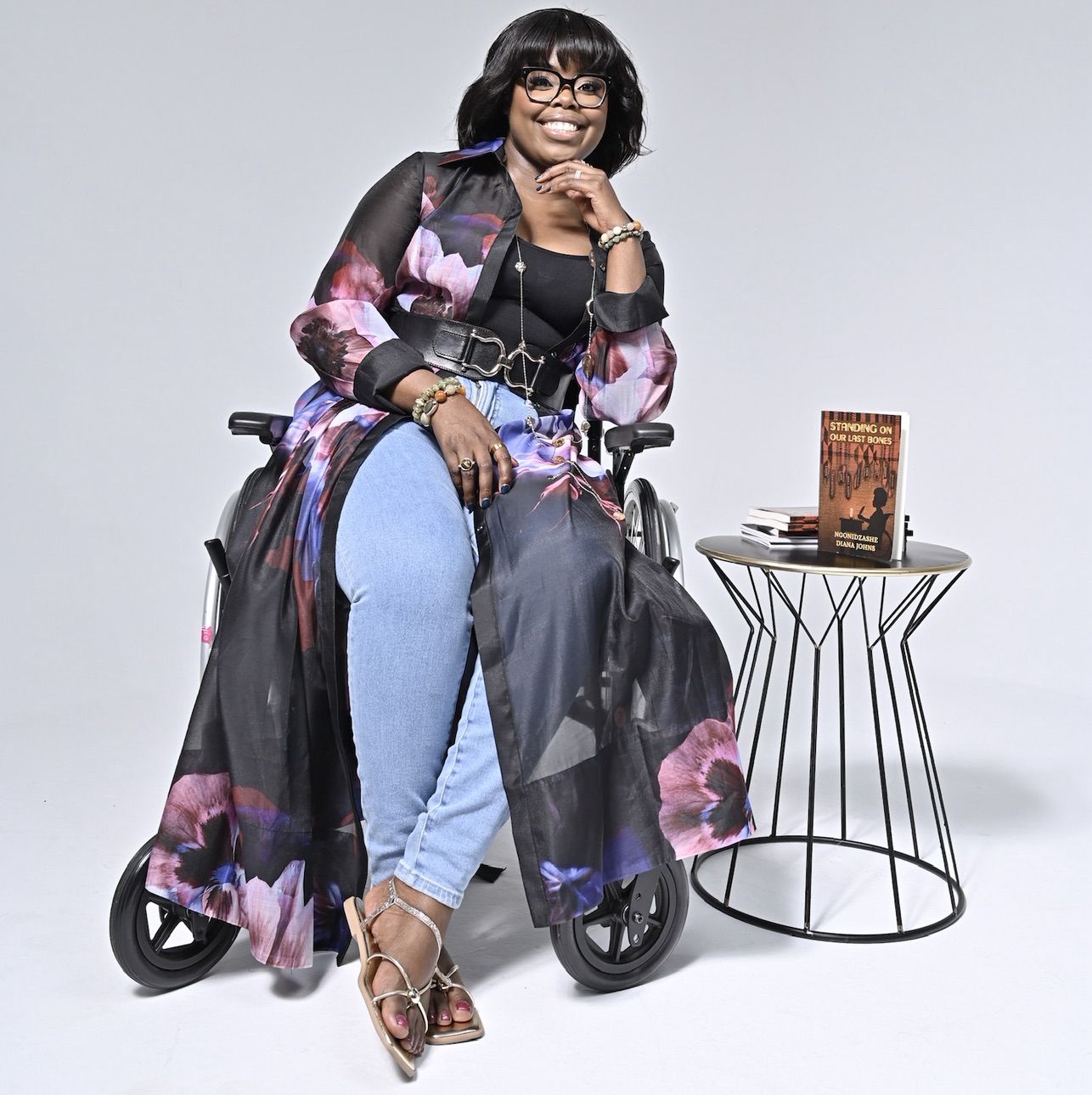
There was a time when I thought my identity was buried under a mountain of medical records and hospital bracelets. When you’re navigating the choppy waters of chronic illnesses: whether it’s the relentless flare of Endometriosis, the dizzying spells of POTS, or the unpredictable reactions of MCAS: it’s easy to feel like the "you" that used to exist has been replaced by a "patient."
I know that feeling of looking in the mirror and seeing a stranger, someone whose life is dictated by heart rates, heavy bleeding, or brain fog. But here’s the secret I learned while sitting in my wheelchair, surrounded by notebooks: Your identity isn’t gone. It’s just waiting for you to reclaim it.
Healing isn’t always about a "cure" (I wish it were that simple, believe me). Often, it’s about the radical act of finding yourself again in the midst of the storm. If you’re ready to stop being a footnote in your own medical history and start being the author of your story again, here is my guide on how I started my own healing journey.
Step 1: Give Yourself Permission to Grieve the "Before" You
Before we can rise, we have to acknowledge what we’ve lost. For a long time, I tried to "power through" my Adenomyosis and the exhaustion that came with it. I was desperate to keep up with the version of me that could do it all.
But you can’t heal a heart you’re ignoring.
The first step in my rooted approach to recovery was mourning. I had to sit with the grief of the career changes, the cancelled plans, and the body that didn't work the way it used to. It’s okay to be angry. It’s okay to cry over the life you thought you’d have. Reclaiming your identity starts with being honest about the gap between where you are and where you wanted to be. Once you name the loss, it loses its power to haunt you.
Step 2: The Radical Act of Writing It Down
If there is one tool that changed everything for me, it was journaling. And I’m not talking about just tracking symptoms (though that’s helpful). I’m talking about "soul-writing."
When my world felt chaotic, the blank page was the only place I had total control. I started using guided journals to navigate the complex emotions that doctors didn't have a prescription for. Writing is a way to pull the invisible battles out of your head and put them where you can see them.
In my journey, journaling became my sanctuary. It was where I could admit I was scared, where I could celebrate a "small" win like making it to the kitchen, and where I could remind myself that I am more than my diagnosis. If you’re looking for a place to start, our Becoming Light journal is designed for exactly this: gentle transformation and finding your way back to your essence.
Step 3: Redefine What "Productive" Looks Like
In a world that prizes "the hustle," being chronically ill can feel like a personal failure. I used to beat myself up on days when my POTS meant I couldn't stand up for more than five minutes.
I had to radically shift my perspective. I began to see "resting" as a productive act. If my body was fighting a war internally, then lying down was the most strategic thing I could do.

Reclaiming your identity means deciding that your worth is not tied to your output. You are worthy because you exist, not because of how many tasks you ticked off a list while in a flare. Using a self-discovery journal helped me track these shifts in mindset, turning my "I can't" into "I am choosing to care for myself."
Step 4: Stop Treating Your Body Like an Enemy
It’s so easy to feel betrayed by your own skin when you’re dealing with MCAS reactions or the "endo belly" that makes you want to hide. For years, I spoke to my body like it was a broken machine I wanted to trade in.
But a healing journey requires a truce. I started practicing a resilience methodology that focused on body-neutrality first, then body-kindness. Instead of focusing on what my legs couldn't do, I focused on the fact that my heart was still beating, my mind was still curious, and my hands could still hold a pen.
When you stop fighting your body and start listening to it, the "warrior" narrative shifts. You aren't fighting yourself; you are navigating a challenge with yourself. That shift in language is everything.
Step 5: Find Your Voice and Your Village
Chronic illness can be incredibly isolating. You might feel like a burden or like no one "gets it." But reclaiming your identity involves realizing you don't have to do this alone.
Finding a community: whether it’s online groups for your specific condition or local circles: is vital. But even more important is finding your own voice within that community. Sharing my story, both in my books and through speaking engagements, was a way for me to take my pain and turn it into a bridge for others.
You have a story that matters. Whether you share it with a thousand people or just one trusted friend, speaking your truth is a key part of the healing journey. It moves you from a passive recipient of medical care to an active participant in your own life.
Your Transformation Begins with a Single Word
Reclaiming your identity isn't a destination you reach and then stay at forever. It’s a practice. It’s choosing, every single day, to believe that you are more than your symptoms.
I created Chiedza Innovations because I wanted every woman navigating a "storm" to have the tools I wish I’d had at the beginning. Our journals aren't just paper and ink; they are invitations to rise, to heal, and to remember exactly who you are.
Are you ready to write the next chapter of your story? Visit our shop to find the companion for your journey.
You are still here. You are still rising. And your story is just getting started.
I used to think rest was something I had to earn. I’d treat it like a prize at the end of a very long, very exhausting race, a race I wasn't even sure I wanted to be running. For years, I viewed the concept of "Sabbath" through a dusty lens of religious rules. It felt heavy, restrictive, and honestly? Like one more thing on my to-do list.
But then, life happened. The kind of life that leaves you breathless and searching for a shore. In my own healing journey, I realized that I didn’t need another "productivity hack." I needed a sanctuary. I needed to move from a "law of rest" to a "romance with stillness."
That’s when I discovered the beauty of the Sunset Sabbath. It’s not about being "perfectly religious"; it’s about being perfectly present. It’s about a rooted approach to resilience that acknowledges we are human beings, not human doings.
The Biblical Heart of Rest: Understanding Menuha
In Genesis 2, we see the blueprint. The Bible says that on the seventh day, God finished His work and rested. But here’s the kicker: the ancient Hebrew word for this rest is Menuha.
Menuha isn’t just the absence of work; it’s a positive, created thing. The sages used to say that on the seventh day, God created "tranquility, serenity, peace, and repose." The universe was actually incomplete until rest was added to it. Think about that for a second. Your life is incomplete without the intentional creation of stillness.
When I started practicing a Sunset Sabbath, beginning the day in the evening, just as the biblical rhythm suggests, it shifted everything. It’s a gift, not a demand. It’s God’s way of saying, "The world can spin without you for a moment. Come, sit with Me."
Shifting from Rules to Romance
If you’re anything like me, your "resting" usually looks like scrolling through social media until your eyes burn, or finally catching up on the laundry. That’s not Menuha. That’s just a change of scenery for your stress.
A Sunset Sabbath is an invitation to a romance. It’s a weekly date with your soul and your Creator. It’s about saying "yes" to your own humanity. When we lean into this sacred pause, we aren't just "taking a break"; we are reclaiming our authentic identity from the hands of a world that demands we always be "on."
Whether you’re looking for a self care journal to document this shift or just a moment of quiet, the goal is the same: to find your way back to the light.
5 Steps to Start Your Own Sunset Sabbath Ritual
You don't need a cathedral or a complicated liturgy. You just need a willing heart and a few intentional shifts. Here is how I manage my weekly transition into peace.
1. Mark the Transition (The Sunset Shift)
In the biblical rhythm, the day begins in the evening ("And there was evening, and there was morning, the first day"). This is revolutionary. It means your day starts with rest, not with work.
As the sun begins to dip, I make a physical move to signal to my brain that the work-week is over. I close the laptop, put my phone in a dedicated "Sabbath basket," and light a single candle.
- The Ritual: As you light the candle, say out loud: "I release this week into Your hands. My work is finished, whether or not it is done."
2. Ritualize the Release
We carry so much "unspoken weight" in our bodies. For me, part of my healing journey is acknowledging the burdens I’ve been trying to carry alone. I use this time to clear the mental clutter.
I grab my Still Rising guided journal and spend fifteen minutes doing a "burden dump." I write down the worries, the to-dos, and the heartaches of the week. By putting them on paper, I am physically moving them out of my spirit and into a safe place.
- The Tool: Using a manifestation journal or a guided reflection tool like Still Rising helps ground those abstract anxieties into something manageable.
3. Honor the Vessel
Your body is the temple where this peace lives. You cannot find Menuha if your nervous system is still screaming at 100mph. This step is about sensory shifts.
Change your clothes. Put on that soft linen dress or those cozy socks you keep "for best." I often use a drop of essential oil on my wrists, something earthy like cedarwood or frankincense, to ground myself in the moment. It’s a way of anointing yourself for the rest ahead.
- The Ritual: Gently wash your hands or feet, acknowledging the work they’ve done this week. Speak a blessing over your body: "Thank you for carrying me. You are allowed to rest now."
4. Feast and Focus (The Gratitude Review)
Sabbath is not a fast; it’s a feast. Even if it’s just a simple bowl of soup, make it special. Use the "good" plates. Sit at the table without the distraction of a screen.
During dinner, I practice a "Gratitude Review." I look back at the last six days and find five things I am genuinely thankful for. It’s easy to focus on what went wrong; it takes intention to focus on what went right. This practice shifts your internal atmosphere from scarcity to abundance.

5. Guard the Gate (Choose One Delight)
Finally, decide what the "gate" of your Sabbath looks like. What is the one thing that brings you pure, unadulterated joy? For some, it’s reading a book of poetry. For others, it’s a slow walk in the garden or listening to a favorite album.
Choose one "delight" and guard it fiercely. This isn’t a luxury; it’s a necessity for a soul that wants to rise with intention. When you allow yourself to delight in something, you are practicing the very essence of Menuha.
Your Journey to Rising Still
Transformation begins when we give ourselves permission to write our own story, and sometimes, the most powerful thing you can write is a period at the end of a long week.
If you are navigating a challenging season, please know that you don't have to navigate it alone. Our Chiedza journals and resources are designed to be your companions in the quiet. Whether it’s the gentle transformation found in Becoming Light or the resilience-building prompts in Still Rising, these tools are here to help you pause, reflect, and rise.
Starting a Sunset Sabbath isn’t about adding another rule to your life. It’s about building a sanctuary in time. It’s about reclaiming your peace so you can show up for your life with clarity, courage, and a heart that is truly at rest.
Are you ready to start your own ritual this week? I’d love to hear what your one "delight" will be. Head over to chiedzaco.com to find the perfect journal to start your journey.
Stay rooted, stay intentional, and keep rising.
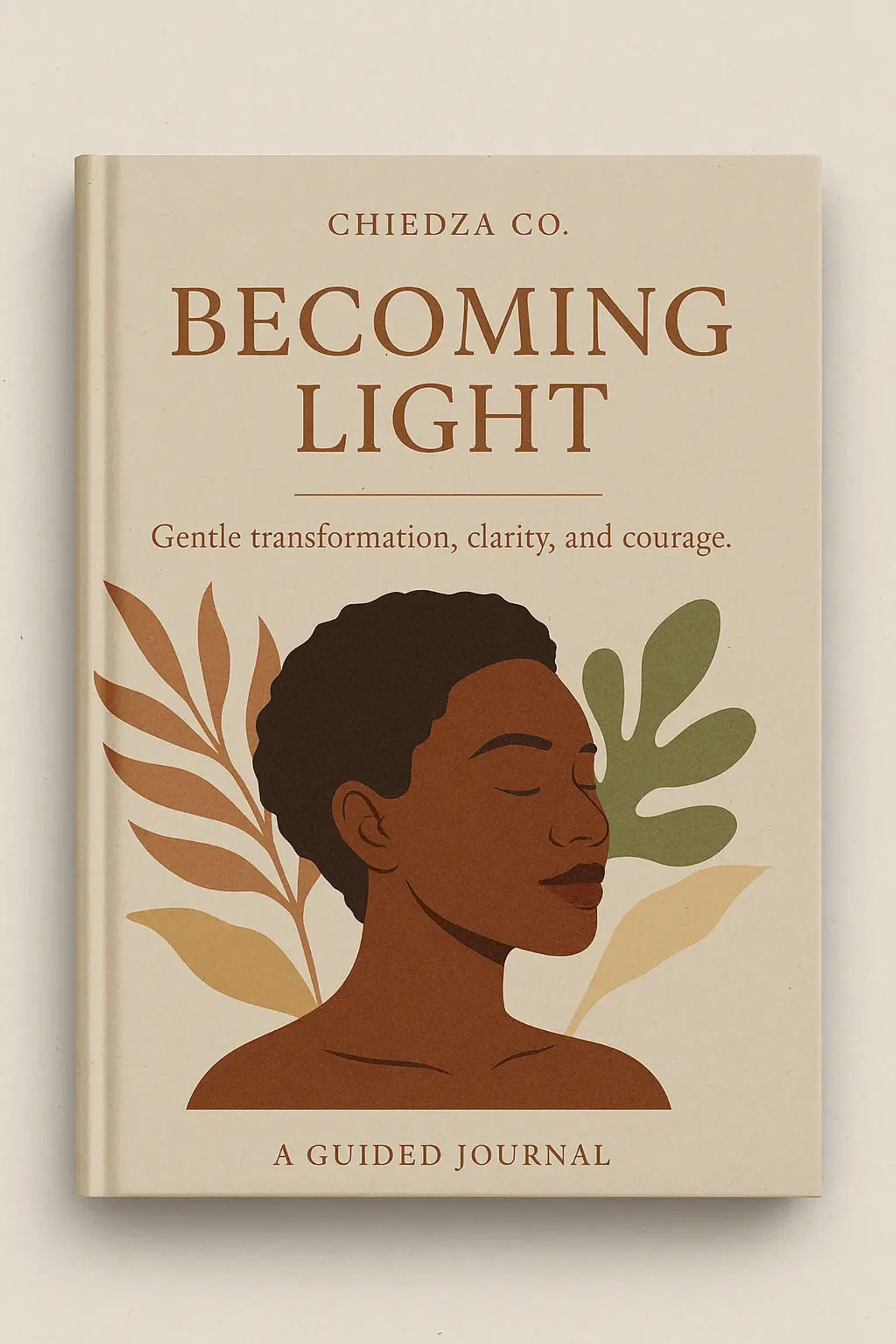
There are some seasons where my journal stares back at me like an unpaid bill.
You know the ones. The "fallow" seasons. The seasons where the grief is so heavy it’s sitting on your chest like a physical weight, or the confusion is so loud you can’t hear your own intuition. You pick up your pen, you open your guided journal for women, and… nothing.
Not a single word. Not even a "Dear Diary."
I used to think that meant I was failing at my own healing journey. I thought if I couldn’t articulate the pain, I couldn’t process it. But I’ve learned, mostly through the messy, tear-stained pages of my own Still Rising journal, that healing doesn’t always speak in complete sentences. Sometimes, it speaks in fragments. Sometimes, it just wants to draw a circle and sit inside it.
If you’re in a place where words feel impossible, first of all: give yourself a massive dose of grace. You are not "stuck." You are in a sacred space of slow becoming. You are growing beneath the surface, and that is often the hardest work of all.
Here are 15 journaling prompts for healing designed for the days when you have nothing to say, but everything to feel.
When the Words Are Stuck (The Low-Pressure Starters)
When I’m feeling particularly wordless, I stop trying to write "well" and start trying to write "honestly." These prompts don't require grammar; they only require your presence.
- "Right now, my mood feels like this weather…" (Is it a storm? A thick fog? A stubborn heatwave? Describe the atmosphere, not the emotion.)
- "If my heart could make a sound today, it would be…" (Is it a low hum? A screech? The sound of a door clicking shut?)
- "Three things I am not ready to talk about yet are…" (Sometimes, naming what is off-limits creates safety for the things that are ready to come out.)
Body-Based Prompts (For When the Mind is Too Loud)
I’ve spent a lot of my life navigating the world from a wheelchair, and one thing I’ve learned is that my body has a memory all its own. When my brain is in a loop, I ask my body where it’s holding the story.
- "Where in my body is the loudest right now?" (My shoulders? My jaw? My gut? Just name the spot.)
- "If this sensation had a color, what shade of [brown/gold/earthy tone] would it be?" (Visualizing the feeling as a color can make it feel less like 'you' and more like something you are 'carrying'.)
- "One tiny thing my body needs right now to feel 1% softer is…" (A warm tea? A heavier blanket? To finally unfreeze my shoulders?)
Finding the Fragments (When the Story is Too Heavy)
Healing isn't about turning every wound into wisdom before it's finished hurting. It's about acknowledging the fragments. I often use these when I’m working through the "middle of the storm" seasons that inspired my Still Rising collection.
- "The most 'unfinished' part of me today is…"
- "One thing I wish someone would say to me right now is…" (Write it down. Then, read it back to yourself as a prayer.)
- "Today, I choose to leave [this specific worry] on this page so I don't have to carry it into my sleep."

Tiny Acts of Self-Compassion
I’m a big believer that we don't have to prove our pain made us stronger. Sometimes, we just have to prove we survived the day. That is enough.
- "One thing I did 'right enough' today was…" (Did you answer one email? Did you take your medication? Did you choose to stay?)
- "What is one dream that survived today's disappointment?"
- "If I were my own best friend, I would tell myself…"
Lists for the Weary (No Paragraphs Required)
When sentences feel like too much heavy lifting, let the bullet points do the work. This is a rooted approach to clearing the mental clutter without needing a literary degree.
- "Five things I can see/smell/touch right now…" (Grounding is the first step toward healing.)
- "Three boundaries my peace is asking for this week…"
- "The one word that describes who I am becoming, even if I can't see the full picture yet."
How to Use These Prompts
You don’t have to do all fifteen. Please, don’t. That would be the opposite of the "sacred space for slow becoming" we’re trying to build here at Chiedza Co.
Pick one. Just one.
If you’re using our Becoming Light journal, look for the empty spaces. Those blank pages aren't a test; they are an invitation. They are a place for the prayers whispered through tears and the faith that trembles but remains.
Your Transformation is a Blueprint
I remember a time when I couldn't even pick up a pen. The "weight of words I never said" (which you can read more about here) felt like it was drowning me. But I started with one word. Tired. Then the next day, Hopeful.
These journaling prompts for healing aren't just questions; they are a bridge. They take you from the "wordless" place back to your own heart.
If you’re looking for a dedicated container for this work, our guided journals for women are designed with this exact tension in mind. They aren't just books; they are tools for reclaiming your authentic identity and rising with intention.
Whether you’re navigating a storm or just looking for a gentle way to find yourself again, remember: you do not have to bloom on demand.
Rest here. You are becoming. ✨🤎
Ready to start your slow becoming?
Explore our full collection of journals and digital resources at Chiedza Co. and find the perfect companion for your healing journey.

There are days when my body feels like a house where all the alarms are going off at once, but nobody can find the fire.
My heart races for a deadline that isn’t until Friday. My shoulders are hiked up to my ears as if I’m bracing for an impact that never comes. In those moments, my mind is a runaway train of “what ifs,” and "if onlys." Maybe you know the feeling? It’s that humming electricity of anxiety that makes it impossible to focus, impossible to rest, and frankly, impossible to be the version of ourselves we actually like.
For a long time, I thought the only way to fix this was a week-long retreat or a complete lifestyle overhaul. But as a woman navigating a busy life, a chronic illness, and the beautiful chaos of Chiedza, I realized that I don't always have a week. Sometimes, I only have seven minutes between meetings or before the kids wake up.
That is how I developed what I call the Rooted Reset. It’s a resilience methodology: a quick, intentional way to bring the nervous system back from the edge of a cliff and return it to a place of "slow becoming."
If you’ve been looking for a way to use your self care journal as more than just a place to vent, this 7-minute practice is for you.
Why Your Nervous System Needs a Manual Override
We live in a world that celebrates "the hustle," but our bodies aren't designed to be in a state of high alert 24/7. When we are constantly stressed, our sympathetic nervous system (the "fight or flight" mode) takes the wheel. We become reactive, exhausted, and disconnected from our intuition.
To heal, to grow, and to "rise with intention," we have to learn how to flip the switch back to the parasympathetic nervous system (the "rest and digest" mode). This isn't about ignoring your problems; it's about giving your body the safety it needs to actually solve them.
The 7-Minute Rooted Reset: Step-by-Step
This isn't a generic "how-to." This is a blueprint for reclamation. Grab your journaling for anxiety tools, set a timer, and let’s begin.
Minute 1: The Settle
Before you do anything, you have to acknowledge where you are. Sit down. If you can, put your feet flat on the floor. Feel the weight of your body in the chair.
I like to imagine roots growing from the soles of my feet, deep into the earth. It sounds a bit "woo-woo" until you realize that your brain actually needs that physical feedback of "I am supported. I am not falling." Drop your shoulders. Unclench your jaw. Just be in the room for sixty seconds.
Minutes 2–3: The Breath of Return
Breathing is the only part of our autonomic nervous system that we can consciously control. It is the "manual override" for anxiety.
Try the 4-7-8 technique:
- Inhale through your nose for a count of 4.
- Hold that breath for a count of 7.
- Exhale slowly through your mouth for a count of 8.
The long exhale is the secret sauce here. It tells your brain, "If I can breathe this slowly, there must not be a lion in the room." Do this for two minutes. Don't worry if your mind wanders; just bring it back to the count.
Minutes 4–5: Sensory Grounding (The 5-4-3-2-1)
Anxiety lives in the future. Grounding lives in the now. To pull your spirit back into your body, use your five senses to anchor yourself.
Look around and name:
- 5 things you can see: (The way the light hits the floor, the texture of your dress, a stray pen).
- 4 things you can touch: (The cool surface of your desk, the soft fabric of your sleeve, your own hands).
- 3 things you can hear: (A bird outside, the hum of the fridge, your own breath).
- 2 things you can smell: (Your coffee, the scent of the rain outside).
- 1 thing you can taste: (The lingering mint from your toothpaste or just the inside of your mouth).
This simple exercise forces your brain to switch from "emergency mode" to "observation mode." It’s a circuit breaker for panic.
Minutes 6–7: Journaling for Anxiety
Now that your body feels safer, we use the final two minutes for "fast journaling." This isn't the time for perfect prose. This is for getting the "ink on the page" so the thoughts don't have to stay in your head.
Open your self-discovery journal and answer these three prompts rapidly:
- "Right now, my body is telling me…" (e.g., my chest feels tight, my stomach is knotted).
- "The story I am telling myself is…" (e.g., "I'm failing," "I'll never get this done").
- "One truth I know for sure is…" (e.g., "I am safe in this moment," "I have handled hard things before").
When you write down the "story" you're telling yourself, it loses its power. You realize it’s just a narrative, not a fact. And when you anchor yourself in a "truth," you provide your nervous system with a solid place to stand.
Transformation in the Fragments
I often say that becoming was never about arriving. It’s about trusting the process in the seasons that feel barren. The Rooted Reset isn't about making your anxiety disappear forever; it’s about proving to yourself that you have the tools to manage it.
It’s about those "roots nobody applauds." When you take seven minutes to breathe and write, you are doing the holy work of growing beneath the surface. You are telling yourself that you are worth the pause.
I use my Becoming Light journal for this every single morning. It’s a sacred space where I don’t have to "bloom on demand." I can just be unfinished, rebuilding myself fragment by fragment.

Make It a Ritual
If you’re feeling overwhelmed, don't wait for the "perfect" time to start. The perfect time is usually when you feel the least like doing it.
Keep your Still Rising journal or your premium blank journal somewhere visible: on your nightstand, at your desk, or in your bag. When the hum of anxiety starts to get too loud, give yourself permission to take those seven minutes.
You don't have to prove that your pain made you stronger. You just have to choose to stay. To breathe. To write.
Welcome to the slow becoming. Rest here. You are doing the work.
✨ 🤎
Ready to start your own rooted practice? Browse our collection of guided journals and digital resources designed to help you navigate life's storms and rise with intention. Whether you need the structured prompts of Becoming Light or the gentle space of our premium journals, we have a tool to meet you exactly where you are.

There was a time when my life felt like a browser with fifty-seven tabs open, and every single one was playing a different video at full volume. Between managing my business, navigating life in a wheelchair, and trying to be a semi-functional human being, I was running on fumes. I thought "Sabbath" was just a dusty old rule for people who had time to sit still: which, spoiler alert, wasn't me.
But then I discovered the concept of Menuha.
In the biblical heart of rest (Genesis 2), God didn't just stop because He was tired. He created Menuha: a state of peace, tranquility, and harmony. It wasn't a "stop doing things" law; it was a "start being whole" gift. I realized that my burnout wasn't a productivity problem; it was a soul problem. I needed a romance with stillness.
That’s how my Sunset Sabbath ritual was born. It’s not about rigid rules; it’s about a gentle invitation to find sanctuary. If you’re on a healing journey and looking for a way to reclaim your peace, here are the five steps I use to transition from the chaos of the week into a sacred pause.
1. The "Golden Hour" Transition
The Sabbath doesn't start with a clatter; it starts with a glow. In ancient traditions, the day begins at sunset, not sunrise. There is something deeply psychological about starting your rest when the light begins to fade.
I start my ritual by physically acknowledging the shift. As the sun dips low, I light a single candle. This isn't just for the aesthetic (though, let's be real, the vibes are immaculate); it’s a signal to my nervous system that the "doing" is done. I take a deep breath and say, out loud, "I have done enough for today."
Whether you’re using a manifestation journal to plan your future or just trying to survive the present, this transition is vital. It’s the "threshold" where you leave your worries at the door.
2. The Digital "Phone Funeral"
You cannot find Menuha if your pockets are buzzing with emails and TikTok notifications. My second step is what I jokingly call the "Phone Funeral."
I have a beautiful wooden box where my phone goes to sleep for the duration of my Sabbath. I don't just "put it on silent": I physically remove it from my sight. This is a rooted approach to reclaiming your attention. When we remove the digital noise, we finally give ourselves permission to hear our own internal voice. It’s scary at first, but once the phantom vibration syndrome fades, the peace that replaces it is addictive.
3. The Sacred Pause Journaling
This is where the real magic happens. Once the house is quiet and the digital world is muted, I open my self care journal. For me, journaling is the cornerstone of my healing journey.
I don't write "To-Do" lists here. Instead, I use my Still Rising journal to reflect on where I saw God’s hand during the week. I ask myself:
- What made me feel alive this week?
- Where did I feel a "gentle nudge" to slow down?
- What burdens am I choosing to set down right now?
Writing these things down turns an abstract feeling into a concrete reality. It’s not just "thinking" about rest; it’s documenting your transformation. You’re giving yourself permission to write your own story, rather than letting the world write it for you.
4. Curate Your Sensory Sanctuary
Rest is a full-body experience. As someone who lives with physical challenges, I’ve learned that my environment heavily dictates my internal state. My Sunset Sabbath involves soft textures and grounding scents.
I might wrap myself in a warm, patterned throw or put on some essential oils (frankincense and lavender are my go-tos). The goal is to make your space feel like a sanctuary. We often spend our weeks in "utility mode": using our bodies and spaces as tools to get things done. In the Sabbath, your space becomes a place of delight. This is the "romance" part of the romance with stillness.
5. Setting Intentional Seeds (Not Goals!)
Finally, before I close my eyes, I use my manifestation journal to plant "seeds" for the week ahead.
The difference between a goal and a seed is the energy behind it. A goal feels like a demand; a seed feels like a hope. I don't plan my meetings; I plan my intentions. I might write: "Next week, I intend to move with grace," or "I intend to see the beauty in the mundane."
By ending my Sabbath ritual this way, I’m not just resting from work; I’m resting for life. I’m ensuring that the peace I found in the Menuha follows me into Monday morning.
Why You Need This
We live in a world that profits from our exhaustion. Reclaiming your peace through a Sunset Sabbath isn't just "self-care": it's an act of quiet rebellion. It’s saying that your worth isn't tied to your output.
If you’re ready to start your own ritual, you don't need a complicated system. You just need the willingness to pause. Our Becoming Light journal or the Still Rising series are designed to be your companions in this process. They are more than just paper and ink; they are tools for gentle transformation.
Transformation begins when you give yourself permission to stop. So, as the sun sets this Friday, I invite you to join me. Put the phone away, light that candle, and let the Menuha begin.
Ready to dive deeper into your healing journey? Explore our full collection of guided journals and digital resources at chiedzaco.com.

I used to be the queen of the "Fine, Thanks" brigade. You know the one. You’re navigating a storm that could sink a battleship, your heart is in literal fragments, and someone asks how you are. You smile, adjust your posture, and say, "I'm fine, thanks. Just keeping on."
It’s a survival mechanism, isn’t it? We tuck the messy parts, the anger, the jealousy, the bone-deep grief, the "unbecoming" thoughts, into a little drawer in the back of our minds and lock it. We tell ourselves that if we don't look at it, it isn't there. We hope that if we ignore the shadow long enough, we’ll eventually just… stop having one.
But here is the truth I’ve learned through my own seasons of sitting in the dark: You cannot heal what you refuse to see.
That drawer you’ve locked? It’s not a storage unit; it’s a pressure cooker. And eventually, those parts of us, the "shadow", will find a way out. They show up as triggers that make us snap at people we love, as self-sabotage when we’re on the brink of a breakthrough, or as a heavy, unexplained exhaustion that no amount of sleep can fix.
This is where the shadow work journal comes in. It’s not a spooky occult practice or something reserved for people who have it all figured out. It is a sacred space for the unfinished. It is the practice of gently turning on the light in that back room and saying, "Oh, there you are. I see you now."
What Exactly is the "Shadow"?
The concept of the shadow isn't about being "bad" or "dark." Think of it as the parts of yourself that you’ve been taught to hide, repress, or deny because they didn't feel "safe" or "acceptable" to the world.
Maybe you were told as a child that "good girls don't get angry," so your anger became part of your shadow. Maybe you were shamed for your ambition, so your desire for more became a hidden wound. Or maybe, like many of us, life threw a storm your way that felt too big to process, so you shoved the pain into the shadow just to keep walking.
Shadow work is simply the process of bringing those parts back into the light of your awareness. It’s about integration. It’s about becoming whole again, not by "fixing" the broken pieces, but by claiming them.
Why Shadow Work Isn’t As Scary As It Sounds
I’ll be honest: when I first heard the term "shadow work," I wanted to run. I already had enough on my plate navigating life from a wheelchair and rebuilding my identity after loss. The last thing I wanted to do was go looking for more trouble in my subconscious.
But I realized that the fear of the shadow is always much bigger than the shadow itself. We imagine monsters in the dark, but when we finally bring a candle into the room, we often find something much more human: a part of us that is just scared, tired, or trying to protect us in a clumsy way.
Using an emotional healing journal makes this process manageable. It gives you a container. You aren’t diving into an abyss; you’re sitting down at a table with a pen and a piece of paper. You are in control of the pace.
The Healing is in the Seeing
Why bother? Because there is a specific kind of freedom that only comes when you stop hiding from yourself.
- You Stop Being a Victim to Your Triggers: When you understand why a certain comment or situation makes you spiral, the trigger loses its power. You can catch yourself in the moment and say, "Ah, I see what’s happening here. This is my old fear of being excluded talking."
- You Reclaim Your Energy: Do you know how much energy it takes to keep a secret from yourself? Repressing parts of our identity is exhausting. When you integrate your shadow, that energy is returned to you.
- You Build Real Self-Love: You can’t truly love someone you don't know. By meeting your shadow, you are finally meeting your whole self. This is where the deep, "rooted approach" to transformation begins.
At Chiedza Co., everything we create, from our Still Rising journal to our digital resources, is rooted in the belief that transformation begins when we give ourselves permission to write our own story. Not the edited, "Instagram-ready" version, but the real one.
How to Begin Your Shadow Work Journey
If you’re ready to start, please don’t try to do it all at once. This is "the holy work of growing beneath the surface," and roots take time. Here is how I manage my own shadow work sessions:
1. Create a Sacred Space
Shadow work is heavy lifting for the soul. Don't do it while you're rushed or in a noisy environment. Light a candle, put on some soft music, and make sure you’re comfortable. You want your nervous system to feel safe enough to let the guards down.
2. Start with the "Mild" Triggers
Don't go straight for your biggest life trauma on day one. Start by journaling about a small irritation from your day.
- Prompts to try: "What made me feel defensive today?" or "When did I feel the need to perform or hide my true feelings?"
3. Be a Witness, Not a Judge
This is the most important rule. When you find a "shadow" thought: like a flash of jealousy or a moment of deep resentment: don’t punish yourself for it. Instead, be curious. Ask, "Where did this part of me learn that it needed to feel this way?"

15 Prompts for Your Emotional Healing Journal
If you’re looking for a place to start, try one of these prompts tonight:
- What is one trait in others that really irritates me? (Usually, this is a mirror for something in our own shadow).
- What am I most afraid of people finding out about me?
- When was the last time I felt "not enough"? What triggered that feeling?
- What are the "rules" I live by that I didn't actually choose for myself?
- If I wasn't afraid of being judged, what would I do differently today?
- Describe a time you felt silenced. What would that version of you say if she had a voice now?
- What does my inner critic sound like? Is it my own voice, or someone else's?
- What part of my life feels "barren" right now? What is growing beneath the surface there?
- When do I feel the most need to be "perfect"?
- What is a "negative" emotion I try to avoid at all costs? Why?
- How do I punish myself when I make a mistake?
- What was I told about "success" growing up? Does that still fit me?
- If my pain could speak, what would its first sentence be?
- What do I need to give myself permission for today?
- Who would I be if I stopped trying to prove my worth?
Reclaiming Your Light
Here is the beautiful secret about shadow work: the shadow doesn't just contain our wounds. It also contains our "golden shadow": the talents, the dreams, and the fierce strength we were told to dim so we wouldn't "make people uncomfortable."
When you do the work in your shadow work journal, you aren't just cleaning out a closet. You are excavating gold. You are finding the parts of you that are brave, creative, and resilient: the parts that have been waiting for you to notice them.
Our Becoming Light journal was designed exactly for this: to be a soft place to land while you do the hard work of self-discovery. It’s about that gentle transformation that happens when we finally stop fighting our shadows and start listening to them.
A Final Thought for the Weary
If you’re reading this and feeling overwhelmed, remember: You do not have to bloom on demand. You do not have to prove that your pain made you stronger.
Some days, becoming looks like courage. Other days, it looks like staying. It looks like picking up a pen and writing one honest sentence.
This is a place for the unfinished. You are welcome here, exactly as you are: shadows and all.
Ready to begin your own slow becoming? Explore our full range of guided journals and resources at Chiedza Co. and find the tool that speaks to your season.
We’re rising. Together. ✨🤎
There is a particular kind of exhaustion that comes from being told you must always be "on." We live in a culture that treats human beings like seasonal displays at a department store, if it’s spring, you must be in full bloom. If it’s autumn, you must be harvested. There is no room for the fallow season. No space for the quiet, dark, messy work of being "underground."
For a long time, I tried to force my own blooming. I thought that if I wasn't producing, I wasn't growing. If I couldn't point to a lesson learned or a wound healed, I felt I was failing at my own life. I felt the pressure to turn every heartbreak into a "hustle" and every scar into a "story" before the blood had even dried.
But life, true, deep, transformative life, doesn't work like that.
Transformation isn't a performance. It’s a slow, often invisible, process of becoming. It is the holy work of growing beneath the surface, where nobody can see, nobody can applaud, and nobody can demand a timeline.
A Sacred Space for Slow Becoming
At Chiedza Co., we believe in the beauty of the unfinished. We believe that your worth is not tied to your "bloom." Whether you are navigating a storm or gently rediscovering who you are after a long winter, this is your invitation to stop performing and start simply being.
A sacred space for slow becoming.
You do not have to bloom on demand.
You do not have to prove that your pain made you stronger.
You do not have to turn every wound into wisdom before it has finished healing.
Some days, becoming looks like courage.
Other days, it looks like staying.
Like taking your medication.
Like answering one message.
Like choosing hope when grief has made a home in your chest.
This is a place for the unfinished.
For the women rebuilding themselves from fragments.
For the prayers whispered through tears.
For the dreams that survived disappointment.
For the faith that trembles, yet remains.
Here, we honour the holy work of growing beneath the surface.
The roots nobody applauds.
The battles nobody sees.
The grace that carries us when our own strength has gone.
Because becoming was never about arriving.
It is about trusting that God is still shaping something beautiful in the seasons that feel barren.
And perhaps that is the miracle:
that while the world celebrates blooming,
heaven is often closest to us underground.
Welcome. Rest here. You are becoming. ✨🤎
The Myth of the "Instant Bloom"
In my own healing journey, I’ve had to unlearn the idea that growth is always linear. We want the "after" photo. We want the testimony. We want the five-step plan to "get over it."
But when you are in the middle of a challenging season, those demands feel like a weight you can’t carry. When I first started creating the Still Rising journal, it wasn't because I had it all figured out. It was because I was in it. I was in the storm, and I needed a place to put the fragments of my heart.
We often feel like we have to apologize for being "under construction." We say, "Sorry I haven't been myself lately," or "I'll be back to my old self soon." But what if the "old self" is gone, and the new one is still being woven together in the dark?
You don't have to prove your strength. Sometimes, the strongest thing you can do is simply stay. Stay in the process. Stay in the faith. Stay in the room.
Why "Slow" is a Revolution
In a world that prizes speed, choosing to be slow is a radical act. When we talk about a self discovery journal or a guided journal for women, we aren't talking about "productivity hacks." We are talking about reclamation.
Slow becoming means giving yourself permission to:
- Feel the tension: In Hebrew, one word for "wait" is kavah, which means to be stretched or bound together. Waiting isn't passive; it’s the active tension of a soul being strengthened.
- Embrace the "Underground" seasons: Think of a seed. For weeks, nothing is visible above the soil. But underneath? The roots are pushing deep, finding water, and establishing the foundation. Without the underground work, the bloom cannot survive the wind.
- Honor small victories: If all you did today was take your medication and breathe, that is growth. If you chose hope for five minutes even though your chest felt heavy, that is a victory.
Our Becoming Light journal was designed for exactly this. It isn't a planner to fill your days; it’s a companion for your transformation. It’s for the woman who is ready to ask, "Who am I now?" without the pressure of having an immediate answer.
The Architecture of a Rooted Approach
When we look at our lives through a rooted approach, we stop looking at "setbacks" as failures and start seeing them as refinement. I’ve learned that the seasons that felt most barren: the ones where I felt most "stuck": were actually the seasons where the most profound work was happening.
It was in the "underground" where I learned that I am not a footnote in my own story. It was there that I realized my identity isn't based on what I can do, but on whose I am.
For many of us, an emotional healing journal is the first step toward this realization. It provides a container for the "prayers whispered through tears" and the "dreams that survived disappointment." When you write, you are essentially saying to yourself: What is happening inside me matters. My slow becoming is holy.
Tools for Your Season of Becoming
Transformation begins when we give ourselves permission to write our own stories. Whether you are rebuilding from fragments or seeking a gentle path to self-discovery, we’ve created resources to hold space for you.
- For the Storm: The Still Rising Guided Journal is for the woman who is in the thick of it. It’s not about "getting over it"; it’s about rising in it.
- For the Transformation: The Becoming Light Journal is a tool for self-discovery and gentle growth. It’s a space to find clarity and courage as you move toward your authentic identity.
- For Daily Reflection: Our self care journal prompts and PDF downloads offer instant access to a moment of peace in a busy world.

Trusting the Shaping
Becoming was never about arriving at a perfect destination. It’s about trusting the hand that is shaping you. If you feel "underground" today: hidden, dark, or pressed upon: remember that heaven is often closest to us in those very moments.
The world might be looking for the bloom, but God is looking at the roots. He is looking at the faith that trembles yet remains. He is looking at the quiet courage it takes to keep going when the applause has stopped.
You are not behind. You are not failing. You are simply in the holy work of growing beneath the surface.
Welcome to this sacred space.
Take a breath.
Rest here.
You are becoming.
Explore our collection of guided journals and resources designed to support your slow becoming. From premium physical journals to digital downloads, find the tool that speaks to your current season.

I used to think my manifestation journal was a list of demands I was serving to the universe. Every night, I’d sit down, pen in hand, and practically sweat over the pages. I want this. I need that. Here is how I’m going to make it happen. I was treating my self-care journal like a high-stakes board meeting where I was both the CEO and the exhausted intern.
But here’s the thing I realized during one particularly draining season of my life: you cannot manifest from a place of depletion. You cannot write a new story when your hand is too tired to hold the pen.
That’s when I discovered the "Sunset Sabbath." It wasn’t just a break; it was a revolution in how I approached my healing journey. It was the moment I stopped trying to force the light and started learning how to sit in the glow of what already is. If you’ve been grinding away at your goals but feeling like you’re running on an empty tank, your manifestation journal doesn't need more entries: it needs a weekly pause.
The Biblical Heart of the Pause: Finding Your Menuha
In our fast-paced world, we often view rest as a reward for work. We think, "If I finish my to-do list, then I can rest." But in the ancient Hebrew tradition, specifically in Genesis 2, rest isn't the finish line; it’s the crowning glory of creation.
There’s a beautiful word for this: Menuha.
Most people translate it as "rest," but it’s so much deeper than just taking a nap. Menuha is a state of tranquility, serenity, and peace. It’s the kind of stillness where God didn't just stop working because He was tired; He stopped to delight in what He had made. In the biblical narrative, the Sabbath was the very first thing God called "holy." Not a person, not a place, but a piece of time.
When I started incorporating a "Sunset Sabbath" into my week, I stopped looking at rest as a rule I had to follow and started seeing it as a "romance with stillness." It’s an invitation from the Divine to step out of the "hustle" and into a sanctuary built of minutes and hours.

Shifting from Striving to Receiving
If you’re anything like me, your self care journal is often filled with "becoming." We are constantly becoming better, becoming stronger, becoming more. And while that growth is beautiful, the Sabbath asks us to simply be.
In my own practice, I noticed that my journaling was becoming a form of "anxious striving." I was trying to "manifest" my way out of pain rather than sitting with God to heal it. By creating a dedicated Sunset Sabbath: a time from Friday evening to Saturday evening where the "work" of manifestation stops: I gave my soul permission to catch up with my body.
This is what I call a "rooted approach" to resilience. Instead of trying to control every outcome, we practice trust. We acknowledge that the world keeps spinning and God keeps working, even when we are still. That realization is the ultimate catalyst for transformation.
My Sunset Sabbath Ritual: A Blueprint for You
I don't believe in rigid rules, but I do believe in gentle rituals. Here is how I’ve curated my weekly pause to ensure my heart stays open and my mind stays clear:
- The Digital Sundown: As the sun begins to dip, I put my phone in a drawer. No scrolling, no emails, no "inspiration" hunting.
- The Light of the Candle: I light a single beeswax candle. It symbolizes the light that shines in the darkness: a reminder that my transformation is happening even in the quiet moments.
- The Braindump of Trust: Before I close my eyes, I use my Still Rising journal to do one final entry. But it’s not a list of wants. It’s a "surrender list." I write down everything I am worried about and I physically "hand it over" on the page.
- The Menuha Walk: On Saturday morning, I take a slow walk. No podcasts, no music. Just the sound of my own breath and the wind. It’s about being present in the world God made.

Why "Still Rising" is Your Best Sabbath Companion
When we created the Still Rising guided journal, we specifically designed it for women who are in the middle of the storm. It’s not a journal that asks you to "think positive" and ignore your reality. Instead, it’s a tool for intentional rising.
Using a physical tool like Still Rising during your Sabbath helps ground you. There is something deeply healing about the tactile feel of paper and the slow flow of ink. It forces you to slow down in a way that a digital app never can. During my Sabbath, I don't look for "answers"; I look for presence. I use the prompts to explore my authentic identity: the version of me that exists outside of my job title or my productivity.
Reclaiming Your Peace in a Loud World
I know what you’re thinking: "Ngonie, I don't have twenty-four hours to just sit around!"
Believe me, I get it. As a business owner and someone who has navigated my own share of "storms," I know that time is our most precious commodity. But that’s exactly why the Sabbath is a gift. It’s the one day you don't have to earn your keep.
When I stopped seeing my healing journey as a marathon I had to win and started seeing it as a garden I had to tend, everything changed. My manifestation journaling became more effective because it was finally rooted in peace rather than panic.
If you’re feeling stuck, I want to invite you to try a Sunset Sabbath this week. Start small. Give yourself three hours of "romance with stillness." Use that time to reconnect with your own story.
You can find all our resources, including the Becoming Light journal for those gentler seasons of transformation, over at our Shop. We are here to help you pause, reflect, and rise: not with frantic energy, but with holy intention.
Your manifestation journal is a powerful tool, but it is the rest that gives the words their power. This week, give yourself permission to stop. The sun will set, the world will wait, and you: my dear: will still be rising.

Welcome to the Friday Sunset Sabbath.
Take a breath. No, a real one. The kind that reaches all the way down to the soles of your feet and reminds your nervous system that, for the next few hours, you don't have to produce, perform, or prove a single thing.
We’ve made it to the edge of another week. And as the sun begins its slow descent, casting long, golden shadows across the room, I find myself thinking about the word that has been stuck in everyone’s throat this year: Manifestation.
By now, in 2026, we’ve seen it all. We’ve seen the "just vibe your way to a million dollars" reels, the "think happy thoughts and the universe will provide" TikToks, and the endless sea of aesthetic planners that promise a new life if you just write down your goals three times a day. But if you’re reading this, you’re likely standing where I’ve stood, in the middle of a storm that "good vibes" couldn't fix.
So, let’s get honest. Does manifestation journaling actually matter in a world this complex, this heavy, and this demanding?
The short answer is yes. But the long answer? The long answer requires us to stop chasing magic and start embracing the healing journey of true intention.
Beyond the "Magic Wand" Theory
For a long time, we were sold a version of manifestation that felt like a spiritual magic wand. If you wanted the house, the partner, or the peace, you just had to "align" and wait. But here’s the truth I’ve learned through my own seasons of navigating life-altering change: True manifestation isn't about getting what you want; it’s about becoming the woman who can hold what she’s been given.
In 2026, manifestation has evolved. It’s no longer about "just vibes." It’s about spiritual groundedness. It’s about anchoring your desires in your deepest values and then doing the messy, sacred work of clearing the path for them to arrive.
If your manifestation journal is just a wish list, it’s going to fail you when the storm hits. But if it’s a tool for internal excavation? That’s where the power lies.
The Work of Soul Maintenance
I often talk about how transformation begins when we give ourselves permission to write our own story. But there is a part of that story we often skip over: the aftercare.
In our methodology at Chiedza, we believe that manifestation requires more than just a vision board. It requires a sustained maintenance of our internal landscape. Think of it as the "vital aftercare" of the soul. You can manifest a new beginning, but if you haven’t tended to the soil of your spirit: clearing out the old weeds of trauma, the rocks of limiting beliefs, and the debris of past storms: whatever you "manifest" won’t have the roots to survive.
This is why your healing journey and your manifestation practice must be two sides of the same coin. You cannot call in the light if you are unwilling to sit with the shadows that are currently occupying the space where that light needs to go.
Why "Still Rising" is Your Essential Companion
When I created the Still Rising Guided Journal, I wasn't thinking about "manifesting" a luxury vacation. I was thinking about the woman sitting on her bathroom floor, wondering how she was going to get through the next ten minutes.
In 2026, "Still Rising" is more relevant than ever because it acknowledges the storm. It doesn't ask you to pretend you’re okay; it asks you to be present.
True intention in 2026 looks like:
- Acknowledging the "Invisible Battles" you are fighting while still daring to name a "Visible Future."
- Practicing a rooted approach to resilience that doesn't bypass your pain.
- Using your journal not just to track your goals, but to track your growth through the fire.
When you use a tool like Still Rising, you aren't just writing words; you are performing an act of rebellion against the idea that your current circumstances are your final destination.
The Truth About Intention
Intention isn't a "thought." It’s a direction.
I remember when I was first navigating life in my wheelchair, I had to manifest a new version of myself. I didn't do it by wishing my legs would work; I did it by intending to find my voice, my power, and my purpose exactly where I was. I had to do the hard work of soul maintenance every single day. I had to look at my scars and decide they were crowns.

Manifestation journaling matters in 2026 because it provides a record of your resilience. It proves to you, on the days when you feel like you’re failing, that you have actually been rising all along.
A Sunset Sabbath Practice for You
As the sun dips below the horizon, I want to invite you into a small ritual. Put your phone away. Light a candle. Grab your Still Rising journal (or any of our premium blank journals) and ask yourself these three soul-deep questions:
- What am I currently carrying that no longer has a place in the future I am building? (This is your excavation.)
- What is one small, tangible action I can take this week to show the universe I am ready for what I’m asking for? (This is your maintenance.)
- In the middle of my current storm, what is one thing that is "Still Rising" within me? (This is your truth.)
Don’t rush the answers. Let them breathe.

You Are the Catalyst
At the end of the day, a journal is just paper and ink. The magic: the real manifestation: is you.
Our resources at Chiedzaco.com are designed to be the catalyst, the gentle nudge that reminds you of your own power. Whether it's the Becoming Light journal for those gentle seasons of self-discovery or the Standing on Our Last Bones collection for the moments when you need to lean into your heritage and faith, we are here to support your journey.
Manifestation in 2026 isn't about escaping your life. It's about loving yourself enough to change it, one page at a time.
Stay grounded. Stay intentional. And above all, keep rising.
With love and light,
Ngonie & The Chiedza Team
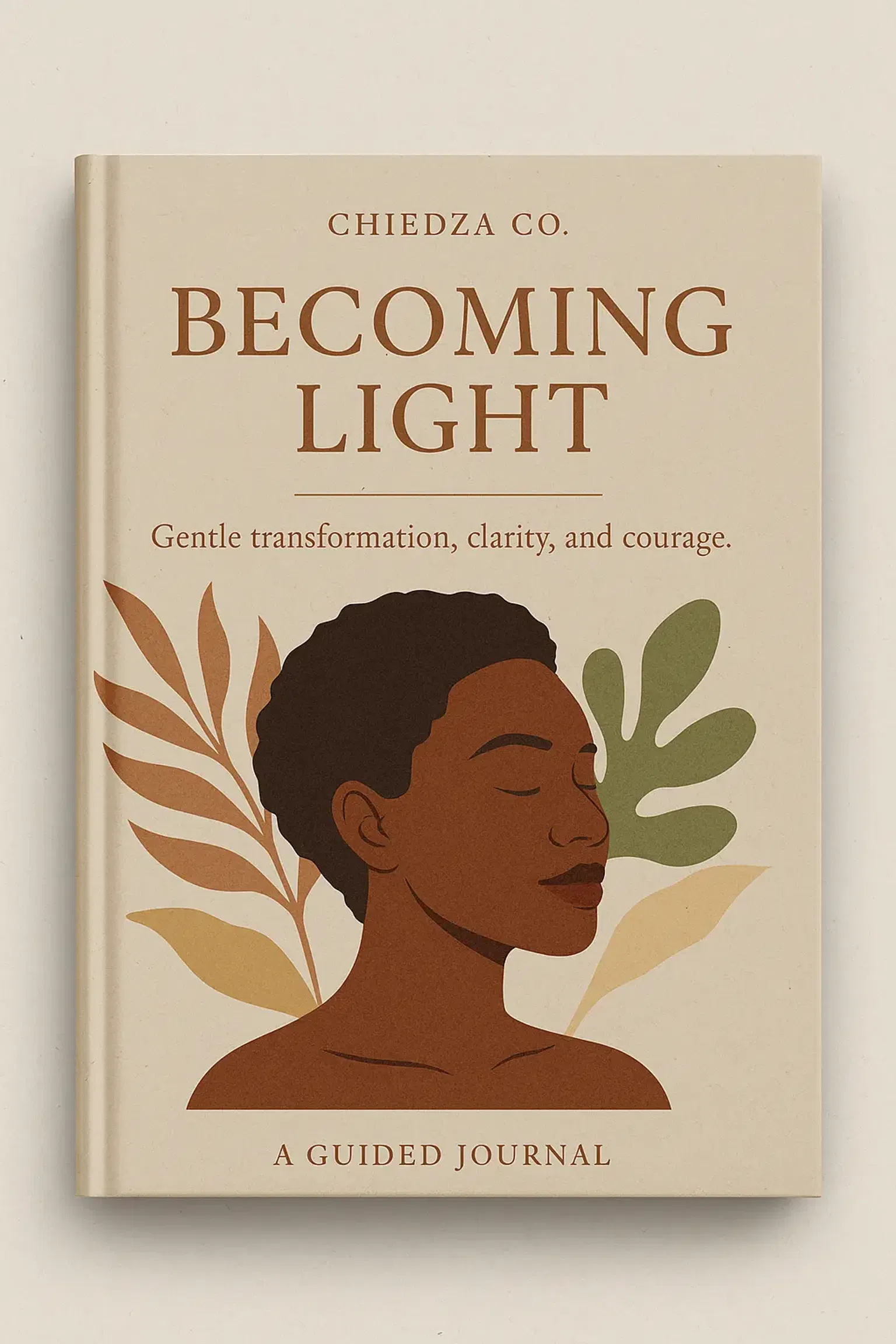
Let’s be honest: I have spent a scandalous amount of money on candles that smell like "serenity" and mugs that tell me to "Choose Joy" in a font so loopy it’s practically unreadable. And for a long time, I actually tried to follow those mugs' advice. I’d wake up, look at a mountain of laundry, a chaotic inbox, and a heart that felt a bit bruised from life’s latest curveball, and I’d tell myself, "Just think positive thoughts! Good vibes only!"
Spoiler alert: It didn't work. In fact, it made me feel worse.
There is a specific kind of exhaustion that comes from performing happiness when you’re actually hurting. It’s like trying to paint a bright yellow sun over a crack in the wall, the crack is still there, it’s just now covered in sticky, wet paint. That, my friends, is toxic positivity. It’s the insistence that we must maintain a "positive" outlook regardless of how dire or difficult a situation is. And frankly? It’s a waste of your precious time.
If you’ve been feeling like your "self-care" is just another item on a to-do list that makes you feel guilty, I’m here to offer an alternative. We’re trading forced smiles for authentic healing. We’re trading "good vibes" for a self love journal routine that actually holds space for the real you, the one who is tired, the one who is rising, and the one who is everything in between.
The Performance of "Fine"
We live in a culture that rewards the "hustle" and the "glow-up," but rarely the "messy middle." As women, especially those of us navigating the intersection of heritage, career, and community, there is an unspoken pressure to be the "strong one." We are expected to carry the weight of the world and look radiant while doing it.
When we use journaling as a tool for toxic positivity, we write things like:
- "I am so grateful for this challenge because it’s making me stronger." (Even when we actually just want to scream into a pillow.)
- "I will only focus on the good today." (Which effectively bans our actual feelings from the room.)
This is self-abandonment disguised as self-improvement. Authentic self-love doesn't ask you to ignore the storm; it asks you to acknowledge that you are the one standing in it, and you deserve a coat.
A Rooted Approach to Resilience
In my own journey, navigating life’s storms from a wheelchair, building a business, and reclaiming my identity, I realized that true resilience isn't about being "unbreakable." It’s about being unextinguishable.
I often talk about a rooted resilience methodology I live by: the belief that the light within you does not go out, even when the world feels very, very dark. But to see that light, you have to stop trying to blind yourself with artificial "positivity." You have to be willing to sit in the quiet, honest truth of your current season.
This isn't about "fixing" yourself. You aren't a broken appliance; you’re a human being in transition. Our goal with a self love journal isn't to manufacture happiness, but to cultivate a space where you can be found again.
The 5-Minute "Becoming Light" Routine
I know you’re busy. I know your "me time" is often squeezed between a Zoom call and a school run, or between a late-night deadline and the sweet relief of sleep. That’s why this routine is exactly five minutes. No fluff, no "good vibes only" requirement, just five minutes of radical honesty.
Minute 1: The Raw Truth (The Emotional Check-in)
Forget the affirmations for a second. How do you actually feel? Not how you "should" feel, but the visceral reality.
- Write it out: "Right now, I feel [overwhelmed/lonely/excited/angry]."
- The Witty Twist: If you feel like a hot mess, write "I feel like a hot mess." Authenticity is the only requirement here.
Minute 2: Validating the "Why"
Toxic positivity says "don't feel that way." Authentic self-love says "it makes sense that you feel that way."
- Write it out: "It makes sense that I feel this way because [I’ve had no sleep / I’m grieving a loss / I’m doing something new and scary]."
This step is the catalyst for transformation. When you stop fighting your feelings, you stop wasting energy on the performance.
Minute 3: The Body Scan
Your body is the archive of your lived experience. It remembers the stress your mind tries to "positive-think" away.
- Check-in: Where is the tension? Is it in your jaw? Your shoulders? Your gut?
- Write it out: "My body is telling me [I need a glass of water / I need to breathe / I am carrying too much]."
Minute 4: The Small Act of Support
Self-love isn't always a spa day. Often, it’s a boundary.
- Action: What is one tiny, doable thing you can do for yourself in the next hour?
- Examples: Turning off notifications for 20 minutes, saying "no" to that extra favor, or finally eating a lunch that isn't just your kids' leftovers.
Minute 5: Rooted Appreciation
Finally, we look for the light: not the fake, blinding sun, but the steady, rooted glow of your own strength.
- Write it out: "One thing I appreciate about how I handled myself today is…"
This isn't about being "perfect." It's about acknowledging that despite the storm, you are still here, and you are still rising.
Why Your Tools Matter
You could do this on a napkin, sure. But there is something sacred about having a dedicated space for your evolution. This is why we created the Becoming Light journal.
It was designed specifically for women who are tired of the "toxic positivity" trap. It doesn't demand that you be happy every day. Instead, it offers a gentle, structured path toward self-discovery and transformation. With its soft neutral palette and prompts that encourage you to "pause, reflect, and rise," it’s the perfect companion for this 5-minute routine.
When you open a journal that reflects your identity: featuring beautiful illustrations of Black women and rooted in a Zimbabwean British dual heritage: it sends a message to your subconscious: You are seen. Your story matters. Your healing is a priority.
Stop Fixing, Start Finding
The next time you feel the pressure to "stay positive," I want you to give yourself permission to ignore it. Instead, pick up your self love journal and give yourself five minutes of truth.
Transformation doesn't happen because we forced ourselves to be happy. It happens when we give ourselves permission to write our own story: the real one, with all its shadows and its incredible, unextinguishable light.
If you’re ready to stop the "good vibes" performance and start the journey of gentle transformation, I invite you to explore our collection of guided journals. Whether you need the deep reflection of "Still Rising" or the intentional growth of "Becoming Light," there is a space here for you.
You’ve spent enough time trying to be "fine." It’s time to start becoming whole.

Let’s be honest for a second: life has a funny way of turning the lights out just when you thought you’d finally found the switch.
One minute you’re cruising along, and the next, you’re standing in what I like to call "the middle of the storm." It’s that disorienting space where the old version of you doesn’t quite fit anymore, but the new version hasn't checked in yet. You’re looking for clarity, but all you can see is fog.
I’ve been there. I know the weight of a heavy heart and the deafening silence of a mind that has too many questions and not enough answers. When I first started navigating my own "middle," I realized that I wasn't just a minor character in a sad story. I wasn't a footnote in someone else's book. I was the whole city, expansive, resilient, and capable of being rebuilt, even after the hardest winters.
But how do you start rebuilding when you can’t even find your tools? For me, the answer was always at the tip of a pen. Journaling isn't just about recording what you had for lunch; it’s a self discovery journal practice that acts as a bridge from the chaos of the storm to the peace of gentle transformation.
If you’re struggling for clarity today, I’ve put together 30 journaling prompts for healing to help you find your way back to yourself.
The Rooted Approach: Why Journaling Works
We often try to "think" our way out of pain. We analyze, we ruminate, and we loop the same three stressful thoughts until we’re dizzy. Journaling breaks the loop. It takes the abstract, heavy emotions swirling in your chest and pins them onto paper where they can no longer hide.
My resilience methodology is simple: we don't ignore the storm; we sit in it, we name it, and then we decide how we’re going to rise through it. This isn't about toxic positivity. It’s about honest, soul-deep reflection.
10 Prompts for the Middle of the Storm
When you’re in the thick of it, you don't need "manifestation" prompts. You need grounding. You need to acknowledge the "now."
- What does the "storm" look like right now? If you had to describe your current struggle as a weather pattern, what would it be? (A slow drizzle? A hurricane? A thick fog?)
- Where am I holding the tension? Close your eyes and scan your body. Where is the tightness? What is that body part trying to protect?
- What is the loudest "lie" I’m telling myself today? (e.g., "I'm behind," "I'm not enough.") Now, write down one piece of evidence that proves it’s false.
- What am I mourning? Healing requires grieving what we’ve lost, even if it’s just a version of ourselves we used to be.
- What feels heavy? List 5 things weighing on your mind. Beside each, write whether it’s yours to carry or if you’re holding it for someone else.
- If my heart had a voice, what would it be whispering right now?
- What is one thing I know to be absolutely true, even in this uncertainty?
- What do I need most in this exact moment? (Is it a nap? A boundary? A glass of water?)
- Who is in my "inner circle" of safety? Who can I be messy with?
- How have I survived 100% of my hardest days so far? List three specific times you were "in the middle" before and how you made it out.

10 Prompts for Gentle Transformation
As the storm begins to settle, we move into a season of "becoming." This is where we start to look at the wreckage and see the seeds of something new. This is the heart of a self discovery journal.
- What parts of me are currently "under construction"?
- What would "gentle transformation" look like for me? If I didn't have to rush my healing, how would I move through my day?
- What is a "small win" I’ve had in the last 48 hours? (Yes, getting out of bed counts.)
- What am I ready to leave behind in the old chapter? (A habit, a resentment, a pair of jeans that don't fit?)
- If I were to treat myself with the same compassion I give my best friend, what would I say to myself tonight?
- What does "rest" feel like to me? Not just sleep, but soul-level rest.
- What is one dream I tucked away because I thought I wasn't "there" yet?
- How has my definition of "strength" changed over the last year?
- What are three things I love about the woman I am becoming?
- If I could give my younger self one piece of advice for this season, what would it be?
10 Prompts for Rising with Intention
Clarity comes when we stop looking for the exit and start looking at the horizon. These prompts are designed to help you reclaim your authentic identity.
- What does it mean to "rise with intention" today?
- What are my three non-negotiables for my peace of mind?
- If I stopped trying to please everyone else, what would I do with my Saturday?
- What is a "scent" or a "sound" that makes me feel like I’m home within myself?
- How can I take up more space in my own life? (Where am I shrinking?)
- What does a "successful" day look like to me now? (Hint: it doesn't have to involve a to-do list.)
- What is one way I can honor my Zimbabwean or dual heritage today? (Or whatever cultural roots ground you.)
- What am I most proud of myself for, specifically in the way I’ve handled this transition?
- What does "freedom" look like in my next chapter?
- Write a "Letter of Intent" to your future self. What are you promising her?

Tools for the Journey: Still Rising & Becoming Light
I didn't just write these prompts for a blog post; I lived them. And because I know how hard it is to face a blank page when your heart is full, I created physical tools to hold that space for you.
If you are currently in the thick of it: navigating grief, burnout, or a major life shift: the Still Rising Guided Journal was made for you. It’s a 30-day sanctuary designed for women in the middle of the storm, filled with the exact journaling prompts for healing that helped me find my feet again.
Once the clouds start to part and you’re ready to ask, "Who am I now?", Becoming Light is your companion. It’s focused on gentle transformation, helping you peel back the layers and step into your clarity with courage.
Something Special is Coming: The Chiedza App
I know that life doesn't always happen at a desk with a pretty pen. Sometimes the "storm" hits while you’re on the bus, or the "clarity" strikes at 2 AM. That’s why I’m so excited to share that we are building a digital home for your transformation.
The Chiedza App is coming soon! It will be a sacred digital space where you can access these prompts, join community reflections, and track your rising journey from anywhere. Think of it as a pocket-sized sanctuary for the woman on the move. Keep an eye on our shop and sign up for our newsletter to be the first to know when we go live.
Final Thoughts: You Are the City
Transformation doesn't happen overnight. It’s a slow, often messy process of writing and rewriting your story. But remember this: you are not a footnote. You are not a "by the way" or a "once upon a time."
You are a vibrant, living city with deep foundations. And even if some of the buildings have crumbled, the ground beneath you is solid.
Take a breath. Grab your pen. Let’s start writing the next chapter.
With love and intentionality,
Ngonie & The Chiedza Team
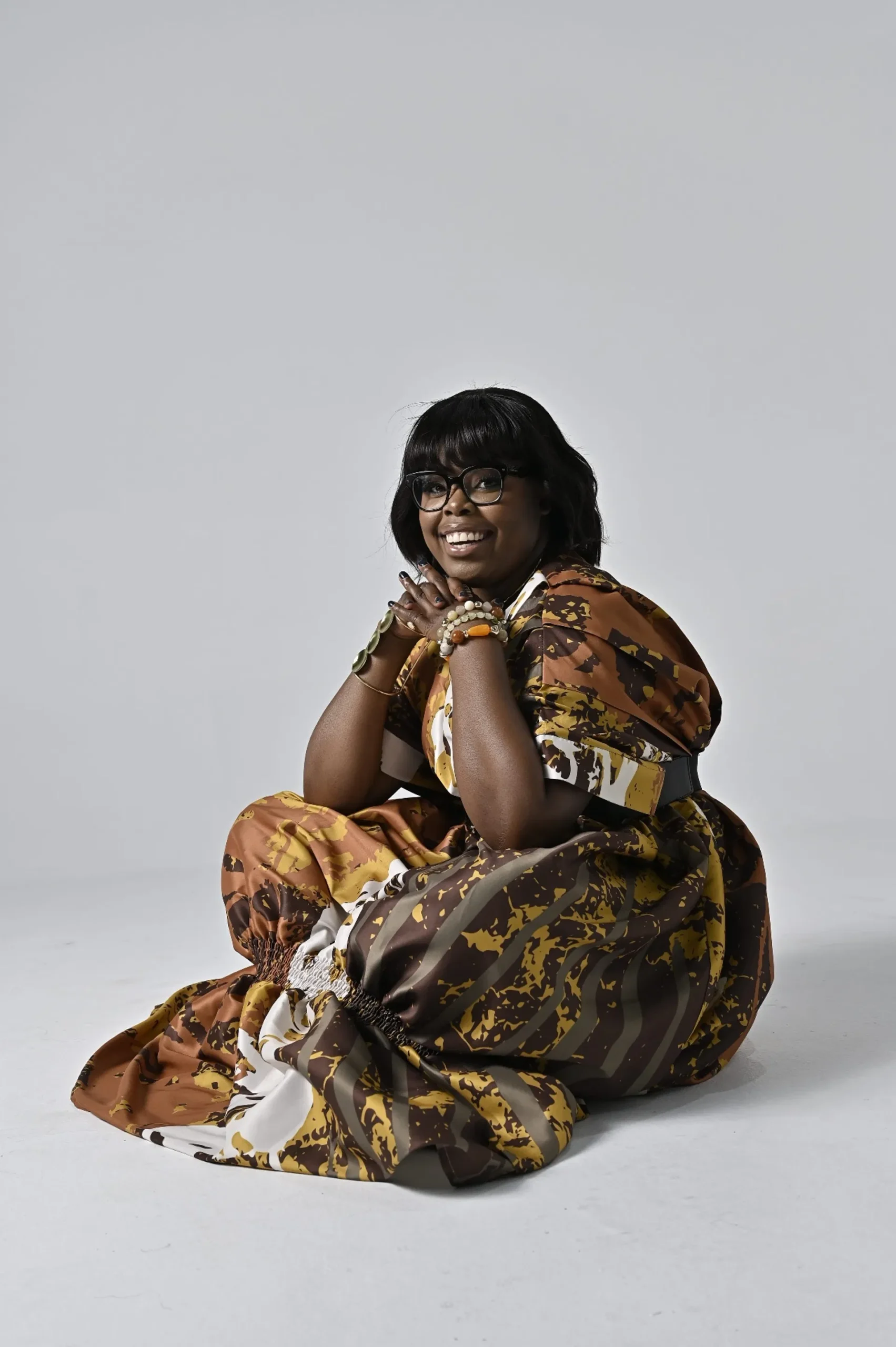
The world demands efficiency, even in our suffering.
We are taught that progress is a ladder: a steady, upward climb toward a version of ourselves that is "fixed," polished, and finally quiet. We expect our healing to follow the same logic as a career path or a home renovation. We want to check the boxes: Grief processed. Trauma resolved. Boundaries set. But healing is rarely that obedient. Some days feel tender and honest; others drag old ache back into the room. This is what makes healing real: not constant ascent, but the courage to remain present through its uneven weather.
But the soul does not move in a straight line.
Healing is a radical rebellion against the clock. It is a slow, rhythmic return to the self, often looping back through the very shadows we thought we had outrun.
The Myth of the Staircase
The lie of the linear path is a heavy burden. It suggests that if you have a bad day: if you wake up with the old familiar weight in your chest after months of feeling light: you have somehow failed. It implies that you are back at the beginning.
This is a fundamental misunderstanding of the human spirit.
Healing is not a staircase; it is a spiral. When you find yourself revisiting an old pain, a familiar trigger, or a buried fear, you are not back at square one. You are returning to a known coordinate, but you are arriving there with more awareness, more tools, and a different perspective. You are circling the same mountain, but you are at a higher elevation.

The Sting of the Thaw
There is a period in every healing journey where things feel significantly worse before they feel better. We call this the thaw.
When a limb is frozen and numb, it doesn't hurt. It is only when the blood begins to rush back in, when the warmth touches the skin, that the pain becomes unbearable. Emotional healing operates on the same frequency. For years, you may have survived by numbing, by compartmentalizing, or by moving so fast that your shadows couldn't catch you.
The moment you slow down: the moment you pick up an emotional healing journal and begin to look inward: is the moment the "numbness" begins to fade.
The pain that surfaces isn't new; it is simply old pain that is finally being felt. This is not regression. It is the necessary, agonizing evidence of life returning to parts of you that you had to abandon just to stay alive. To feel is to flourish, even when the feeling is heavy.
Ancestral Echoes and the Weight of History
For many of us, particularly within the Zimbabwean-British experience, our healing is never just ours alone. We carry the silence of those who came before us. We carry the unexpressed grief of grandmothers who had no room for tears and the displaced longings of fathers who had to be pillars of stone.
When your journey feels non-linear, it is often because you are not just processing your own thirty or forty years of life. You are untangling knots that were tied generations ago.
Your "bad days" are sometimes not yours at all; they are the echoes of ancestral survival strategies that are no longer needed but are still vibrating in your nervous system. Healing is the act of deciding which of these echoes to keep and which to gently lay to rest. This is the core philosophy of Standing On Our Last Bones: even when life reduces us to what feels like our last strength, our last nerve, our last bones, we are still standing. We are still rising.
Survival as an Outdated Strategy
We often judge our "relapses" with a harshness that serves no one. We see our people-pleasing, our hyper-vigilance, or our sudden retreats into isolation as flaws.
In reality, these were your protectors.
These patterns were the armor you wore to survive environments that did not know how to hold your softness. Your brain does not distinguish between a past threat and a current trigger; it simply tries to keep you safe. When you "backslide" into an old habit, it is simply your system reaching for a tool it knows how to use.
Progress is not the absence of these impulses. Progress is the moment you notice the impulse and choose to say, "Thank you for trying to protect me, but I am safe now." Resilience is not polished strength. It is what remains when almost everything has been spent, and still, something in you refuses to collapse.
The Witness of the Page
In the middle of the storm, clarity is a luxury we often cannot afford. This is why the practice of reflection is so vital. It provides the "unseen" proof of our evolution.
Using an emotional healing journal isn't about writing beautiful prose or finding immediate answers. It is about creating a record of your survival. It is about being a witness to your own complexity.
When you look back at entries from a year ago, you might see the same fears. But look closer. Notice how you talk to yourself now versus then. Notice the "pauses" you've learned to take. The page doesn't lie; it shows you that while the waves are still coming, you have learned how to build a stronger boat.
The Still Rising journal was designed for this exact purpose: to be a companion for women navigating the messy, non-linear middle of their transformation.
What Real Progress Actually Looks Like
If we stop looking for the straight line, what are we looking for instead?
Progress in healing is subtle. It is the quiet shifts in the internal landscape that no one else sees. It looks like:
- The Shorter Recovery: You still get triggered, but instead of it ruining your week, it ruins your afternoon. You find your way back to your center a little bit faster.
- The Internal Dialogue: The voice in your head is 5% kinder than it was last month. You have replaced "What is wrong with me?" with "What does this part of me need?"
- The Boundaried 'No': You say no to something that drains you, and you only feel guilty for ten minutes instead of ten hours.
- The Recognition: You notice the old pattern as it's happening, rather than three days later.
These are the crowns we build from our scars. They are not shiny, and they are not always visible to the world, but they are the true markers of a soul that is Still Rising.
You Are Not Broken
There is a profound peace in accepting that you may never be "finished."
The goal of the healing journey is not to reach a destination where pain no longer exists. The goal is to become a person who can hold their own pain with compassion. It is to become someone who is no longer afraid of their own depths.
Society monetizes our desire to be "fixed" because a person who feels perpetually "broken" is a person who keeps buying solutions. But you are not a project to be completed. You are a human being to be experienced.
Your non-linear path is not a sign of failure. It is the signature of your humanity. It is the proof that you are doing the deep, messy, holy work of becoming who you were always meant to be: before the world told you who you should be.
Stay in the spiral. Keep the pen moving. Allow yourself the grace of a slow, uneven, and beautiful rising.
If you’re ready to document your own non-linear journey, explore our collection of guided journals designed to hold your story, exactly as it is.
For a long time, I treated Friday evenings like a frantic race to a finish line that didn't exist. I’d be staring at my laptop screen, my eyes stinging from blue light, trying to squeeze out one last email before the weekend "technically" started. My "rest" usually consisted of collapsing onto the sofa, scrolling through Instagram for three hours, and waking up on Saturday feeling just as drained as I did on Monday morning.
I was surviving, but I wasn't becoming. I was busy, but I wasn't rising.
Everything changed when I stopped looking at the Sabbath as a religious "to-do" and started seeing it as a "to-be." I traded the rigid rules for a romance with stillness. I discovered the concept of Menuha.
The Heart of Rest: It’s Not a Rule, It’s a Romance
In Genesis 2, we read that God finished His work and then He rested. But in the original Hebrew context, this wasn't because He was tired. (I mean, He’s God, He doesn’t get the 3 PM energy slump). He was creating Menuha.
Menuha isn't just the absence of work; it’s a positive, created reality of tranquility, joy, and harmony. It’s the feeling of finally being "at home" in your own soul. When we practice a Sunset Sabbath, we aren't just following a command from an old book; we are accepting a gentle invitation from a Father who wants us to find sanctuary in the middle of our storms.
For those of us on a healing journey, rest can feel like a threat. We think if we stop, the memories or the pain will catch up to us. But I’ve found that when I use my self care journal to document these sacred pauses, rest becomes the very container where healing happens.
Step 1: The Golden Hour Transition
The ritual begins the moment the sun starts its descent. In many cultures, including my own Zimbabwean heritage, the transition from day to night is a sacred boundary.
How I manage this is simple: I physically "clear the deck." I tidy one small corner of my home, usually my writing desk or my bedside table. I’m not talking about a deep clean (we aren't trying to win any "Housewife of the Year" awards here). I’m just moving the clutter out of my immediate line of sight.
Action Item: Light a candle. As you strike the match, say it out loud: "I am stepping out of doing and into being." This small act signals to your nervous system that the "fight or flight" of the work week is over.
Step 2: The Digital Fast (Unplugging the Noise)
You cannot find Menuha while your phone is pinging with notifications about things you can’t change until Monday.
I’ve learned the hard way that my manifestation journal works best when I’m actually present in my own life, not watching someone else’s curated highlight reel. I put my phone in a drawer. Not on the counter. In. A. Drawer.
If the idea of being "unreachable" panics you, remember: the world managed to spin for thousands of years without you checking your DMs every twenty minutes. You are allowed to be "off the grid" for your own sanity.
Step 3: The Sacred Script (Journaling Your Truth)
This is where the magic happens. I pull out my Still Rising journal. This isn't the time for a grocery list; it’s the time for soul-work.
I use a rooted approach to my writing. I ask myself:
- What am I carrying from this week that is too heavy for me to hold?
- Where did I see a "glimmer" of God’s goodness today?
- What do I need to release so I can truly rest?
Writing these things down on physical paper is a way of "externalizing" the burden. Once it’s in the journal, it doesn't have to live in my head anymore. If you’re looking for a tool to help you navigate these reflections, our journals and digital resources are designed exactly for this kind of intentional pause.
Step 4: The Feast of Presence
Sabbath is meant to be delightful. In Jewish tradition, the Sabbath is compared to a bride, someone you prepare for with joy.
For me, this means a "feast" that requires zero stress. Sometimes it’s a simple bowl of hot stew, other times it’s just a really good bar of dark chocolate and a cup of Rooibos tea. The point is to savor it. Eat slowly. Taste the spices. Feel the warmth of the mug.
When we rush our food, we tell our bodies we are still in "survival mode." When we linger, we tell our bodies they are safe.
Step 5: The Surrender Blessing
To close my Sunset Sabbath ritual, I practice a moment of surrender. I sit in the dim light of the candle and I bless my own week. I acknowledge that I didn't get everything done, and that is okay.
I often look back at my Becoming Light journal to remind myself that transformation is gentle. It’s not a violent overhaul; it’s a slow unfolding.
My Closing Prayer: "Thank You for the gift of this day. I release my mistakes. I release my anxieties. I receive Your peace. I am enough, even when I am doing nothing."


Why This Matters for Your Healing Journey
If you are navigating a difficult season, your brain is likely stuck in high-alert. A Sunset Sabbath is a "resilience methodology" that helps rewire your spirit for hope. It reminds you that you are a daughter of the King, not a slave to the grind.
When you give yourself permission to write your own story, one that includes rest, you stop being a footnote in your own life. You start to rise.
If you’re ready to start your own Sunset Sabbath ritual but don't know where to begin, I invite you to explore our Journal Hub. Whether you need the structured prompts of "Still Rising" or the blank space of our premium notebooks, these tools are here to be the catalyst for your transformation.
And hey, if you need someone to come and speak to your community about reclaiming their identity through the power of journaling and rest, I’d love to connect. You can find more about my speaking engagements here.
Let’s find our Menuha together. The sun is setting. It’s time to come home to yourself.
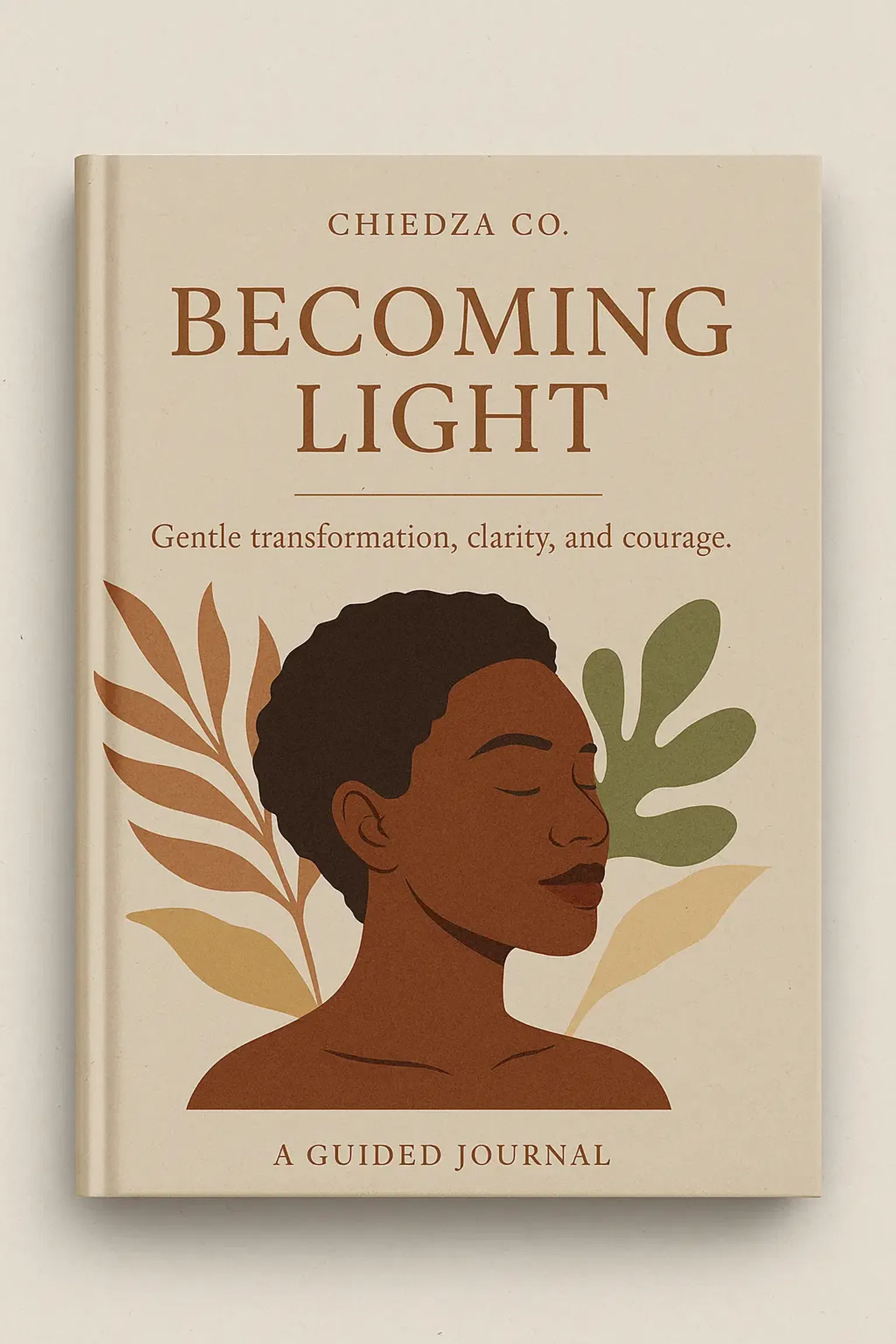
It’s Friday afternoon. If you’re anything like me, your browser has seventeen tabs open, your phone is buzzing with "just one more thing" emails, and you’ve likely forgotten to drink anything other than lukewarm coffee since 10 AM. The world tells us that our value is tied to our output: that if we aren’t producing, we aren’t "winning."
But as the sun begins its slow descent, I feel a different pull. It’s an ancient invitation, whispered from the very beginning of time. It’s not a command to be checked off a religious to-do list; it’s a love letter. It’s the Sunset Sabbath.
Tonight, I’m inviting you to stop seeing rest as a "break" from your real life and start seeing it as the climax of your week. We’re moving from the law of the Sabbath to a romance with stillness.
Beyond the "Day Off": The Mystery of Menuha
In the book of Genesis, we see God finishing the heavens and the earth. And then, Genesis 2 tells us He rested. Now, let’s be real: the Creator of the universe doesn’t get "tired" in the way we do after a long week of school runs and Zoom calls. He didn’t need a nap.
The Hebrew word used there is Menuha. It’s a word that doesn't just mean "not working." It means tranquility, serenity, delight, and peace. It’s the kind of rest that is so beautiful, it actually required its own act of creation. God created the world in six days, but on the seventh, He created Menuha: the atmosphere of sacred joy.
When we enter our Sunset Sabbath, we aren't just crashing because we're exhausted. We are stepping into a sanctuary in time. We are saying, "The work is done, even if the inbox isn't empty." We are choosing to fall in love with the stillness that God Himself calls 'holy.'
Shifting the Narrative: From Rules to Romance
For a long time, I struggled with the idea of Sabbath. I grew up thinking it was about all the things you couldn't do. No work. No chores. No fun? It felt like a cage.
But as I’ve navigated my own healing journey, particularly through seasons of intense physical and emotional storms, I’ve realized that Sabbath is actually a form of rebellion. It’s a refusal to let the world own your peace.
I’ve started viewing Friday night not as the "end of work," but as the "beginning of the romance." It’s the time when I put away the "doing" and simply focus on "being." It’s where I get to reconnect with my authentic identity, the one that exists completely separate from my achievements or my to-do list.
My Sunset Sabbath Rituals (The Practical Magic)
You don't need a cathedral to find sacred rest. You just need a little intention. Here is how I move into my Friday night pause:
1. The Literal Light
As the sun starts to dip, I light a candle. It sounds simple, but it’s a physical signal to my brain that the atmosphere has changed. The harsh fluorescent light of "productivity" is gone. We are now in the soft glow of Menuha.
2. The Great Unplug
I put my phone in a drawer. Seriously. The digital world is the loudest thief of peace. If you’re constantly scrolling through someone else's highlight reel, you can’t hear the whisper of your own soul. This is your time to disconnect from the "manifestation journal" culture of wanting and connect with the reality of having: having this moment, this breath, this life.
3. The Sacred Scribble
This is where my self care journal becomes my best friend. I don't write to-do lists on Friday nights. I write "thank you" lists. I use my Still Rising journal to document where I saw God in the middle of the week’s storms.
Journaling during the Sabbath isn't about solving problems; it's about witnessing your own resilience. It’s about looking at the week and saying, "I’m still here. I’m still rising."
Tools for the Transformation
Transformation doesn't happen by accident; it happens by design. If you find it hard to switch off your "work brain," you might need a guide to help you navigate that inner landscape.
Our Becoming Light journal was designed for these exact moments: the gentle transformation that happens when we give ourselves permission to be quiet. It’s not just a book; it’s a companion for your healing journey.
And for those of you who are currently in the thick of it: the ones who feel like the "storm" hasn't quite passed yet: the Still Rising journal is your anchor. It gives you the prompts to find your voice when the world feels too loud.
Permission to Pause
Tonight, as the sun goes down, I want you to give yourself a radical gift: Permission.
Permission to leave the laundry in the basket.
Permission to let that email wait until Monday.
Permission to sit in the silence and realize that you are loved, held, and enough: exactly as you are, without doing a single thing.
The Sabbath was made for you. It’s God’s way of saying, "Come here, sit down. I just want to be with you."
So, grab your favorite tea, find your favorite chair, and open your journal. Let’s fall in love with sacred rest together.
Stay resilient, stay intentional, and most importantly: stay still for a while.
With love and Menuha,
Ngonie Johns
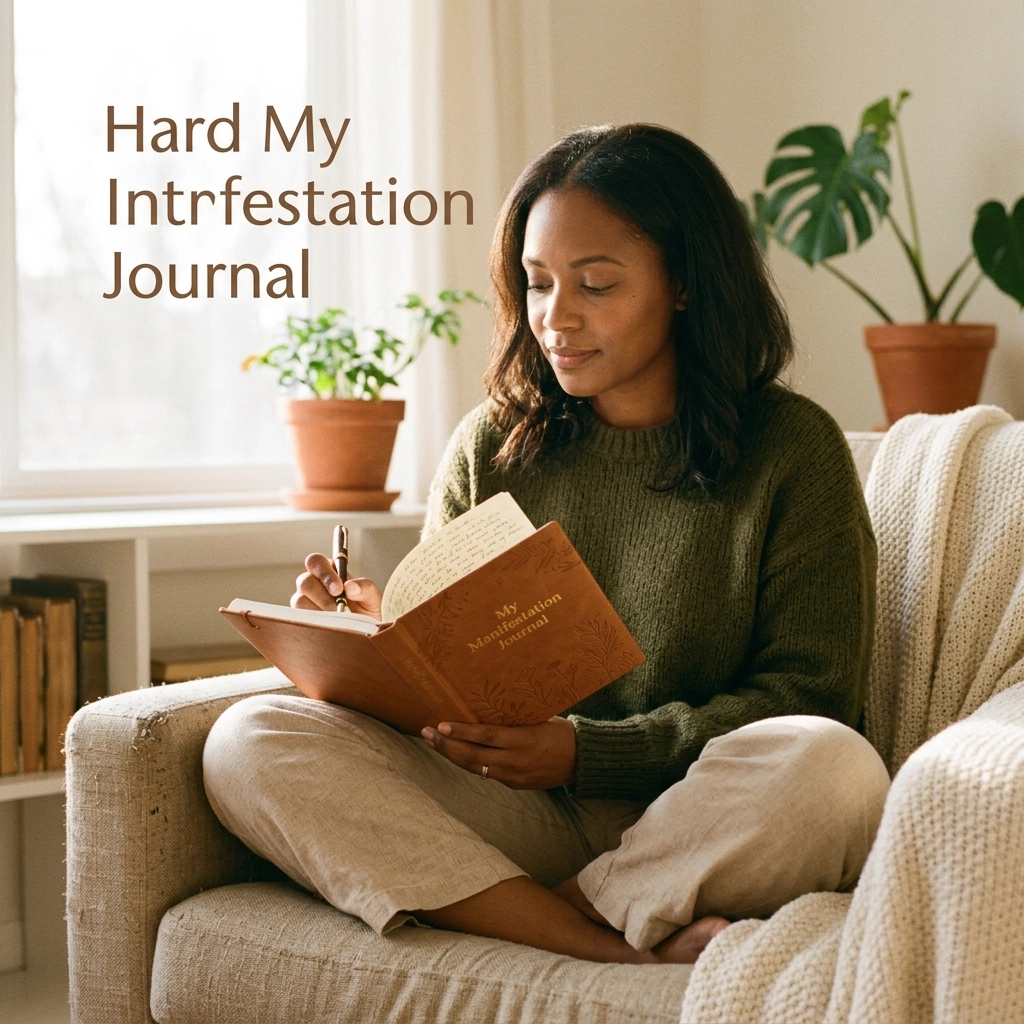
The Radical Reclamation of the Self
Manifestation is not a transaction with the universe; it is a treaty signed between the soul and the present moment.
The modern world monetizes our dissatisfaction. It tells us that we are a collection of deficits waiting to be filled by external acquisitions. We are taught to look forward with hunger and backward with regret. For those navigating the labyrinth of a healing journey, this constant external gaze is a weight that anchors the spirit to its wounds.
We often mistake manifestation for a spiritual shopping list. We think it is about the car, the house, or the hollow approval of strangers. But true manifestation: the kind that breathes life back into a tired heart: is the act of aligning the soul with its inherent light. It is a rebellion against the narrative of "not enough."
When you open a manifestation journal, you are not simply writing a wish list. You are engaging in an act of radical presence. You are stating that despite the fracture, the vessel is still capable of holding gold.
The Weight of the Unspoken Word
Healing demands an audience, yet the world is often too loud to listen to the silence of our growth.
There is a gravity to the things we do not say. Trauma, in its various disguises, lives in the white space of our lives. It thrives in the unarticulated corners of the mind. To heal is to bring these shadows into the light, but the light can be blinding.
A manifestation journal acts as a filter. It allows the weight of the past to be converted into the momentum of the now. By writing in the present tense, you strip the past of its authority. You no longer say, "I want to be whole." You say, "I am becoming." This shift is subtle, yet it is the difference between a plea and a decree.
It is in the journal-hub that the architecture of the new self is designed. Each entry is a brick. Each reflection is a reinforcement. We do not write to record our life; we write to permit our life to begin.
The Alchemical Pen and the Architecture of Hope
To write is to witness the transmutation of grief into a blueprint for existence.
The pen is a primitive tool, yet it possesses a power that digital interfaces cannot replicate. There is a physiological resonance in the act of pressing ink to paper. It is a grounding cord. When you document your intentions within the context of healing, you are creating a new neural map.
The brain does not always distinguish between the vividness of a written vision and the reality of a physical experience. When you inhabit the feeling of peace on the page, your nervous system begins to recognize peace as a safe destination. This is how the manifestation journal changes the navigation of your journey. It provides a compass that points toward internal states rather than external milestones.
We are often deterred by the scale of our own transformation. We see the mountain and forget the feet. The journal breaks the mountain into pebbles. It asks, "What does alignment look like in the next hour? In the next breath?"

The Presence Tense: A Sanctuary from the Void
Survival is a memory of the past; living is a manifestation of the now.
Most of our internal dialogue is a post-mortem of what went wrong or a frantic rehearsal of what might go right. Both are forms of abandonment. We abandon ourselves to the ghost of yesterday or the phantom of tomorrow.
The practice of manifestation journaling forces a return to the "is."
- The sun is warm.
- The breath is steady.
- The soul is expanding.
This is the "presence tense." It is a sanctuary. In this space, the healing journey ceases to be a marathon toward a distant finish line and becomes a series of arrivals. Every page is a home. Every sentence is a rest. We find that the more we manifest the feeling of being supported, the more the universe reflects that support back to us. It is a mirror, not a door.
For those who feel the weight of words we never said, the journal is the only ear that never tires. It is the only witness that does not judge the pace of the rising.
Rebellion Against the Monetization of Pain
Society asks us to perform our trauma; the journal invites us to inhabit our power.
We live in an era where pain is a currency. We are encouraged to share our wounds for the sake of engagement, yet the actual labor of healing is private and unglamorous. It is the quiet work of 4:00 AM reflections and the silent refusal to stay broken.
A manifestation journal is a private rebellion. It is a space where you do not have to "perform" healing. You do not have to be an inspiration. You only have to be honest. You manifest your truth, however jagged it may be. In doing so, you reclaim the narrative from those who would use your story for their own ends.
At Chiedza Co, we understand that the shop is not just a place for products; it is a resource for the resistance. Our books and journals are crafted to be the companions for this quiet defiance. They are the physical evidence that you are choosing to stand on your own bones.
The Geometry of Grace
Alignment is the shortest distance between where you are and who you have always been.
We often think of healing as a process of adding: adding more self-care, more therapy, more knowledge. But manifestation teaches us that healing is often a process of subtraction. It is the removal of the layers of "not me."
Your journal becomes a tool for discernment. As you write, you begin to see which desires are yours and which were implanted by a world that wants you to be small. You begin to manifest a life that fits your soul, rather than a soul that fits your life.
This is the geometry of grace. It is the realization that you are not moving toward a version of yourself that is "better." You are moving toward the version of yourself that is "truer." The journal is the map of that return.
The Infinite Script of the Rising
The end of one page is merely the threshold of the next.
There is no finality in the healing journey. There is only the continuous act of becoming. The manifestation journal is never truly finished; it is a living document of an evolving spirit.
When you look back at the pages written in the middle of your darkest storms, you do not see a victim. You see an architect. You see someone who had the audacity to imagine light when there was only shadow. You see someone who understood that to manifest is to believe in the unseen until it becomes undeniable.
We still rise. Not because the weight is gone, but because we have learned how to carry it differently. We have learned to turn our scars into crowns.
The Invitation to Inhabit
Do not just write the words. Become the space where they are true.
If you are standing at the threshold of your own transformation, let the ink be your witness. Let the page be your ground. The journey is long, but you do not have to walk it without a map of your own making.
Visit our journal-hub to find the vessel for your own rising. Whether you seek the Still Rising guide or the quiet space of a blank page, remember that the act of writing is an act of hope. And in a world that thrives on despair, hope is the ultimate manifestation.
Your healing is not a destination. It is the very ground you walk on. Write it into existence. One breath. One word. One page at a time.

To enter the shadow is to commit an act of quiet rebellion.
In a world that monetizes the bright, the polished, and the performative, turning your gaze toward the unspoken parts of your soul is a radical departure from the norm. We are taught to be architects of our own facades, building structures of personality that the world finds palatable. But the shadow remains: a silent, heavy reservoir of the things we have been told to forget.
When we pick up a shadow work journal, we are not merely writing; we are excavating. We are navigating the weight of words we never said. Yet, the same societal pressures that demand our perfection often follow us into the pages of our journals. We bring the weight of efficiency, the burden of moral judgment, and the exhaustion of productivity into the very space meant for our liberation.
These are not "mistakes" in the traditional sense. They are misalignments. They are the echoes of a world that does not know how to hold the complexity of a human being.
1. The Optimization of the Soul
We live in an era that demands every hour be accounted for, every hobby be a side-hustle, and every internal journey be a path toward a "better version" of ourselves. We treat shadow work as a task to be completed, a box to be checked, or a metric to be improved. We bring a stopwatch to the altar of the self.
This is the pressure of the machine. When you approach your journaling with the intent to "fix" yourself, you are treating your soul as a broken engine rather than a sacred landscape. You rush the process, looking for the most efficient route to healing, and in doing so, you trample over the very insights that require a slow, deliberate presence.
The Standing Truth:
Healing is not a production line; it is a season of rain that cannot be hurried.

2. The Binary of Moral Judgment
Society demands we categorize our experiences into "good" and "bad." We apply these labels to our emotions with a clinical coldness. We call our anger "toxic," our envy "shameful," and our grief "inconvenient." When we journal, we often find ourselves apologizing to the page, trying to justify why these "darker" parts exist.
This moral binary is a weight that prevents true integration. By labeling a part of yourself as "bad," you create a distance that makes it impossible to understand its origin. Every shadow was once a light that was forced into hiding to keep you safe. To judge it is to continue the exile.
The Standing Truth:
The shadow is not a collection of sins, but a gallery of your unhoused survival strategies.
3. The Violence of Haste
We are afraid of the silence between the questions. When a prompt asks us to look at our deepest fears, we often find ourselves writing quickly, filling the white space with noise to avoid the heavy resonance of the truth. We mistake movement for progress.
The societal pressure for "fast results" convinces us that if we aren't writing pages upon pages, we aren't doing the work. But the most profound moments of shadow work often happen when the pen stops moving. It is the moment when the breath catches in the throat, and the room feels suddenly, significantly, smaller.
The Standing Truth:
True excavation requires the patience of a stone; the depth of the insight is found in the weight of the pause.

4. The Performed Solitude
Even in the privacy of a matte hardcover journal, we often write as if someone is looking over our shoulder. We curate our sentences. We soften our edges. We transform our raw, jagged truths into "learnable moments" that would look good on a digital feed.
This is the internalization of the gaze. We have been trained to be visible at all times, to be "on brand" even in our trauma. When you perform your journaling, you are not engaging with your shadow; you are engaging with your ego’s version of what your shadow should look like. You are creating a narrative instead of experiencing a revelation.
The Standing Truth:
The page must be the one place where you are allowed to be entirely, unapologetically, uninteresting and unrefined.
5. The Disconnection from the Vessel
We treat the shadow as a cerebral problem: a puzzle for the mind to solve. We analyze, we rationalize, and we intellectualize our pain. We use big words to describe small, sharp hurts. In this process, we leave the body behind.
Your shadow does not live in your thoughts; it lives in the tightening of your jaw, the heaviness in your chest, and the shallow nature of your breath. When you journal without checking in with your physical form, you are only doing half the work. You are a cerebral ghost haunting your own story. You might find guidance in resources like Becoming Light, which encourages a more holistic descent into the self.
The Standing Truth:
The mind can lie to protect itself, but the body is the only witness that never forgets the weight.
https://cdn.marblism.com/m1Ey_cJYCeT.webp
6. The Myth of the Healed Version
We are sold a version of "healing" that looks like a destination: a sun-drenched plateau where the shadow no longer exists. This is a societal lie designed to keep us consuming "solutions." We journal with the expectation that if we do it "right," we will eventually reach a point where we are permanently light, permanently calm, and permanently "whole."
This expectation makes the return of the shadow feel like a failure. When the old triggers resurface, or the familiar sadness returns, we feel as though we have wasted our time. But the shadow is not something you "get over." It is a part of the human architecture. The goal is not to eliminate it, but to learn how to dance with it.
The Standing Truth:
Healing is not the absence of the storm, but the radical decision to remain Still Rising while the wind is blowing.
https://cdn.marblism.com/jvRBG39YH6d.webp
7. The Gravity of the Unintegrated
The final misalignment is the belief that shadow work is an isolated event. We open the journal, enter the dark, and then close the book and try to walk back into the light as if nothing has changed. We isolate the "work" from the "living."
The shadow requires integration. If you discover a hidden anger or a buried desire in your pages, but you do not allow that discovery to change how you move through the world, you are merely collecting information. You are observing the weight without ever actually moving it. Radical transformation requires that the insights of the dark be allowed to inform the choices of the day.
The Standing Truth:
The journal is the map, but the life is the terrain; the ink must eventually become the action.

Entering the Quiet Defiance
To move past these misalignments is to accept that shadow work is a slow, heavy, and often unrewarding process in the short term. It is a commitment to the unseen layers of life.
When you sit down with your shadow work journal, let the societal pressures fall away. Forget the "productivity" of your healing. Forget the "moral" quality of your feelings. Forget the "audience" that isn't there.
You are simply a human being in a room, holding a pen, trying to find the words for the things you were never allowed to say. There is no right way to do this, other than to do it with a heart that is open to its own complexity.
The weight you carry is not a burden to be discarded, but a part of your story that is waiting to be heard. Give it the silence it requires. Give it the honesty it deserves.
In the end, we do not journal to become perfect. We journal to become real. And in a world of curated illusions, being real is the most radical rebellion of all.
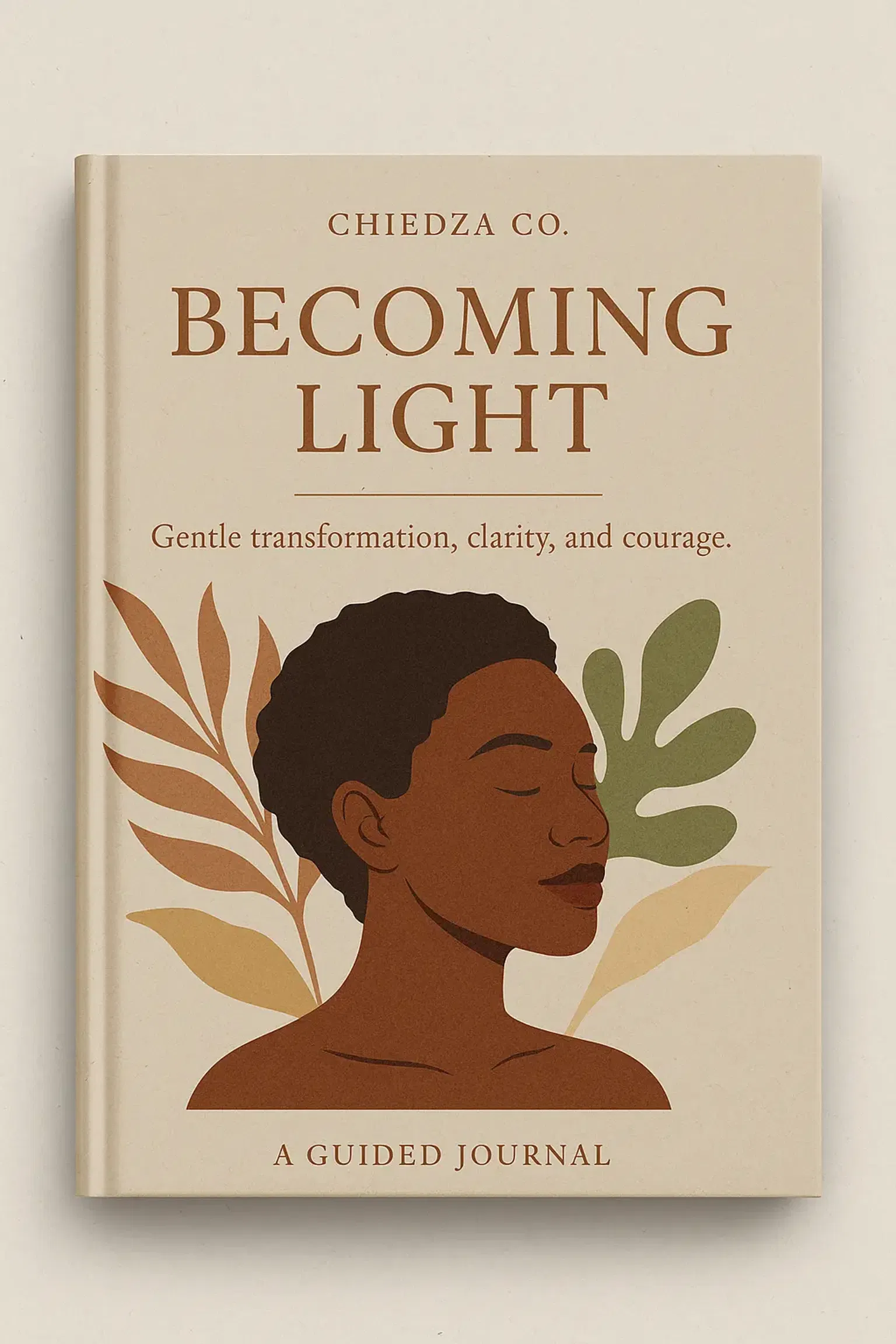
The Weight of the Unspoken
Anxiety is not a failure of character; it is the physiological response to a world that demands more than the human spirit was ever designed to carry.
We live in an era that monetizes our attention and harvests our peace. To feel the tightening of the chest: the "storm" that rolls in without invitation: is to acknowledge the heavy existential burden of existing in the noise. For many women, this noise is compounded by the layers of ancestral expectation and modern pressure. We are expected to be the pillars, yet even pillars can crumble under the weight of an invisible atmosphere.
Journaling for anxiety is not merely a hobby. It is a radical act of rebellion against the chaos.

The Architecture of the Internal Storm
To name a thing is to begin to strip it of its power.
When anxiety remains a nameless vapor in the mind, it fills every corner of our being. It becomes a shadow that follows us into the light. However, when we transfer those swirling, jagged thoughts onto paper, we perform a necessary surgery. We move the pain from the center of our identity to the periphery of our vision.
The page does not judge. It does not offer unsolicited advice. It simply holds the weight.
The Slowing of the Pulse
Writing is inherently slower than thinking. In the gap between a thought and the movement of the pen, there is a sacred pause. This pause is where healing begins. By slowing the narrative, we interrupt the spiral. We force the mind to pace itself with the hand.
Still Rising: A Vessel for the Storm
Within the collection of Chiedza Innovations, there exists a specific sanctuary for these moments of turbulence. The Still Rising Guided Journal is designed for the woman who finds herself in the middle of the storm.
This is more than a notebook; it is a guided journal for women who are weary of the fight but committed to the rising. It serves as a grounded anchor, utilizing warm tones and geometric borders that evoke a sense of ancestral strength and modern resilience. When you hold this journal, you are holding a physical boundary against the encroaching dark.
The Radical Rebellion of Stillness
Choosing to sit with a pen is a refusal to be consumed by the frantic pace of the external world.
In the quiet corners of our homes, surrounded by the soft light of a setting sun or the warmth of a morning tea, we reclaim our narrative. This is where we practice the "sacred pause." We invite you to explore the Self-Care Spiral Journal, a tool specifically crafted for these moments of rest and reflection.

Practices for the Anxious Soul
When the mind is loud, structure is a mercy. Do not look for perfection on the page; look for truth.
The T-Chart of Truths
Divide your page into two columns. On the left, record the "Anxious Story": the lies the storm tells you about your worth and your safety. On the right, record the "Grounded Truth." Use evidence. Use memory. Use the strength of those who came before you.
The Body’s Testimony
Anxiety lives in the flesh. It resides in the shallow breath and the clenched jaw. Use your journal to listen to your body’s testimony.
- Where is the weight sitting today?
- What does the tension in my shoulders want to say?
- If my breath had a color, what would it be?
By documenting these physical sensations in a hardcover journal, you begin to understand the language of your own nervous system. You move from being a victim of the storm to being its observer.
The Ancestral Anchor
We carry more than our own memories; we carry the resilience of the women who stood before us.
For the Black woman navigating the complexities of heritage and healing, journaling becomes a bridge. It is a way to honor the "Gogos" who survived their own storms so that we might flourish today. This sentiment is captured beautifully in our Chiedza Reflections, which encourages the exploration of both darkness and light.

Scars into Crowns
The process of healing is rarely a straight line. It is a rhythmic, often heavy, movement toward the light.
Every entry in your journal is a footstep. Some days the steps are light; other days they are weighted with the mud of old fears. But every step matters. We believe in the transformation of pain. We believe that the very things that sought to break us can become the foundation of our strength.
As you navigate your healing journey, remember that the goal is not to eliminate the storm, but to become a woman who can stand within it, unshakeable and still rising.
The Quiet Power of the Written Word
There is a profound existential relief in seeing your fears bound by the margins of a page.
When anxiety turns inward and the mind begins to rehearse fear, the Becoming Light Guided Journal offers a gentler rhythm. Its prompts help you slow the spiral, name what feels overwhelming, and return to the page as a place of steadiness rather than performance. This is not about forcing calm. It is about creating space to notice your thoughts, soften their grip, and manage anxiety with honesty, patience, and care.

A Final Reflection
You are the one noticing the storm. That means you are separate from it.
By utilizing a guided journal for women, you are giving yourself the gift of a witness. You are affirming that your internal world is worth documenting, worth understanding, and worth protecting. Whether you are using the Still Rising journal or a simple matte hardcover notebook, the act remains the same: a quiet defiance against the chaos.
The storm may blow, but you are rooted. You are grounded. You are still rising.

For a long time, I thought "rest" was a reward I had to earn. I’d tell myself, “If I just finish this project, then I’ll take a nap,” or “Once the kids are settled and the inbox is at zero, maybe I’ll sit down.” But here’s the thing about the inbox: it’s never at zero. And here’s the thing about life: if you wait for the storm to pass before you breathe, you’re going to spend a lot of time suffocating.
I learned this the hard way. There was a season in my life where I was running on fumes, trying to hold everything together while my own heart was in pieces. I was doing all the "healing" work: the therapy, the affirmations, the praying: but I was doing it at a breakneck speed. I was trying to hustle my way to wholeness.
It wasn't working. It was only when I leaned into the concept of the Sunset Sabbath that everything shifted. I stopped seeing rest as a luxury or a "self-care" item on a to-do list, and I started seeing it as a sacred, non-negotiable sanctuary.
The Divine Pause: It’s Not Just About Napping
When we look back at the very beginning: Genesis 2: we see something revolutionary. The Bible tells us that on the seventh day, God finished His work and He rested. Now, let’s be real: the Creator of the universe didn't have a "case of the Mondays." He wasn't tired. He didn't need a nap.
In the Hebrew tradition, this rest is called Menuha.
Menuha isn't just the absence of work; it’s the presence of peace. It’s tranquility, deep ease, and delight. Think of it as the "missing piece" of creation. The world was made in six days, but it wasn't finished until the rest was added. Without rest, creation is incomplete.
If God: who has limitless energy: chose to weave rest into the fabric of existence, why do we think we can thrive without it? For those of us on a healing journey, Menuha is the soil where transformation actually takes root. You can't plant seeds in a hurricane. You need the stillness for the growth to happen.
Shifting from Rule to Romance
I grew up with a lot of "shoulds" around the Sabbath. It often felt like a list of chores I couldn't do, or a rigid law that felt more like a cage than a gift. But what if we looked at it differently? What if we saw the Sabbath not as a rule to keep, but as a romance to pursue?
Imagine an invitation from the Divine to just… stop. To put down the heavy weights of expectation and productivity. To say to the world, "You can wait. I am spoken for today."
This "romance with stillness" is where I found my voice again. When I stopped performing for a day, I started hearing what my soul actually needed. I realized that my value wasn't tied to how much I produced, but to whose I was. That realization is the ultimate manifestation journal entry: the truth that you are enough, right now, in the quiet.
Why Rest is the Secret Sauce of Healing
When you’re navigating life’s storms: whether it’s grief, a health crisis, or a major life transition: your nervous system is often on high alert. You’re in "survival mode." Healing requires moving from "survival" to "safety."
Sacred rest tells your body: “You are safe. You are held. The world will not fall apart if you close your eyes.”
In my own life, especially as a woman navigating life from a wheelchair, I’ve had to reclaim my body as a place of holiness, not just a tool for productivity. Rest became my way of saying "thank you" to a body that has carried me through so much. It’s an act of defiance against a culture that tells us our worth is our work.
During these pauses, I found that having a dedicated self care journal was a game-changer. My Still Rising journal became the place where I’d pour out the "middle-of-the-storm" thoughts that only surface when everything else goes quiet. It’s not just a book; it’s a companion for the pause.
Practical Rituals for the Modern Woman
So, how do we actually do this? How do we "fall in love" with rest when the laundry is screaming and the emails are pinging? We start small. We create a "Sunset Sabbath" that fits our life.
Here is my rooted approach to reclaiming peace:
- The Digital Blackout: Pick a time: maybe Friday evening to Saturday evening: to turn off the noise. The world won't end if you don't see that notification.
- Light the Candle: Use a physical cue to tell your brain the Sabbath has begun. For me, lighting a candle and saying a simple prayer: "I receive Your rest": changes the atmosphere instantly.
- Journal the Quiet: Don't just sit there and worry! Use a manifestation journal to write down three things you’re grateful for that have nothing to do with your achievements.
- Feast on Beauty: Whether it’s a slow walk, a warm bath, or listening to music that makes your soul soar, do something that is purely for delight.

You Are Not a Footnote
I often say that we are not footnotes in our own lives; we are the main characters. And every good story needs chapters of rest. If you are tired, if you are weary, if you feel like you’re just going through the motions, this is your invitation to the Sunset Sabbath.
Healing isn't something you finish; it’s a rhythm you live. And that rhythm must include the pause.
If you’re ready to start your own gentle transformation, I invite you to explore our resources at Chiedza Innovations. Whether it’s the Becoming Light journal for self-discovery or a simple PDF download to get you through the week, we’re here to help you rise with intention.
Falling in love with sacred rest didn't just change my schedule; it changed my life. It gave me back my joy. It gave me back me.
Are you ready to stop running and start resting? Your healing journey is waiting for you in the quiet.

The Altar of the Blank Page
The act of picking up a pen is the first step in a quiet rebellion against a world that profits from your self-estrangement.
We live in a culture that monetizes our distractions, ensuring we never have to face the quiet resonance of our own souls. To sit with a journal is to refuse to be a product of external expectations. It is an excavation of the "unseen" layers of the self that have been buried under the weight of words we never said.
Healing is not a destination; it is a reclamation of the territory stolen by trauma, social conditioning, and the relentless pace of modern existence. To find your authentic identity, you must first acknowledge that much of what you call "yourself" is actually a collection of survival mechanisms.
The Architecture of Silence
We carry the structural integrity of our past wounds within the very way we breathe, speak, and choose.
Before you begin these prompts, understand that the goal is not to "fix" a broken version of yourself, but to witness the version of you that was never broken to begin with. These are journaling prompts for healing designed to strip away the artifice.
1. The Excavation of the Original Self
Consider the version of you that existed before the world provided you with a script for your own life.
Describe the sensory details of a moment from your childhood where you felt entirely autonomous and unobserved, what were you doing, and what did that internal freedom taste like?
2. The Currency of Compliance
We often pay for our belonging with the currency of our authenticity, trading our truths for the safety of being liked.
List three instances this week where you said "yes" while your spirit was screaming "no." What was the specific fear that made the "yes" feel necessary?
3. The Geography of Pain
Healing requires us to map the places within us where the light no longer reaches, acknowledging the borders of our own endurance.
If your current emotional state were a physical landscape, would it be a scorched desert, a stagnant swamp, or a cliffside in a storm? Describe the weather of your inner world today without using traditional "feeling" words.
4. The Unspoken Permission
We spend our lives waiting for a ghost to grant us the authority to live as we truly are.
Write a letter of permission to yourself, signed and dated, granting you the radical right to be "too much," "not enough," or simply "unavailable" to the demands of others.
5. Rituals of Release
The weight of what we carry is often invisible, yet it determines the cadence of our walk and the depth of our rest.
What is one story you tell about your own inadequacy that no longer serves your survival? Imagine placing this story into a small box and burying it: what does the lightness in your chest feel like afterward?
6. The Monetization of Your Exhaustion
In a society that equates worth with productivity, when rest becomes rebellion, the authentic self finally has room to speak.
How much of your identity is tied to what you produce rather than who you are? If you were stripped of your titles, your work, and your usefulness, who is the human being that remains in the silence?
7. Reclaiming the Name
The names given to us by others: labels like "the quiet one," "the difficult one," or "the reliable one": can become cages we inhabit for decades.
If you could rename yourself based solely on the quality of your soul, what name would you choose, and what does this new name protect within you?
8. The Shadow’s Invitation
Authentic identity is not found only in the light; it is the integration of the parts of ourselves we have been taught to hide.
Speak to the part of you that you are most ashamed of. Ask it: "What were you trying to protect when you first appeared?" Listen for the answer with empathy rather than judgment.
9. The Weight of Others’ Expectations
We are often walking through life wearing a coat stitched together from the opinions of people who do not truly see us.
Identify one expectation placed upon you by a parent, partner, or society that feels heavy today. Write down the process of unbuttoning that coat and leaving it on the floor.
10. The Language of the Body
The body keeps the score of every trauma and every repressed truth, speaking in the dialect of tension and ease.
Where in your body is the most silence right now? Where is the most noise? If that tension could speak a single sentence, what is it trying to tell you about your current environment?
11. Sovereignty in Solitude
True identity is often what remains when there is no one left to perform for.
Describe a version of your life where you are the only audience member. What would you do differently today if you knew your choices would never be posted, shared, or validated by another human being?
12. The Ancestral Echo
We are the culmination of the silences of those who came before us, carrying their unhealed wounds in our marrow.
What is one cycle of behavior in your family that you are choosing to break? How does this act of breaking become a foundational stone for your new, authentic identity?
13. Forgiving the Younger Self
Reclaiming your identity requires a radical reconciliation with the version of you that didn't know any better.
Write to your twenty-year-old self. Instead of giving advice, give them gratitude. What did they endure so that you could be here today, asking these deeper questions?
14. The Future as an Act of Resistance
The life you are building is a sanctuary for the person you are becoming.
In your most authentic future, what is the first thing you do when you wake up? Focus on the feeling of your feet hitting the floor: is there a sense of dread, or a sense of radical presence?
15. The Final Unmasking
Identity is a process of stripping away the layers until only the essential truth remains.
Complete this sentence ten times, with increasing honesty: "Without the mask, I am…"
The Radical Persistence of Being
To heal is to move through the world with a sense of "quiet defiance." It is the understanding that your worth is inherent and that your identity is a sacred garden that only you have the right to tend.
When we use resources like the Still Rising journal or engage in deep reflection, we are not just writing; we are witnessing. We are confirming that our internal psychological states are more valid than external societal expectations.
The weight of the world is heavy, but the weight of a life unlived is heavier. Reclaiming your identity is the most significant existential burden you will ever carry, but it is also the only one that will ever set you free.

Authenticity is a practice of the "unspoken" becoming spoken. It is the moment you realize that the scars you carry are not defects, but the map of a survivor who has finally decided to come home to themselves. Visit our shop to find the tools that support this journey of becoming.
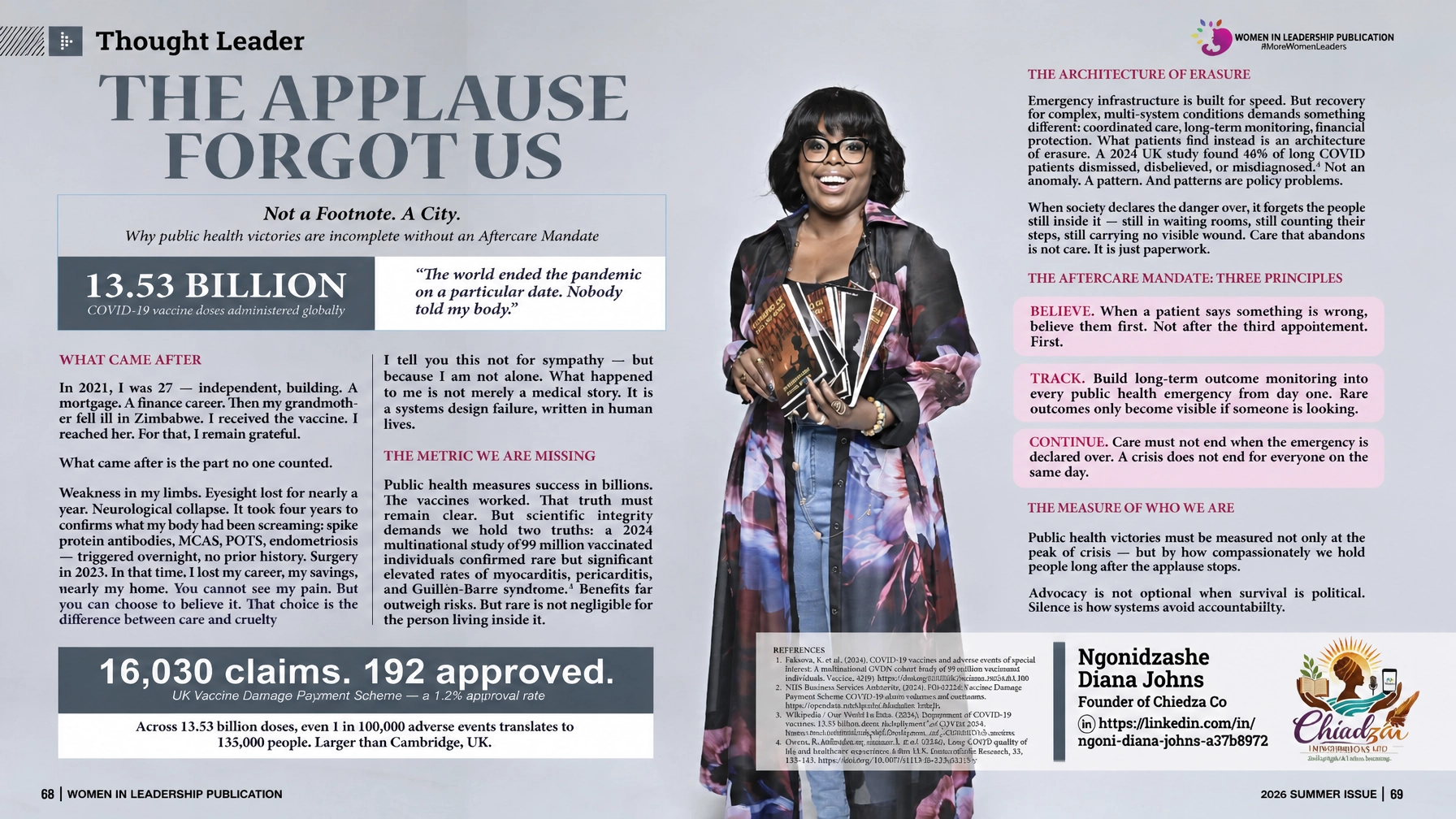
When the invitation from Women in Leadership magazine landed in my inbox, my first instinct wasn’t to celebrate. It was to look at my reflection in the mirror: a reflection currently framed by the metal bars of my wheelchair: and wonder if they’d sent the email to the wrong person.
I’m Ngoni Diana Johns. I am a Zimbabwean-British woman. I am a writer, a publisher, and a woman living with the daily, grinding reality of chronic illness. Usually, when people think of "Leadership," they think of power suits and glass ceilings. They don’t think of someone navigating the world from a seated position, calculating their energy levels like a dying phone battery.
But then I remembered my own philosophy: Standing on Our Last Bones.
This isn't just a catchy phrase for a Hardcover Journal. It is a way of life. It’s that moment when you are physically, emotionally, and spiritually spent, yet you still find a way to rise. Not because you’re a superhero, but because you are the culmination of a thousand women who came before you.
The Applause is Fickle; the City is Eternal
The title of this post, “The Applause Forgot Us, Not a Footnote a City,” is something that’s been rattling around my brain since the magazine feature came out. Seeing those words stretched across a full double-page spread did something to me. It made the message feel less like a clever line and more like a calling.
Often, we chase the "applause." We want the recognition, the feature, the award. We think that being "seen" is the ultimate goal. But applause is loud for a second and then it vanishes. If you build your identity on the noise people make when you’re winning, you’ll crumble the moment the room goes quiet.
I realized that being in that magazine wasn't about me getting a pat on the back. It was about making sure that women like me: black women, disabled women, women who have felt like "footnotes" in the stories of the Great and Powerful: realized we aren't footnotes at all. We are the City. Not the tiny mention tucked at the bottom. Not the decorative afterthought. The city means foundation. It means shelter. It means community. It means roads, memory, movement, lineage. It means other women can find their way because something solid exists beneath their feet.
We are the infrastructure of resilience. We are the ones who hold up the sky when everyone else is looking for a place to hide.


Look at this photo. Then look at that City page. That’s the point, really. I am not trying to be a neat little inspirational footnote tucked under somebody else’s headline. I am trying to build something women can live inside. My wheelchair isn’t a sign of weakness; it’s my throne. My books: the Still Rising series and my guided journals: aren't just products. They are maps. When I sit there with those pages, I’m not just a CEO; I’m a daughter of Zimbabwe standing on British soil, carving out a space where we don't have to apologize for our scars.
Wearing My History Like a Patchwork
There’s a certain pressure when you’re featured in a leadership magazine to look "polished."
Wearing my history like a patchwork: Ngonie Johns in the vibrant robe and city shoot.
To look like you have it all figured out. But my journey has never been polished. It’s been a series of breaks, pivots, collapses, and repairs, which is probably why that part of the feature landed so deeply for me.

For years, I was the high-functioning woman people respect on paper. I had the Accounting & Finance first-class degree. I understood performance. I knew how to hit the mark, speak the language, and carry ambition in a way that made other people comfortable. The woman I was before survival knew how to perform. The woman I am becoming knows how to transform systems.
What the spread cannot fully hold, but what my body remembers with brutal clarity, is the collapse. Endometriosis. Dysautonomia. MCAS. POTS. Neurological complications. The slow, bewildering dismantling of the life I thought I was building. The kind of unraveling that does not just interrupt your plans; it interrogates your entire theology of usefulness. One minute you are functioning inside the rules of productivity, and the next your body is dragging you into a different education altogether.
So no, the real story was never about leaving finance for poetry as if I simply swapped one discipline for another. It was about moving from a world of numbers, output, and high-functioning survival into the deeper work of building CHIEDZA: an emotionally intelligent ecosystem rooted in truth, reflection, healing, restoration, and light. If I’m honest, poetry was just one doorway into that ecosystem. It was where I told the truth before I had the courage to say it out loud. It was where I stopped performing competence long enough to hear my actual voice.
And somewhere inside that wreckage, I stopped asking, "Why is this happening to me?" and started asking, "What is this teaching me about humanity?" That question changed everything. It shifted me from private pain into public architecture. From trying to get my old life back into building something wiser than the life I lost.
That is where The Aftercare Mandate was born for me. Leadership built on restoration rather than extraction. Leadership that does not worship burnout and call it excellence. Leadership that makes room for the body, the soul, the nervous system, the grief, the pause. Leadership that understands women are not machines, and healing is not a detour from purpose; it is part of the blueprint.
That shift from finance into building CHIEDZA wasn’t a neat career move. It was a shedding. A return. A refusal to keep speaking only in numbers when my life was asking for witness, texture, grief, God, survival, and beauty. CHIEDZA is not just a company to me. It is the ecosystem I built from the ruins. A place where women can process grief, hold joy, honour faith, survive hard seasons, and write themselves back into their own lives. I don’t create journals and books because stationery is pretty. I create them because writing saved me from disappearing inside my own life.
Maybe that is why the magazine imagery hits the way it does. The spread is glossy, yes. The words are elegant. But underneath it is a deeper truth: this is the woman they thought would disappear. The woman whose body collapsed. The woman whose usefulness, by the world’s standards, should have shrunk. And yet there I am, still here, still building, still turning survival into structure.
I love that this part of the feature made room for the contradiction. That’s how I feel about my identity. I am a mosaic of Shona traditions and British sensibilities. I am a mix of deep faith and raw, unfiltered frustration with the medical system. I am a leader who sometimes needs to sleep for fourteen hours just to survive the next three.
For a long time, I thought I had to pick a side. Was I the "Sick Girl" or the "Successful Woman"?
The truth is, I’m both. And so are you. You are allowed to be a masterpiece and a work in progress at the same time. You can be the woman everyone looks up to while still being the woman who needs to use a Self-Care Spiral Journal just to process the sheer weight of existing.
The Blueprint for Transformation
This magazine feature wasn't a destination; it was a signal. It told me that the world is finally ready for a different kind of leader: one who leads from the heart, from the chair, and from the truth.
But how do you get there? How do you move from feeling like a footnote to realizing you’re the whole damn city?

It starts with the "Sacred Pause."
In my own life, transformation didn't happen during the "busy" times. It happened in the quiet moments between the pain. It happened when I picked up a pen and started writing my way out of the darkness. This is why I created Chiedza Innovations. "Chiedza" means light in Shona. I wanted to create tools that weren't just pretty notebooks, but actual catalysts for soul-work.
When I was writing the prompts for Becoming Light, I was thinking about that woman who feels forgotten. The one who thinks her story doesn't matter because she hasn't "arrived" yet.
Let me tell you: The "arrival" is a myth. The transformation is in the documenting. It’s in the messy, tear-stained pages of a Grief Journal or the defiant joy of a Faith-based Notebook.
Representing the Lineage
Being a Zimbabwean-British woman in a leadership space means I carry my ancestors with me. Every time I speak, I’m speaking for the women in my family who had the leadership skills of a CEO but were never given the platform.

When the magazine asked me about my "success," I didn't talk about profit margins. I talked about community. I talked about how "I" is a myth, and "We" is the only thing that lasts. We are a collective. That’s why the bio spread matters to me. Not because it flatters me, but because it places my story inside a wider room of thought leadership and reminds me that none of us rise alone.
If I am standing, it is because I am Standing on Our Last Bones. And for me, that philosophy has never meant pretending to be unbreakable. It means honouring what is left when everything unnecessary has been stripped away. It means making a life from the fragments. It means standing anyway, even if "standing" looks like speaking from a wheelchair, writing through pain, or building something beautiful with the very bones of survival. I am standing on the shoulders of my sisters, my mother, and my Gogo. I am also standing on every version of myself that thought she was finished and kept going.
The "Applause" might forget us tomorrow. The magazine will end up in a recycling bin eventually. But the "City": the impact we have on each other, the way we teach one another to heal, the way we refuse to be erased: that remains.
Your Turn to Write the Map
I want you to look at your life right now. Are you waiting for someone to give you a "feature" before you believe your voice matters? Are you waiting for the applause to tell you that you’ve made it?
Stop waiting.

You are not a footnote in someone else’s story. You are the architect of your own city. And seeing myself holding that spread in my hands drove it home in a way I can’t quite fake on command. It reminded me that the story only matters if it opens a door wider for somebody else. Whether you are navigating chronic illness, career changes, or just the heavy weather of being a woman in the 21st century, you have a blueprint within you.
I invite you to use the same tools I use. If you’re feeling the weight of the world, maybe you need the Gentle Resolve journal. If you’re ready to reclaim your power, grab a Still Rising Hardcover.
Don't do it for the applause. Do it so that when the world tries to relegate you to a footnote, you can point to your own thriving, shimmering, patchwork life and say:
"I am the City. And I am just getting started."
Stay bright, stay raw, and keep rising. We’re doing this together.
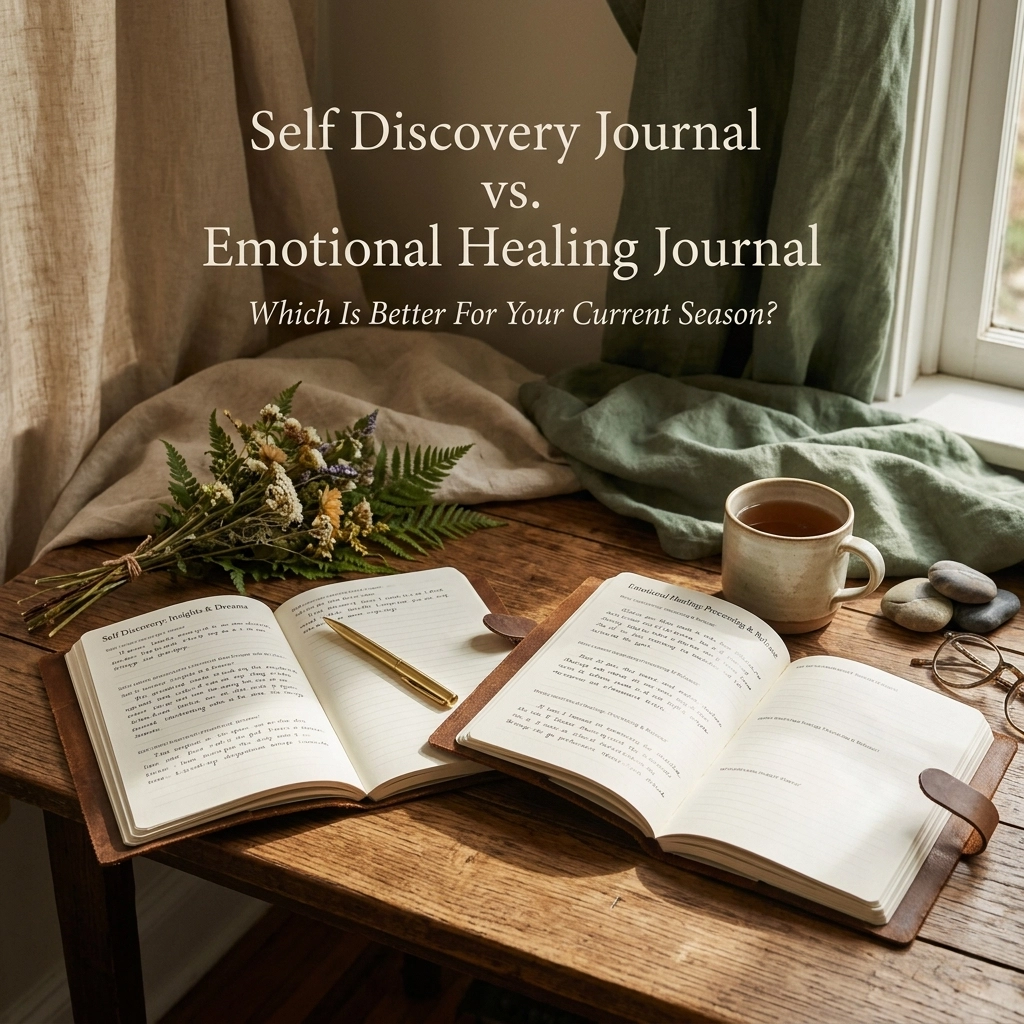
The Weight of Choice
To hold a pen is to claim a small, radical territory in a world that demands your constant diffusion.
The blank page does not demand your productivity; it demands your presence, a rare currency in an era that monetizes your attention before you have even woken to the day.
Choosing between a self discovery journal and an emotional healing journal is not a matter of preference, but a recognition of the climate within your own soul.
It is an acknowledgment that the heart, like the earth, moves through distinct and necessary seasons.
To ignore the season is to plant seeds in frozen ground or to seek shelter under a tree that has already shed its leaves.
The Emotional Healing Journal: The Art of Unearthing
The emotional healing journal is a descent into the interior, a quiet rebellion against the silence we are taught to maintain about our own pain.
It is the labor of clearing the rubble.
When the weight of the past sits heavy in the throat, we often find ourselves carrying the weight of words we never said.
This journal is not about the person you wish to be; it is about the person you are currently tending to, the one who is wounded, tired, or grieving.
Healing is the winter of the spirit: a time of necessary contraction, of survival, and of processing the cold truths that have settled in the marrow.
In this season, the Still Rising journal serves as a witness to the storm, providing a space where the narrative of "brokenness" is slowly translated into the language of resilience.
An emotional healing journal does not ask you to "find" yourself; it asks you to acknowledge where you are currently lost.
It focuses on the "why" of your reactions, the origin of your triggers, and the slow, deliberate work of stitching together a fractured sense of safety.
It is a somber practice, requiring a willingness to look at the scars without the immediate need to turn them into something beautiful.
Beauty, in this season, is simply the act of staying.
The Self-Discovery Journal: The Courage of Naming
If healing is a descent, self-discovery is an expansion.
The self discovery journal is the spring that follows the thaw, the radical act of defining yourself outside the expectations of a society that has already decided who you should be.
It is the moment you realize that the identity you have worn was perhaps a garment tailored by others.
Discovery is a violent unmasking of the authentic self.
It is not about fixing what is wrong, but about exploring the vast, unmapped territory of what is right, what is true, and what is possible.
When you engage with a tool like the Becoming Light journal, you are moving from the preservation of the self to the evolution of the self.
You are asking questions that have no easy answers: What do I value when no one is watching? What does my joy look like when it is not a performance?
In this season, when rest becomes rebellion, we find the strength to choose our own path rather than following the well-worn grooves of external validation.
Self-discovery is the cartography of the soul, a process of naming the landmarks of your own internal landscape.
The Mirror vs. The Map
To distinguish between these two paths, one must look at the orientation of the heart.
The emotional healing journal is a mirror: it reflects the current state of the soul, showing the bruises and the healing tissue with equal clarity.
The self discovery journal is a map: it looks at the terrain and asks, "Where shall we go now that the path is clear?"
One deals with the burden of what was; the other deals with the weight of what could be.
We often make the mistake of trying to map a territory while we are still trapped in the debris of a collapsed structure.
Alternatively, we spend our lives endlessly clearing debris, never realizing that the ground is finally firm enough to build upon.
The wisdom lies in knowing whether you need to be held or whether you need to be challenged.

Determining Your Current Season
Ask yourself: Does my silence feel like a sanctuary or a prison?
If your silence is a prison, filled with the echoes of past trauma and unaddressed grief, you are in a season of healing.
You need the Standing on Our Last Bones journal, a place for the prayer of the ones who keep going despite the exhaustion.
If your silence is a sanctuary, but one that feels increasingly small, you are in a season of discovery.
You are ready to outgrow the walls you built for protection.
The modern world monetizes our confusion, selling us quick fixes for existential burdens that require the slow medicine of the pen.
To journal is to refuse the quick fix in favor of the deep truth.
The Rebellion of the Written Word
Whether you are unearthing the past or naming the future, the act remains an act of resistance.
We live in a culture that fears the internal life, preferring the loud, the fast, and the superficial.
To sit with a Self-Care Spiral Journal is to insist that your inner world has a gravity of its own.
It is to declare that your healing is not a luxury, and your discovery is not a vanity.
Both are essential for the woman who intends to stand fully in her own power.
Healing prepares the soil; discovery plants the garden.
The Integration of Silence and Ink
There is no hierarchy in these seasons.
The "becoming" is not better than the "healing"; it is simply the next breath.
Some days require the heavy, rhythmic labor of processing pain.
Other days require the light, lyrical exploration of joy and identity.
The goal is not to reach a final destination where no more journaling is required, but to develop a relationship with the page that sustains you through every shift in the wind.
Chiedza Innovations exists at this intersection: the place where the light meets the shadow, and where the ink meets the soul.
We provide the vessels, but the depth is yours to claim.
Whether you reach for a Becoming Light guided journal or a simple matte hardcover notebook, you are making a choice to honor the complexity of your human experience.
A Final Contemplation
Consider the weight you carry today.
Is it the weight of an old wound that needs tending?
Or is it the weight of a new wingspan that is ready to be tested?
Listen to the silence.
The page is waiting to hold whatever truth you are finally ready to release.
In the end, every word written is a step toward the light, a slow and intentional rising from the ashes of who you were taught to be into the brilliance of who you actually are.
The pen is in your hand.
The season is yours to name.

If you’re reading this while propped up by three pillows, clutching a lukewarm cup of herbal tea, and wondering how on earth you’re going to tackle a 14-item to-do list when your body feels like it’s made of lead and static, I see you. I am you.
Living with a chronic illness isn’t just about managing symptoms; it’s about navigating a world built for people with "infinite" batteries while you’re running on a portable charger that’s currently at 4%. For a long time, I thought "busy" and "chronic illness" were two worlds that couldn't coexist without me ending up in a flare-up that lasted three weeks. I thought I had to choose: my career or my health. My dreams or my dignity.
But then I realized something life-changing. I don’t have to be "normal" to be successful. I just have to be intentional. I had to learn how to stand even when it felt like I was down to my last few inches of strength. This is what we call the "Standing On Our Last Bones" philosophy at Chiedza Innovations. It’s the belief that we are deterred but never excluded. We still rise. We still win.
Here is exactly how I manage a high-octane work day without losing my soul (or my health), and how you can build your own blueprint for transformation too.
1. The Morning Audit: Before I Reach for My Phone
My "busy" day doesn't start with emails. If I start there, I’ve already lost the battle. My morning starts with an audit. Before I even swing my legs out of bed, I check in with the "CEO" of my life, my body.
Is today a high-pain day? Is the brain fog rolling in like a London mist? I don’t judge it anymore; I just observe it. I use my Becoming Light Guided Journal to ground myself. This isn’t just a diary; it’s my navigation system. I spend five minutes writing down how I feel and what one "win" would look like today. If I’m in a flare, the win might just be "sending three emails." If I’m feeling strong, it might be "recording a podcast episode."
Transformation happens when you stop fighting your reality and start working with it. Whether I'm sitting in my wheelchair or standing in a pair of heels for a keynote, the mission remains the same: gentle transformation. You can grab your own copy of the Becoming Light journal here to start your own morning audit.

2. Pacing is My Secret Power (Not My Limitation)
I used to think pacing was for "slow" people. Now I know pacing is for smart people. On a busy work day, I don’t look at the clock; I look at my energy. I’ve adopted what I call "The Rhythm of the Last Bones."
I work in 45-minute sprints followed by 15-minute "Sacred Pauses." During those pauses, I am strictly off-limits. I don't "just check Instagram." I close my eyes. I breathe. I might use my Self-Care Spiral Journal to jot down a single word that describes my current state. This prevents the "crash and burn" cycle.
If you’re a chronic illness girlie, you know the "push through" mentality is a lie. When we push through, we pay for it with interest later. By building rest into the schedule, I’m not being lazy, I’m being sustainable.
3. Dressing for the Identity, Not the Pain
There is a specific kind of magic in how we present ourselves to the world, even when we’re hurting. Some days, "managing" a work day means staying in my softest loungewear. But on the days when I have to show up, whether it's for a client meeting at Chiedza Co or a virtual workshop, I dress for the woman I am becoming.
This dress isn't just fabric; it's armor. It's a reminder that even when my bones are tired, my spirit is vibrant. You can be both: a person who needs a wheelchair and a person who commands a room. You can be someone who needs frequent naps and someone who runs a publishing empire. When you lead with your authentic identity, the world has no choice but to follow.
4. The Mid-Day Re-Alignment
By 2:00 PM, the "afternoon slump" hits everyone, but for us, it hits like a freight train. This is where I use the Still Rising Guided Journal.
When I feel the overwhelm creeping in, that "I can't do this" feeling, I turn to the prompts in Still Rising. It’s designed specifically for women in the middle of the storm. I remind myself that I am "Standing On Our Last Bones." I look at my "must-do" list and I ruthlessly cut it. If it isn't life-or-death, and my body is screaming, it waits until tomorrow.

I’ve learned that being a "boss" isn't about how much you get done; it's about the grace you show yourself while doing it. Leading a busy life with a chronic illness requires a radical kind of self-honesty. I’ve had to learn that "no" is a complete sentence and a vital medical necessity.
5. Creating a "Last Bones" Workspace
My workspace is a sanctuary, not a cage. I’ve filled it with things that remind me of my "why." I have my Standing On Our Last Bones Hardcover Journal right next to my laptop.
Why? Because seeing that art: the representation of resilience: reminds me that my story matters. It reminds me that every word I write and every book we publish at Chiedza Innovations is a bridge for someone else.
If you’re working from home or an office, your environment needs to support your physical needs. For me, that means an ergonomic setup, plenty of water, and journals that act as emotional anchors.
6. The End-of-Day Decompression
When the laptop closes, the "work mode" doesn't just evaporate. I have to consciously transition. I use a ritual to signal to my nervous system that it’s time to heal.
I write down three things I’m proud of: not three things I did, but three things I was.
- I was patient with my brain fog.
- I was courageous in a difficult meeting.
- I was kind to my body when it needed a break.
This shifts the narrative from "I’m a sick person trying to work" to "I am a powerful person who manages her life with wisdom."
Your Blueprint for Transformation
You don't need to have it all figured out to start managing your days differently. You just need the right tools and the right mindset. You aren't "less than" because your path looks different. In fact, the resilience you develop by navigating a busy life with a chronic illness makes you one of the most capable people on the planet.
If you’re ready to stop surviving your work day and start rising through it, I invite you to explore our Journal Hub. Whether it’s the Still Rising journal or the Standing On Our Last Bones series, these aren't just notebooks: they are your partners in this journey.
We are standing on our last bones, my friend. And honestly? We’ve never looked more powerful.
Come over to chiedzaco.com and let’s start your transformation together. You’ve got the spirit; we’ve got the tools. Let's show the world what happens when a "chronic illness girl" decides she’s still rising.


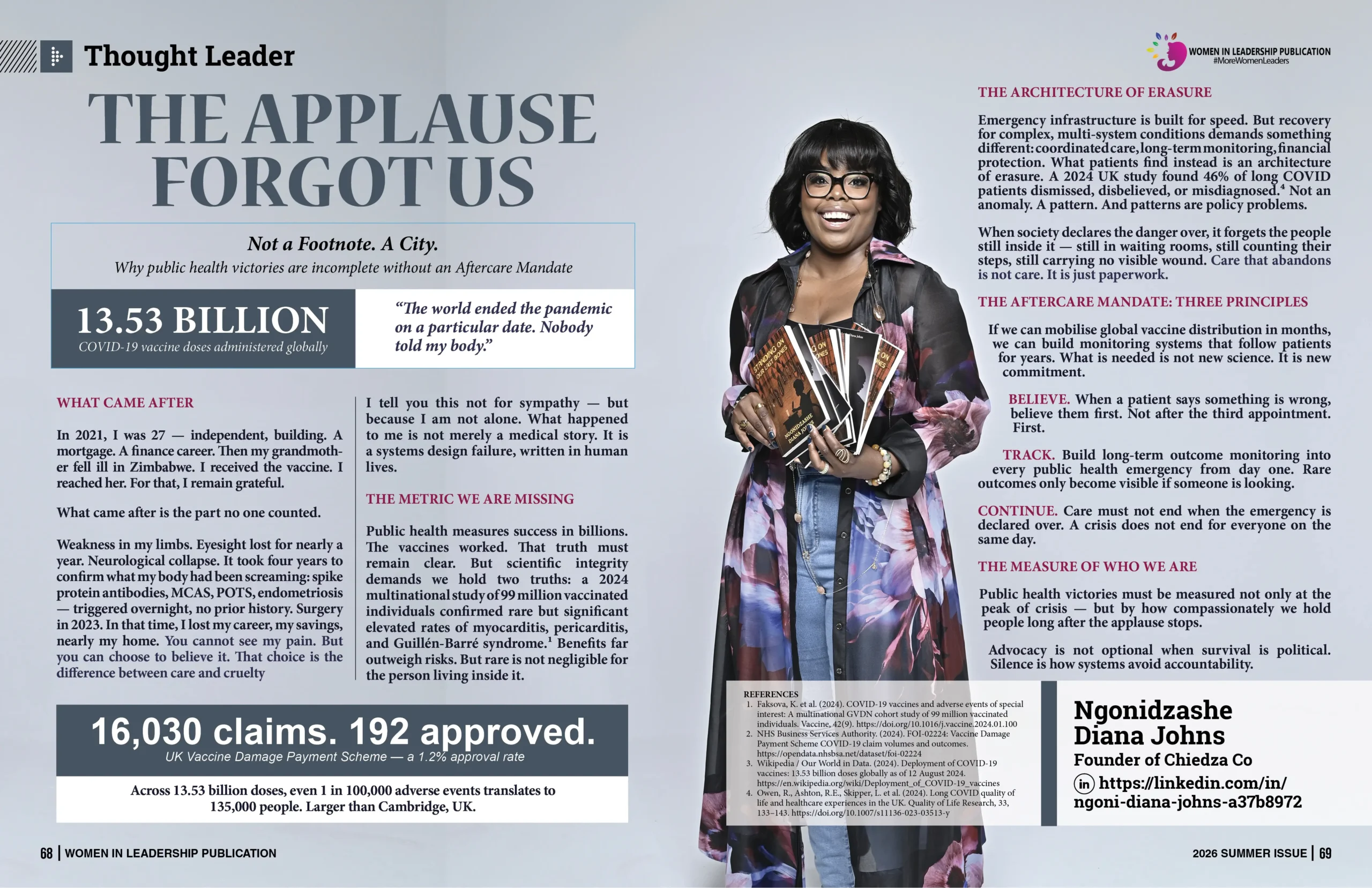
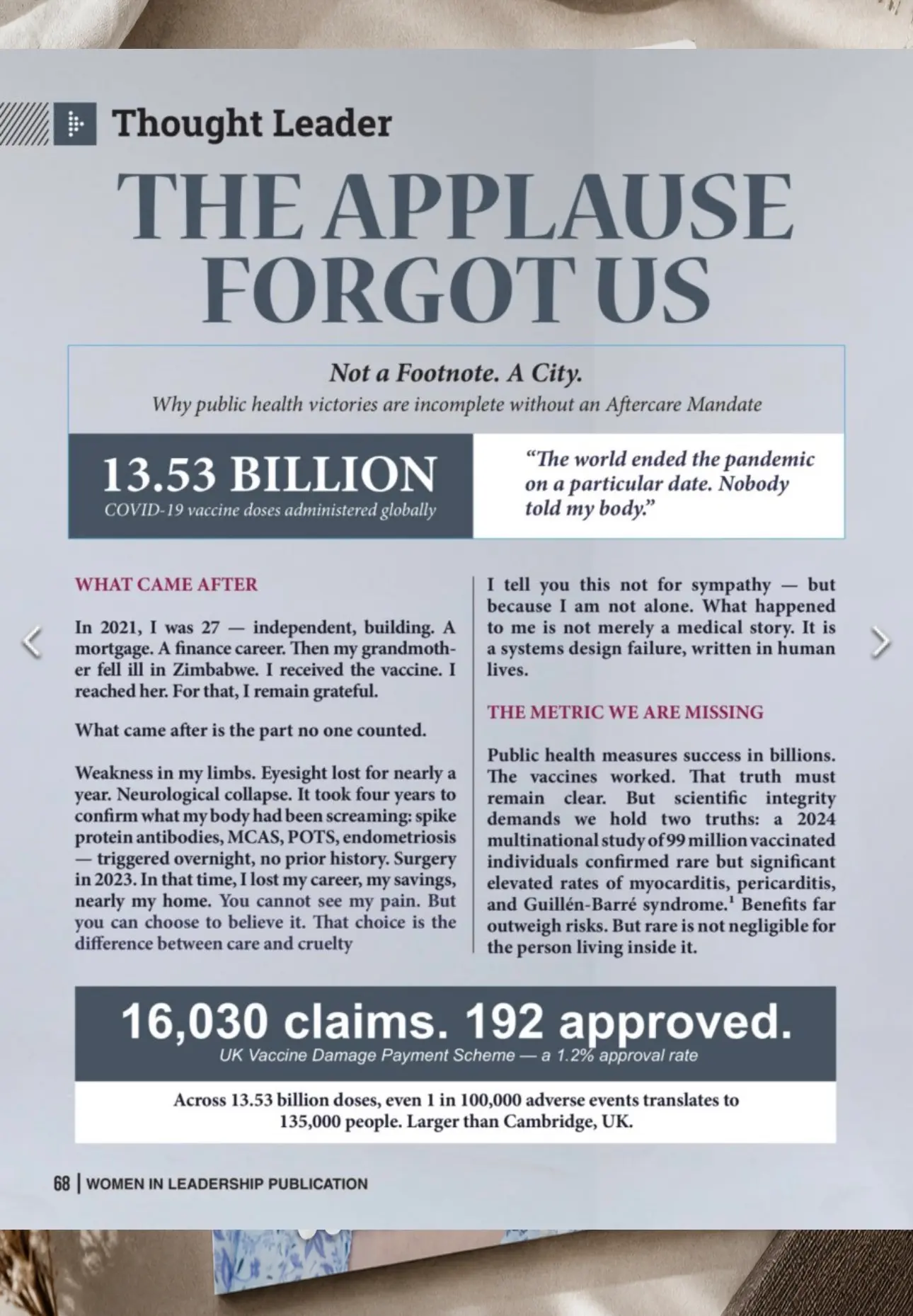
If you had told me five years ago that I’d swap my meticulous spreadsheets and quarterly forecasting for soul-work and emotional intelligence, I probably would have laughed: politely, of course, because finance people are nothing if not composed. My life was defined by the black and white: profits, losses, and the relentless pursuit of "more." But somewhere between the high-stakes meetings and the bottom lines, I realized I was reporting on a system that was fundamentally broken: not because the numbers were wrong, but because the humans behind them were exhausted.
The shift from being a "finance person" to becoming a thought leader wasn't just a career change. It was a complete overhaul of my identity. It was the moment I realized that I wasn't just a cog in the machine; I was the architect of my own resilience. This is the story of how I moved from guarding resources to mobilizing them for the soul, and how Chiedza Innovations became the ecosystem for that transformation.
From Reporting Numbers to Shaping Narratives
In finance, you’re taught to look at the past to predict the future. You analyze what happened in Q1 to make sure Q2 doesn't go off the rails. But as I sat in those boardrooms, I started noticing a pattern that no software could track. We were optimizing for performance, but we were completely ignoring human sustainability.
Ngonie Johns: Leading from the chair, where the performative self dies and the authentic self begins.
We were building empires on shaky ground. I started asking myself: What business problems am I uniquely positioned to solve? The answer wasn't better tax structures. It was how to build a life and a business that doesn't require you to sacrifice your sanity for your success. I wanted to move from "functional expertise" to "enterprise leadership" of the heart.
 )
)
This image: the woman looking over the city: is exactly how I felt when I finally stepped out of the "finance box." I wasn't just a footnote in the corporate world anymore; I was a city in myself. I had to become the infrastructure that supported my own growth before I could lead anyone else.
Standing On Our Last Bones
My philosophy, "Standing On Our Last Bones," came from a place of deep, personal exhaustion. It’s that feeling when you’ve given everything, and you’re literally down to the marrow. In my finance days, when we hit our "last bones," we just worked harder. We pushed through the burnout because the "numbers" demanded it.
But in this new chapter, I’ve learned that standing on your last bones is actually a sacred space. It’s where the performative self dies and the authentic self begins. It’s the starting point of a real healing journey. We don't just "bounce back" from burnout; we evolve through it. We build something new on the remains of who we used to be.
At Chiedza, we believe that being deterred doesn’t mean being excluded. We still rise. We still win. But we do it differently now. We do it with the understanding that our value isn't tied to our output, but to our existence.
The Aftercare Mandate™: Shifting from Performance to Sustainability
One of the biggest lessons I brought from finance into thought leadership is the concept of "Aftercare." In business, we have maintenance schedules for servers and cars, but what do we have for people?
The Aftercare Mandate is my response to the "hustle until you break" culture. It’s a framework that prioritizes what happens after the big launch, after the crisis, and after the achievement. If you don't have a plan for how to sustain the human behind the work, your "growth" is just a bubble waiting to burst.
When I work with leaders now, I don’t just look at their strategy; I look at their sustainability. Are they building a life they actually want to live, or are they just building a monument to their own exhaustion? Through Chiedza Innovations, I’ve created a space where we normalize the "human" in "human resources."
The Power of the Self-Discovery Journal
You might wonder how a numbers-driven person started advocating for journaling. Let's be real: I used to think journaling was for people with too much time and not enough to do. I was wrong.
My self-discovery journal became my most important "financial statement." It allowed me to audit my thoughts, track my emotional triggers, and forecast my own well-being. It’s the ultimate tool for anyone transitioning from a high-pressure role into a space of intentional leadership.
The journey from finance to thought leader required me to stop looking at screens and start looking in the mirror. I had to ask the hard questions: Who am I when I’m not "producing"? What do I carry that isn't mine to hold? These are the reflections that lead to true transformation.

If you’re feeling like you’re just "reporting the numbers" of your life rather than shaping the narrative, I highly recommend picking up Still Rising or Becoming Light. It’s not just about writing; it’s about reclaiming your voice.
Building CHIEDZA: An Emotionally Intelligent Ecosystem
Today, my "capital allocation" looks very different. I’m investing in people, in healing, and in the "Limitless Becoming" of women everywhere. CHIEDZA isn't just a company; it’s an emotionally intelligent ecosystem. We use frameworks like S.A.F.E.R. (Care, Structure, Scale) to help women navigate their own transitions.
My background in finance wasn't a waste; it was the training ground. It taught me the importance of structure, the power of a clear vision, and how to scale impact. But now, I apply those principles to things that actually matter: like healing journeys and emotional resilience.
Your Roadmap to Transformation
If you’re currently where I was: stuck in a role that feels like a costume, performing for a bottom line that doesn't satisfy your soul: here is my blueprint for you:
- Redefine Your Identity: You are not your job title. You are a leader who happens to work in [Finance/Law/Tech]. What business problems do you solve with your heart?
- Master Your Narrative: Connect your "chapter one" (the struggle) to your "chapter three" (your obsession with change). Your story is your most valuable asset.
- Prioritize Human Sustainability: Implement your own Aftercare Mandate. What do you need to stay whole while you build your empire?
- Invest in the Tools: Whether it's a speaking engagement to find your voice or Still Rising and Becoming Light to help you find your truth, give yourself the resources you need to evolve.
The transition from "Finance Person" to "Thought Leader" is ultimately about shifting from accuracy to authenticity. It’s about helping your organization (and yourself) see around corners and make better bets: not just on the market, but on the future of humanity.
I’m no longer just reporting on the world; I’m helping build a new one. And honestly? The ROI on this life is much, much higher.
If you're ready to start your own evolution, come join us at the Chiedza Shop. Let’s stop standing on our last bones and start building on them.

The Architecture of the Threshold
We do not merely cross into the weekend; we surrender to the gravity of what we have carried.
The sun begins its descent not as a disappearance, but as an invitation. In the modern world, we are conditioned to view the end of the day as a failure of productivity: a forced intermission in an endless play of doing. But the Sunset Sabbath demands a different perspective. It is the architectural boundary between the labor of the hands and the sanctuary of the soul.
To witness the light fading is to acknowledge that our control over the world is an illusion. We have spent the week attempting to bend time, to squeeze meaning from minutes, and to justify our existence through output. As the horizon turns to amber, that justification must cease.
We stand at the threshold of the Sunset Sabbath, where the only requirement is to be.
The Weight of the Setting Sun
Gravity is not a burden; it is the earth’s way of holding us still when we refuse to stop.
There is a specific weight to Friday evening. It is the cumulative mass of every email sent, every word swallowed, and every expectation met. We carry this weight in our shoulders and in the shallow rhythm of our breath.
When rest becomes rebellion, we realize that our exhaustion is not a sign of weakness, but a symptom of a world that monetizes our energy. To choose the Sabbath is to refuse to be a commodity. It is a radical act of reclaiming the self from the marketplace.

The shore represents the end of the journey. Like the woman standing on the pebbles, we must find the joy in the pause. The water does not apologize for its tide; the sun does not apologize for its setting. Why, then, do we apologize for our need to vanish from the world’s sight for a few hours?
The Economy of Silence
Silence is the currency of the soul, yet we spend our lives in the poverty of noise.
The Sabbath is not merely the absence of work; it is the presence of a specific kind of silence. It is a silence that allows the "unspoken" to finally rise to the surface. We often avoid rest because we fear what we will hear when the hum of the world stops.
We fear the weight of words we never said.
In the poetic return to rest, we make peace with that silence. We let the unspoken thoughts breathe. We acknowledge that the "being" is far more expansive than the "doing." The Sabbath is the space where we find our names again, stripped of our titles, our roles, and our achievements.
The Liturgy of the Breath
To breathe is to participate in the ancient rhythm of ceasing.
Consider the breath. It is the smallest Sabbath we possess. An inhalation is a gathering; an exhalation is a release. If we do not release, we cannot gather again.
The week is a long, sustained inhalation: a tensing of the spirit. The Sunset Sabbath is the long, slow exhalation. It is the moment where we let the air out of the pressure cooker of our lives.

In this space, we practice the art of intentional rising. We recognize that to rise effectively, one must first be fully grounded in the stillness of the earth.
The Sanctity of the Unseen
Our culture worships the visible, but the soul is nourished in the shadows of the Sabbath.
We are obsessed with the visible. We document our lives, curate our joys, and broadcast our struggles. But the Sunset Sabbath happens in the private interior. It is the "unseen" work of restoration.
It is the moment you close the laptop and the light of the screen is replaced by the soft glow of a candle or the natural dimming of the room. This transition is sacred. It marks the shift from the external gaze to the internal witness.
We are reminded that our scars: those marks left by the friction of the week: are being transformed. In the stillness of the Sabbath, the "ashes" of our exhaustion are slowly refined into the "light" of new perspective. This is the alchemy of rest.
The Rebellion of Non-Productivity
To do nothing is to declare that your worth is inherent, not earned.
The most difficult part of the Sabbath is the "ceasing." Our minds are programmed to scan for the next task, the next goal, the next optimization. We have been taught that "rest" must be "productive": that we should rest so that we can work harder later.
This is a lie.
The Sunset Sabbath insists that rest is an end in itself. We do not rest to recover for work; we rest because we are human, and humans require periods of sacred nothingness. We return to the state of "being" as an act of quiet defiance against a culture that views us as biological machines.
The Structural Maintenance of the Soul
Rest is not indulgence; it is infrastructure, and neglected infrastructure always collects a cost.
In finance, what is ignored beneath the surface eventually destabilizes everything above it. The soul follows the same law. Exhaustion behaves like deferred maintenance. It compounds quietly. It erodes clarity, weakens discernment, and leaves the inner life carrying fractures no one else can see.
The Sabbath interrupts this private collapse. It is not an aesthetic pause. It is structural care. It is the reallocation of attention back to what sustains the whole life. What budgeting is to money, rest is to the spirit: a disciplined refusal to live in hidden deficit.
Sabbath Ritual Blueprint
Three quiet movements for returning the self to itself.
-
Digital Deceleration
Power down the screens before the mind begins to bargain for one more scroll. Let the nervous system exit the marketplace. The soul cannot hear itself over constant notification. -
Sensory Shift
Change the atmosphere with intention: dim light, light a candle, wrap yourself in soft fabric, step toward evening air, let tea or oil or silence mark the crossing. The body must be told that striving has ended. -
Breath Anchor
Sit still long enough to notice the breath without trying to improve it. Inhale for four, exhale for six, and let the longer release teach the body what the mind resists: you are allowed to let go.
Signature Prompt
A question that reveals what the week has asked you to counterfeit.
What part of my identity was I performing this week that I can now set down?
Explore the tools for this journey at our Journal Hub, where the blank page becomes a mirror for the resting mind.
The Transition from Doing to Being
The sunset is the sky’s way of telling us that the day’s work is enough, even if the list is unfinished.
There is a profound peace in the "unfinished." Most of our stress comes from the pursuit of completion: a state that rarely exists in a living, breathing life. The Sabbath teaches us to be content with the "incomplete."
We leave the tasks where they are. We leave the problems unsolved. We trust that the world will continue to spin without our constant intervention. This trust is the heart of the poetic return. It is a return to a state of child-like dependence on the rhythms of nature.
As the quote suggests, some parts of us don’t need to be fixed by more work; they need to be found again in the quiet. The Sabbath is the search party for the lost parts of the self.
A Meditative Closing
As the light vanishes, the vision clears.
When the sun finally slips below the horizon, and the stars begin to punctuate the velvet dark, the Sabbath has truly begun. The "doing" is done. The "being" has taken its throne.
Tonight, as you witness the transition:
- Pause at the window.
- Notice the exact moment the colors shift from gold to indigo.
- Let the tension in your jaw dissolve.
- Acknowledge that for the next twenty-four hours, you are not a worker, a provider, or a problem-solver.
- You are simply a soul in a state of rest.
The week has been heavy. The world is loud. But the sunset is a promise that there is always a way back to the center.
Welcome home to your Sabbath. Welcome back to yourself.
To deepen your practice of reflection, visit our Books & Journals collection and find a companion for your quiet hours.
The world rewards the survivor for their endurance, but it rarely recognizes the architect behind the reconstruction.
For a long time, the narrative of my life was framed by what I had lost. Chronic illness: Endometriosis, Dysautonomia, MCAS, POTS: did not just take my health; it dismantled the high-performance finance career I had spent a decade building at institutions like Wellington Management and Barclays. It forced an identity collapse.
But collapse is often the prerequisite for a new kind of construction.
I am incredibly humbled to share that Chiedza Innovations Ltd will be featured in the upcoming Self Made Book 2, curated by Byron Cole and Bianca Miller-Cole, with Bianca Miller-Cole also joining this feature as a co-authorial voice shaping the conversation around entrepreneurship, visibility, and impact. Being selected for this publication is not just a personal milestone; it is a validation of Chiedza’s core philosophy: that healing is not an abstract emotion, but a structural necessity.
This moment also stretches beyond the page. At the end of June, Chiedza will step into an in-person interview at the Speaker conference, marking the next level of our global expansion and signaling that this work is travelling further than one platform, one audience, or one market.
The Shift from Story to Infrastructure
Survival is an instinct. Architecture is a choice.
As I prepare for my interview with Dr. Byron Cole, and in the broader context of this collaboration with Bianca Miller-Cole, I realize that their standard is exacting. They do not just want to hear about the "brave woman with a beautiful story." They want to see the founder who turned personal collapse into emotionally intelligent infrastructure.
Byron’s own journey from a council estate to a multi-award-winning serial investor means he respects earned success. He rewards clarity over poetry. In our upcoming discussions, we will move past the "why" of Chiedza and lean heavily into the "how."
Chiedza is not just a wellness brand. It is an ecosystem built to fill the gap between surviving and recovering. Most wellness platforms optimize people who are already functional. Chiedza rebuilds people who have been disrupted. This distinction is why we will be in the book. We are not just telling stories; we are building the tools to help others write their own.

The Finance Foundation: Why Systems Matter in Healing
The discipline of the market meets the fragility of the human heart.
People often ask how I transitioned from the rigid world of investment management and banking to the fluid space of emotional wellness. The truth is, I never left the systems behind. I simply reapplied them.
In finance, you understand operational structure, risk management, and scalable models. When my health collapsed, I looked for a recovery system that mirrored the precision of the environments I came from. I found nothing. I found plenty of motivation, but very little architecture.
Chiedza Innovations was born from this void. I realized that if you can structure a multi-million-pound portfolio, you can structure a recovery framework. I stopped trying to "return" to who I was and started building a platform from who I had become. My finance background isn’t separate from Chiedza: it is the bedrock. It is what allows us to scale The Gentle Resolve and our publishing arm into a global wellness ecosystem.
Introducing the S.A.F.E.R.™ Framework
Recovery requires a blueprint, not just a wish.
In Self Made Book 2, we will dive into the frameworks that make Chiedza a "business" rather than a "passion project." Central to this is our S.A.F.E.R.™ Framework.
Healing is often marketed as a linear path, but for those of us with chronic illness or deep-seated grief, it is a spiral. The S.A.F.E.R.™ Framework provides the guardrails. It is designed for high-functioning professionals who look fine on the outside but are privately breaking.
It stands as a testament to the belief that softness is not weakness; it is a form of high-level architecture. When you are navigating invisible battles, you need a system that respects your capacity while pushing for your restoration.

The A.F.T.E.R.C.A.R.E Mandate™: A New Standard for Advocacy
The world teaches us how to perform through pain, not how to recover from it.
Part of Chiedza's mission is to move beyond the individual and influence the institutional. This is where the A.F.T.E.R.C.A.R.E Mandate™ comes in.
Currently, our healthcare and corporate systems are designed for "exit" or "return to work." They are not designed for the long, complex tail of recovery. The A.F.T.E.R.C.A.R.E Mandate™ is our advocacy framework aimed at corporate wellness partnerships and healthcare organizations.
It challenges the idea that recovery is a checkbox. It insists on emotionally intelligent systems that support people through the "after": the period where the crisis has passed but the identity is still being reconstructed. This is the work we do through our advocacy frameworks, ensuring that the diaspora community and those with chronic illnesses are seen as more than just a diagnosis or a statistic.
Beyond the Page: Building an Ecosystem
A book is a beginning; a platform is a legacy.
Being featured in Self Made Book 2 will be a powerful signal of traction, but our vision extends far beyond the printed word. With Bianca Miller-Cole named as part of this co-authored space and our in-person interview at the Speaker conference approaching at the end of June, we are stepping into the next level of Chiedza’s global expansion. We are building Chiedza into a globally recognized recovery ecosystem.
This includes:
- Publishing: Books like Still Rising and Becoming Light serve as the intellectual property that anchors our mission.
- Digital Tools: The Chiedza App, currently in development, will offer daily structured recovery support.
- Physical Spaces: Our long-term goal includes wellness centers and retreats designed specifically for emotional reconstruction.
- Community: Platforms like our Substack where high-functioning women can find language for their 2 AM searches.

Why This Matters for the Diaspora and the Underserved
Healing is a political act when the world expects you to stay broken.
The global mental wellness market is worth over $180 billion, yet much of it is optimized for performance enhancement rather than recovery. Furthermore, the African diaspora is often structurally underserved in this space.
Chiedza exists at this intersection. We are bringing cultural depth, faith-rooted healing, and lived-experience authenticity to a market that has long ignored the nuances of our grief and our resilience. When Byron Cole asks me why people should care about Chiedza, my answer is simple: "Because we are filling a gap that no one else is even looking at."
We are creating tools like our Matte Hardcover Reflection Notebooks and Standing On Our Last Bones Journals to provide a tangible place for this rebuilding to happen.
A Note to the Fellow Architect
You are not just a survivor of your story; you are the one who gets to design what comes next.
If you are reading this while navigating your own season of disruption: whether it is health, career, or grief: know that your pain is not your identity. It is simply the terrain.
I didn’t build Chiedza because I had everything figured out. I built it because I was tired of falling into gaps that didn't need to exist. I built it because I realized that the same skills that made me a successful professional could make me a successful healer.
Being featured in Self Made Book 2 will be a reminder that the world is ready for a different kind of wellness. One that is honest, structured, and deeply human.
We are moving from survival to architecture. We are turning our scars into crowns.
Thank you for being part of this journey. Chiedza means "Light" in Shona, and together, we are finding it in the places where others only see shadow.

To explore our full range of recovery tools, visit our Product Collection and join us in the radical act of rebuilding.

The Silence of the Page is the First Act of Resistance
To breathe in a world that demands you hyperventilate is a radical rebellion.
We carry within us a heavy, unmapped geography of fear, often mislabeled as mere stress. Journaling for anxiety is not a hobby; it is the process of disarming the ghosts that haunt the corridors of the mind.
We do not write to be heard by others. We write to prove to ourselves that we still exist beneath the noise.
The Weight of Five Minutes
Time is the currency the world uses to extract our peace.
To reclaim five minutes is to tell the world that your soul is no longer for sale. Five minutes is the threshold where the frantic pace of survival slows into the rhythmic pulse of being.
We often believe that healing requires hours of excavation, but the most profound shifts occur in the margins. A five-minute routine is not a shortcut; it is a concentrated dose of presence.

The Ritual of the Unseen
We do not create a routine to add another item to the ledger of productivity.
We create a "Pause."
Anxiety thrives in the abstract. It lives in the "what if" and the "not yet." When we apply pen to paper, we force the abstract to become concrete. We drag the invisible into the light of the physical world.
This is the foundational truth of journaling for anxiety: what is written is no longer allowed to roam free in the mind.
Step One: The Brain Dump as a Spiritual Exhalation
The first two minutes are for the purge.
We call it a "Brain Dump," but it is more akin to an exorcism of the trivial and the terrifying. Do not seek beauty in your prose. Do not look for grammar. The mind is often a messy room; the first step to cleaning it is to throw everything out onto the floor.
Write the racing thoughts. Write the fear of the grocery list. Write the memory that stings.
By externalizing the chaos, you acknowledge that you are the vessel, not the contents.
Step Two: The Three Priorities as Anchors
The next minute is for the focus.
Anxiety is a fragmentation of the self. It pulls us in a thousand directions at once, leaving us paralyzed in the center of the storm. To choose three things is to refuse the lie that everything is an emergency.
If your only win for the day is to remain kind to yourself, write it down. If it is to finish a single chapter of The Weight of Words We Never Said, let that be enough.
Three priorities serve as the lighthouse in the fog. They do not demand perfection; they offer direction.
Step Three: The Emotional Mirror
the final two minutes are for the truth.
We spend our lives wearing masks for the sake of societal comfort. The journal is the only place where the mask is allowed to crumble. Ask yourself: How am I really feeling right now?
Do not settle for "fine." Do not settle for "okay."
Reach for the weighted words. Are you grieving a version of yourself that no longer exists? Are you standing on your last bones? Are you quietly rising despite the ash?
To name a feeling is to strip it of its anonymity. An anonymous enemy is a monster; a named enemy is merely a guest.
The Nervous System is a Lyrical Machine
Healing is not a destination, but a cadence.
Journaling for anxiety creates a full nervous system cycle. The act of writing engages the motor cortex, the visual system, and the cognitive centers of the brain. It forces the frantic "fight or flight" response to sit down and converse with the "rest and digest" system.
When you write, your heart rate acknowledges the slowing of your hand. Your breath follows the ink.
It is a physical manifestation of the internal shift from panic to peace.
The Rebellion of Consistency
The world monetizes our inconsistency.
It sells us quick fixes for the wounds it inflicts. A five-minute journaling routine is a refusal to participate in the cycle of consumption. It costs nothing but your attention, yet it yields the wealth of a clear mind.
Whether you choose a morning ritual to greet the light or an evening reflection to settle the dust, the timing is less important than the commitment.
Consistency is the quietest form of strength.

Tools for the Journey
We do not need much to begin, but the tools we choose carry their own weight.
A journal should feel like a sanctuary. It should be a place where your scars are invited to become crowns. Whether you prefer the tactile resistance of a hardcover guided journal or the accessibility of a digital wellness interface, the intention remains the same.
The tool is the witness; you are the author.
Aphorisms for the Anxious Mind
- The page does not judge the hand that trembles.
- Anxiety is a story we tell ourselves; journaling is the editor’s pen.
- Five minutes of truth is worth more than a lifetime of comfortable lies.
- We do not write to remember; we write to let go.
- Peace is not the absence of the storm, but the discovery of the center.
The Pause is the Prize
We often wait for the anxiety to leave before we begin to live.
But the routine is not about waiting for the storm to pass. It is about learning to sit in the rain and realize that you are not made of sugar. You will not melt.
The five-minute pause is a sanctuary you build for yourself, brick by brick, word by word. It is the realization that while you may not control the world, you are the absolute sovereign of the five inches between your pen and your heart.
In the end, journaling for anxiety is about returning home to a self you thought you had lost.
It is a way of saying: I am here. I am still rising. I am enough.
Explore more resources for your healing journey at the Chiedza Journal Hub, and remember that your story is the only one worth writing.

The silence of the clinic is a form of architecture.
It is a structure built to hold our bodies but rarely our stories.
For too long, we have lived in the gaps between diagnosis and daily survival. We have been told that our pain is a localized event, a singular glitch in a specific organ. But the body does not work in silos. The body is a unified field of experience.
We have arrived at a threshold where the clinical finally meets the visceral.
The year 2026 has brought us more than just a calendar change; it has brought a scientific reckoning. Recent studies in Nature Genetics have begun to confirm what the lived experience has screamed for decades: endometriosis is not a "period problem." It is a systemic revolution: a multi-systemic disorder involving immune dysregulation and neuro-inflammation that echoes through every fiber of the being.
We are not just patients. We are cartographers of a terrain the world is only now beginning to acknowledge.
The Validation of the Invisible
To live with the triad of Endometriosis, POTS (Postural Orthostatic Tachycardia Syndrome), and MCAS (Mast Cell Activation Syndrome) is to exist in a state of permanent, quiet rebellion.
It is the labor of navigating a body that reacts to the world as if it is under siege. It is the exhaustion of explaining why a scent, a sound, or a simple flight of stairs can trigger a cascade of internal collapse. This "emerging disease cluster" is no longer a fringe theory. It is a biological reality.
Science is finally finding the "loci," the genetic markers of our struggle. But while researchers find the data, women are still being left at the hospital door without a plan for the day after.
This is where our work begins.

The Aftercare Mandate™: A New Requirement for Living
We are introducing a concept that challenges the very foundation of modern medicine: The Aftercare Mandate™.
Surgery is an event; recovery is a lifestyle.
Diagnosis is a label; healing is a labor.
The current medical system is designed for the acute, but our lives are chronic. The Aftercare Mandate™ is our refusal to be dismissed once the stitches are out. It is the radical insistence that we deserve a framework for reintegration, a map for the "after" that accounts for the neuro-rewiring and the systemic shifts our bodies have endured.
This is not a gentle suggestion to broken systems. It is a call to arms for better care, better design, and better follow-through. The AFTERCARE Mandate™ names what too many institutions leave unspoken:
- A – ACKNOWLEDGE: Every experience is real and valid — seen before it is solved
- F – FOLLOW THROUGH: No referral is the end — every referral is the beginning of continued care
- T – TRACK & TRANSITION: Data makes the invisible visible — every transition is a vulnerability window
- E – EQUIP FOR RECOVERY: Tools, not just support — building capacity for the long road beyond crisis
- R – REINTEGRATE: The return is not the end — it is the most overlooked and most critical moment
- C – CONNECT TO CARE: Professional care is a right, not a privilege — the bridge must be built deliberately
- A – ADAPT & LEARN: A system that does not learn cannot serve — iteration is fidelity to the young person
- R – REACH THE UNREACHED: The Mandate is meaningless if it only serves those already visible to the system
- E – EMPOWER THROUGH EVIDENCE: The young person is the evidence — and the mandate — and the future.
This is urgent because the cost of neglect is cumulative. This is visionary because care after crisis must become as non-negotiable as care during it.
To facilitate this, we are launching two new weekly rhythms on the Chiedza Innovations blog.
The Healing Path: Tuesdays and Thursdays
Healing is not a linear ascent. It is a rhythmic, often difficult, navigation of the self.
Every Tuesday and Thursday, we will walk The Healing Path. These posts will be deep dives into the mechanics of recovery, bridging the gap between clinical research and the S.A.F.E.R.™ Framework.
The S.A.F.E.R.™ Framework is our proprietary response to the chaos of chronic illness:
- S : Situate: Locating yourself within your own story, rather than the one written by your medical chart.
- A : Acknowledge: Validating the reality of the systemic storm (the MCAS flares, the POTS brain fog, the Endo pain) without judgment.
- F : Frame: Organizing the symptoms not as failures of the self, but as signals of a system under stress.
- E : Evaluate/Elevate: Using data to track patterns and elevating the voice of the intuition.
- R : Reintegrate: Learning how to step back into the world not as "fixed," but as "transformed."
In The Healing Path, we will explore how to operationalize your own care when the system refuses to provide the manual. We will discuss the brain-body connection and how chronic conditions literally rewire our neural pathways: and how we can begin the slow, intentional work of rewiring them back toward peace.
Sunset Sabbath: The Friday Pause
If the week is for the labor of the path, Friday is for the sanctity of the pause.
We are introducing Sunset Sabbath.
Modern society monetizes our movement and ignores our stillness. For the woman living with chronic illness, rest is often viewed as a symptom of defeat rather than a strategy for survival. We are reclaiming rest as an act of defiance.
Sunset Sabbath is an invitation to when rest becomes rebellion. It is a space for contemplative, rhythmic, and soulful reflection. It is where we acknowledge that we are human beings, not human doings.
It is the soft landing at the end of a heavy week of research and advocacy. It is the moment we allow the "Reintegrate" pillar of the S.A.F.E.R.™ Framework to breathe.
A Big Announcement: The TED Stage
The world is finally ready to hear the truth about the invisible tangle of our lives.
It is with a heart full of both gravity and hope that I announce my upcoming TEDx talk at Flourish Summit in South Africa, taking place November 10-20, 2026.
This talk is the culmination of years of the weight of words we never said. I will be taking our message: the message of the Aftercare Mandate™, the systemic reality of Endometriosis, and the necessity of reclaiming our stories: to a stage designed to move ideas into consequence.
We are building anticipation for this moment not for the sake of the stage, but for the sake of the shift. This is about moving the needle from "awareness" to "action." It is about ensuring that the next generation of women doesn't have to spend a decade fighting for a name for their pain.
Flourish Summit is not merely an event on the calendar. It is a proving ground for a new language of care. South Africa becomes the site where this vision is spoken plainly: that aftercare must stop being an afterthought, and that better systems must be built with urgency, evidence, and human dignity at the center.
I am using this blog and our social channels to research, refine, and reveal the core of this talk. You are part of this process. Your stories, your "scars into crowns," and your persistent rising are the fuel for this message.
The Invitation to Rise
We do not rise because the path is easy. We rise because we have no other choice if we wish to truly live.
The "Gentle Revolution" is not loud. It does not demand attention through noise. It demands attention through the quiet, persistent act of taking care of ourselves in a world that doesn't always know how.
Whether you are here because you are navigating an Endo diagnosis, or you’re wrestling with the dizzying reality of POTS, or you’re simply seeking personal growth and transformation, you are home.
Starting this Thursday, we begin the deep dive. We will bridge science and soul. We will look at the 2026 data and we will ask: "How does this help me breathe today?"
Are you ready to walk the path?
Join us every Tuesday, Thursday, and Friday. Let us pause, reflect, and rise together.
The revolution has already begun. It is happening inside you.
To explore our full range of journals and resources designed to support your healing journey, visit our Shop or browse our Books & Journals section.

The Radical Act of Naming Oneself
To live as a woman in a world that constantly seeks to narrate your experience is a quiet, heavy burden. We are taught to be mirrors, reflecting the needs of others, until our own features become a blur.
The pen is not merely a tool for record-keeping; it is a radical instrument of reclamation. When you choose a self-discovery journal, you refuse the script handed to you and begin the slow return to your own voice. This is the beginning of the end of performance. This is the first turn toward Chiedza—Light—not as spectacle, but as a return to oneself.
Step 1: Selecting the Vessel for Your Sanctuary
A journal is not just a collection of bound pages; it is the physical manifestation of the permission you give yourself to exist.
The space you choose must feel like a sanctuary, a place where the air is thin enough to breathe your own truth. Whether you prefer the tactile resistance of paper or the clinical efficiency of a digital interface, the choice must be intentional. For women navigating chronic illness, grief, and life’s transitions, the Becoming Light journal serves as a gentle companion, offering prompts that act as lanterns in the dark.
At Chiedza Innovations, healing is not severed from where we come from. It is culturally rooted, deeply human, and shaped by the wisdom we carry through storm, silence, and survival.
When the vessel feels sacred, the writing becomes a rite. Do not settle for a notebook that feels like a chore; find the one that feels like a homecoming.
Step 2: The Archeology of the Authentic Self
We are all built upon the ruins of the girls we used to be before the world told us who we were supposed to become.
Self-discovery is less about invention and more about excavation. It requires us to sift through the layers of "shoulds" and "musts" to find the artifacts of our original joy. Ask yourself: What was the shape of my laughter before I learned to quiet it? What did I love before I was told what was useful?

This step is the weight of words we never said. It is an uncomfortable digging into the soil of our history to reclaim the parts of ourselves we discarded to make room for others. We look for the qualities we miss: the curiosity, the unmasked anger, the wild dreaming: and we name them. To name a thing is to call it back into existence.
Self-discovery is not a polished reinvention. It is the sacred work of remembering. It is a return to the light after the storm, carrying the wisdom of where you have been without letting it become your only name.
Step 3: Mapping the Soul’s Internal Compass
Your values are the gravity that keeps you from drifting into someone else’s orbit.
Society often monetizes our confusion, keeping us in a state of perpetual seeking so that we may be sold a solution. Reclaiming your story requires you to define your own North Star. What do you value when no one is watching? What creates a resonance in your chest that feels like a "yes"?
In this stage of journaling, we move beyond the "what" and into the "why." We identify the non-negotiables of our existence. This is where when rest becomes rebellion; we realize that prioritizing our own peace is a radical defiance of a world that demands our constant exhaustion. We write our values down not as a list of goals, but as a declaration of sovereignty.
Step 4: The Radical Shift from Judgment to Witness
The most significant barrier to healing is the internal critic who stands over our shoulder, red pen in hand, ready to cross out our truth.
To use a self-discovery journal effectively, you must learn the art of the "Sacred Pause." Instead of asking, "What is wrong with me?" we must learn to ask, "What is happening within me?" This is the shift from being a judge to being a witness.
Judgment is a cage; curiosity is a key. When you record a difficult emotion or a perceived failure, do not wrap it in shame. Observe it. Track the patterns. Notice how your body reacts to certain names or memories. By documenting your reactions without the weight of condemnation, you create the safety necessary for the shadow parts of your story to finally come into the light.
This is especially true for women living inside the long, invisible rooms of chronic illness, grief, and profound transition. Much of their healing is unseen labor. Much of their courage goes unnamed.
Step 5: Synthesizing the Narrative and Moving into Breath
A journal is not a cemetery for old thoughts; it is a laboratory for a new life.
The final step in reclaiming your story is the integration of your insights into your daily rhythm. Reflection without action is merely a sophisticated form of procrastination. As you notice the themes emerging from your pages, ask yourself what small, radical changes they demand.
Does your story require you to set a boundary? Does it require you to walk away from a table where your name is not respected? The Becoming Light guided journal is designed to help you bridge this gap, turning spiritual growth into tangible steps of slow living and intentionality.
And for the woman learning to rise while still carrying pain, Still Rising stands beside this journey as another sanctuary of reflection, resilience, and radical tenderness.
The Quiet Power of the Unseen
The world may not notice the moment you change. There are no sirens when a woman finally decides she is enough.
Journaling is an unseen labor. It happens in the early hours or the late stillness, away from the gaze of the marketplace. Yet, it is the most productive work you will ever do. It is the steady accumulation of self-knowledge that eventually becomes an unshakeable foundation.
You are not broken; you are simply under-recorded. Your story has been told by others for too long, filtered through their lenses and edited for their comfort. By following these steps and committing to the practice of self-discovery, you are taking back the pen. You are giving yourself permission to heal, to rise, and to finally be seen: first and most importantly, by yourself.
The journey toward the light is not a sprint; it is a slow, rhythmic walk toward the truth. Carry your journal like a map, and your pen like a staff. You are no longer lost; you are simply on your way back to who you were always meant to be.
If you are ready to begin with gentleness and intention, step into the Chiedza Co community at chiedzaco.com and find the Becoming Light and Still Rising journals, along with digital resources created for women navigating chronic illness, grief, and life’s transitions. This is more than a collection of tools. It is a sanctuary for reclamation, a place to return to the light after the storm.
Some seasons do not ask for urgency. They ask for witness. They ask for softness. They ask for the courage to begin again, in light.